





- -27.29%

Recommended price

€59.23


 Richiedi info sul prodotto
Estimated delivery: 1-3 business days

Information on returns and shipments

Payment methods

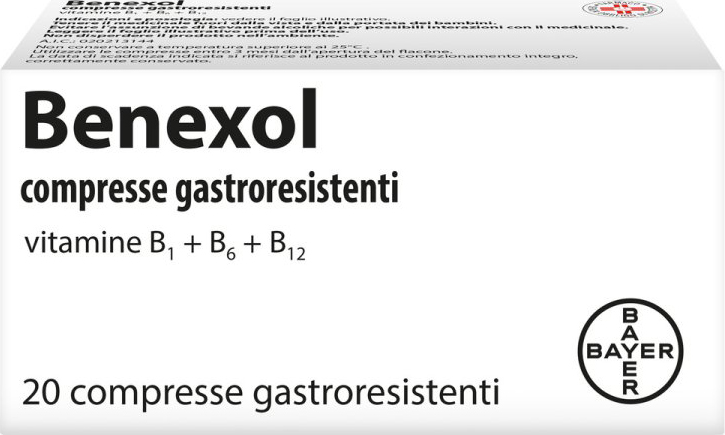
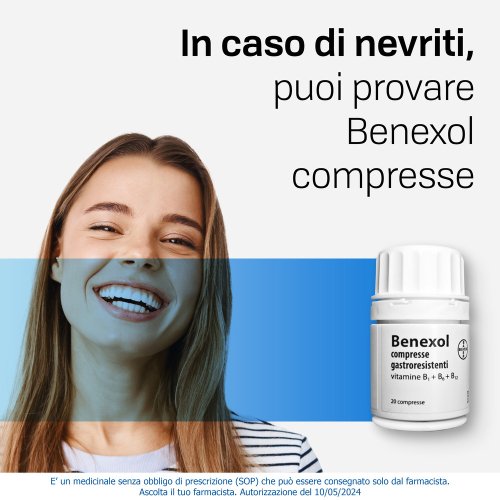
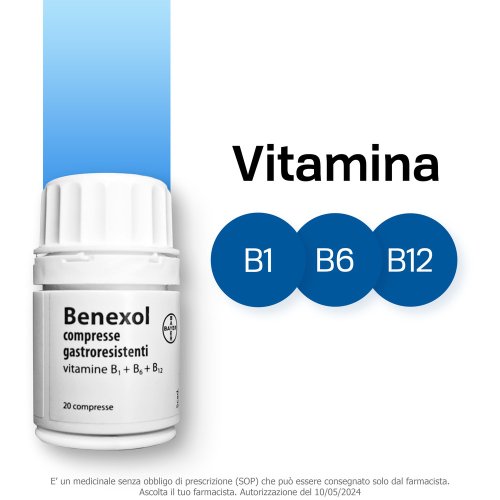
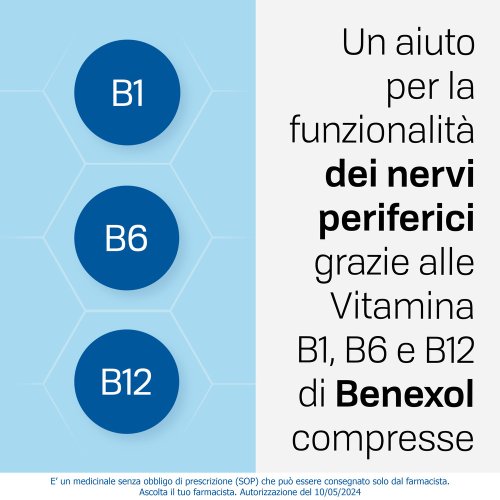
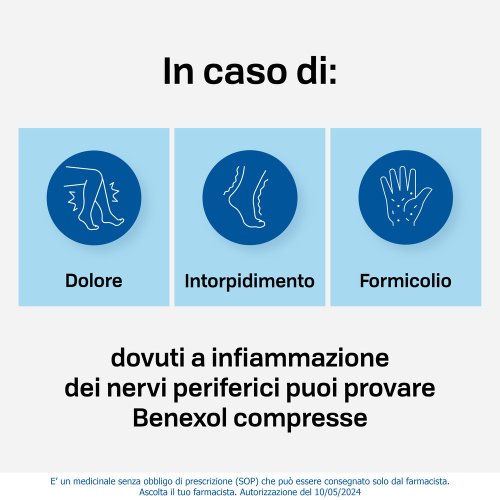
Drug based on vitamins B1, B6 and B12 indicated in deficiency states or increased need such as in the occurrence of neuritis and polyneuritis.
Deficiency states of vitamins B1, B6 and B12 and their various clinical forms (deficiency polyneuritis, neuritis during treatment with isoniazid and other vitamin B6 antagonists). Adjuvant therapy in non-deficiency neuritis and during radiotherapy.
Hypersensitivity to the active ingredients or to any of the excipients. Pregnancy and breastfeeding. Children under 12 years of age. Renal or hepatic insufficiency.
Indicated in adults and adolescents aged 12 years and older.
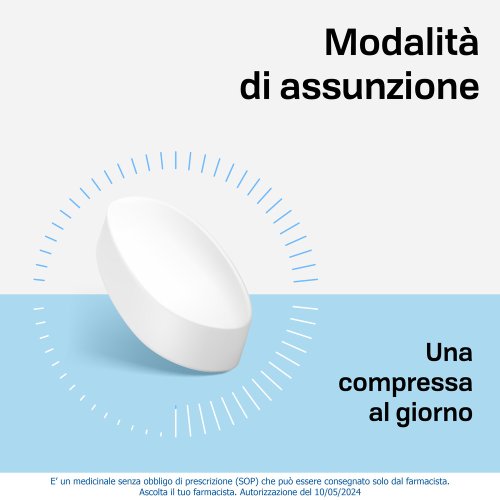
Gastro-resistant tablets: 1 tablet per day.
The product is generally prescribed for periods of one or more weeks. In some cases, the doctor may extend the treatment up to several months. Low dose powder and solvent: indicated when absorption is markedly reduced and for the treatment of hypovitaminosis. The dose is one vial per day, unless otherwise prescribed by the doctor. High dose powder and solvent: indicated for the initial therapy of forms with particularly intense symptoms. The dose is one vial per day, unless otherwise prescribed by your doctor.
Method of administration
The tablets should be swallowed with a sip of liquid, without chewing or dissolving them beforehand. Low dose powder and solvent: the injection should be administered deep intramuscularly by qualified and experienced personnel and should be administered as slowly as possible. The solution to be injected is prepared freshly by dissolving the lyophilized dry substance with the appropriate solvent contained in the package. High dose powder and solvent: the injection should be administered deep intramuscularly by qualified and experienced personnel and should be administered as slowly as possible. The solution to be injected is prepared freshly by dissolving the lyophilized dry substance with the appropriate solvent contained in the package.
Do not exceed the recommended dose and duration of treatment. The product should not be taken in higher doses or for longer periods than recommended, as an overdose may be associated with serious neurotoxicity. Particular caution should be exercised when the product is prescribed together with levodopa for the treatment of Parkinson's disease, as pyridoxine at high doses may antagonize its therapeutic effect. Repeated intramuscular administration of preparations containing vitamin B1 may in rare cases cause anaphylactic reactions. The clinical picture may in some respects simulate anaphylactic shock. To avoid these rare anaphylactic reactions, oral administration is always preferable whenever possible. If this is not possible, the intramuscular injection should be administered as slowly as possible and should be administered by qualified and experienced personnel. The low-dose powder and solvent for solution for intramuscular injection and the high-dose powder and solvent for solution for intramuscular injection formulations contain parahydroxybenzoates, which may cause allergic reactions (possibly delayed) and, exceptionally, bronchospasm.
Interactions with other medicinal products. Vitamin B1 (thiamine). The following medicinal products inhibit the activity of thiamine: thiosemicarbazone, 5-fluorouracil. Vitamin B6 (pyridoxine). Several medicinal products interfere with pyridoxine and may reduce its plasma levels. These include: cycloserine, hydralazine, isoniazid, deoxypyridoxine, d-penicillamine, oral contraceptives, and alcohol. Vitamin B6 may reduce the effectiveness of the following medicinal products. Levodopa: Pyridoxine enhances the metabolism of levodopa to dopamine and therefore reduces its antiparkinsonian therapeutic effects at commonly used doses.
This interaction, however, does not occur when carbidopa is used concomitantly with levodopa. Altretamine, phenobarbital, phenytoin, amiodarone: Coadministration may aggravate amiodarone-induced photosensitivity. Vitamin B12 (cyanocobalamin): Aminoglycosides, antihistamines (H2 blockers), metformin and other related biguanides, oral contraceptives, aminosalicylic acid, and proton pump inhibitors may reduce the absorption of vitamin B12 from the gastrointestinal tract. Therefore, in patients taking these drugs, the requirement for vitamin B12 may be increased. Chloramphenicol may delay or interrupt the response of reticulocytes to vitamin B12. Therefore, blood counts should be monitored when taken concomitantly. Interactions with laboratory tests. Vitamin B1 (thiamine): Thiamine may cause false-positive results in the determination of urobilinogen with the Ehrlich reagent. High doses of thiamine may interfere with the spectrophotometric determination of serum theophylline. Vitamin B6 (pyridoxine). Urobilinogen: Pyridoxine may cause a false-positive result in the Ehrlich reagent test.
Gastrointestinal disorders: diarrhea, dyspepsia, nausea, vomiting, gastrointestinal and abdominal pain. Immune system disorders: allergic reaction and anaphylactic reaction. Hypersensitivity reactions with corresponding laboratory findings and clinical manifestations, including asthma syndrome, mild to moderate reactions affecting the skin and/or respiratory tract, gastrointestinal tract, and/or cardiovascular system. Symptoms may include facial swelling (secondary mechanism), dyspnea, urticaria, angioedema, pruritus, and cardiorespiratory distress. If an allergic reaction occurs, discontinue treatment and consult a physician. For the injectable solution only: serious reactions, including anaphylactic shock with possible fatal outcome, have been associated with parenteral use. Renal and urinary disorders: Abnormal urine odor. Nervous system disorders: Peripheral neuropathy and polyneuropathy, paresthesia. Skin and subcutaneous tissue disorders: Photosensitivity reaction, rash, erythema, pruritus, urticaria, and bullous dermatitis. Report any suspected adverse reactions via the national reporting system of the Italian Medicines Agency.
The product is contraindicated during pregnancy. The product is contraindicated during breastfeeding. Women of childbearing potential must use effective contraceptive methods during treatment.
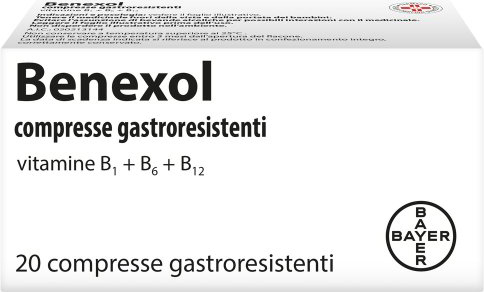
20 Tablets
This product has been on sale since 22/01/2018
In the last 30 days, the product's lowest price was 16,49 €
e'un integratore da non assumere a caso.Mi e' stato prescritto da un oculista.
Consigliato dal medico fa' il suo dovere
Vitamine gruppo B indispensabili
Farmaco prescritto dal neurologo come coadiuvante ad una terapia contro una forte sciatalgia.
È tra le migliori vitamine B


Estimated delivery: 1-3 business days

Estimated delivery: 1-3 business days

Estimated delivery: 1-3 business days

Estimated delivery: 1-3 business days

Estimated delivery: 1-3 business days
