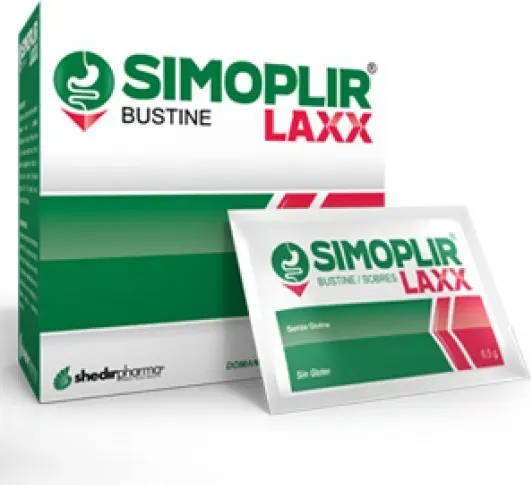
Food supplement for intestinal care.
Indications
Simoplir Laxx, the digestive system is the set of organs and structures responsible for the intake, processing, and absorption of food and the elimination of undigested food particles (residues).
It is made up of the mouth, epiglottis, pharynx, esophagus, stomach, liver, pancreas, small intestine, and large intestine.
The intestine is divided, morphologically, into two segments:
- The small intestine – also known as the “small intestine” – represents the longest portion of the intestine. About seven meters long, it is divided into three portions (duodenum, jejunum, and ileum). It flows into the large intestine – or large intestine – through the ileocecal valve (or Bauhin's valve). The mucosa lining its internal walls is covered by the so-called "intestinal villi," responsible for the absorption of nutrients introduced through food, and by circular folds (their presence serves to increase its surface area so that it can best perform its tasks of completing digestion and absorbing nutrients).
- The large intestine represents the final part of the intestine and, in general, of the digestive system. It extends from the ileocecal valve (or Bauhin's valve) to the anal orifice. It is made up of three segments: the cecum (the portion that originates and develops laterally and at the blind end), the colon (which represents the continuation of the small intestine) and the rectum or straight intestine (which represents the last section of the intestine, the one that opens to the outside through the anal orifice).
Functions of the intestine:
The functional role of the intestine consists of a fourfold activity: secretory-digestive, motor, absorption and excretory.
Secretory-digestive activity: thanks to the enzymes released by specific glands at the duodenal level (Brunner's and Lieberkühn's glands), the digestive phase begun in the stomach is completed;
Motor activity: promotes the mixing and transit of intestinal contents;
Absorption activity of the main nutrients contained in food (mainly in the small intestine), water, electrolytes and specific substances, such as vitamin K, produced by the intestinal bacterial flora (mainly the large intestine);
Excretory activity: excretion of metabolic products and any exogenous toxic substances.
Constipation
Constipation is commonly defined as difficult or infrequent evacuation with a sensation of incomplete intestinal emptying. The acute form is distinguished from the chronic form (which lasts more than 6 months) by the transient nature of the disorder, which can result from various causes.
It is a frequent problem in those who are depressed or subjected to psychological stress. Normal bowel movements vary from person to person, but should generally range from three bowel movements per day to three per week.
So-called transient constipation is common during pregnancy, when changing locations and eating habits (e.g., traveling), in sedentary people who do not stay hydrated, in the period following surgery, and after taking antibiotics.
Chronic constipation, on the other hand, can be caused by actual intestinal and/or anorectal motor dysfunctions or by pathologies such as diverticulosis, chronic inflammatory bowel disease, and colorectal cancer.
Chronic diseases that often accompany constipation include Parkinson's disease, diabetes, and neurological diseases. Some medications (e.g., anesthetics, analgesics, antacids, anticholinergics, antidepressants) can also slow the transit of stool through the intestine.
The symptoms reported by patients with constipation are generally:
Reduced frequency of bowel movements (less than three per week)
Presence of hard stools (“goat-like”)
Excessive and prolonged straining during defecation
Sense of anal obstruction or blockage
Sensation of incomplete evacuation
Recourse to manual maneuvers or aids such as enemas and suppositories
Constipation can significantly reduce people's quality of life. Hard stools and constant straining can also cause not only an increase in blood pressure (with possible conjunctival hemorrhages), but also irritation and prolapsed hemorrhoids.
When you suffer from constipation, the symptoms are varied: you feel bloated, you tend to suffer from flatulence and a general feeling of malaise. Furthermore, evacuation is often associated with pain in the abdomen and rectum and requires considerable effort, with smelly and hard stools. This can make defecation even more difficult and painful, triggering a psychological mechanism by which you involuntarily hold back the urge, worsening the situation.
Format
20 sachets.
Product Code:FRCM113252




 Richiedi info sul prodotto


