Indications
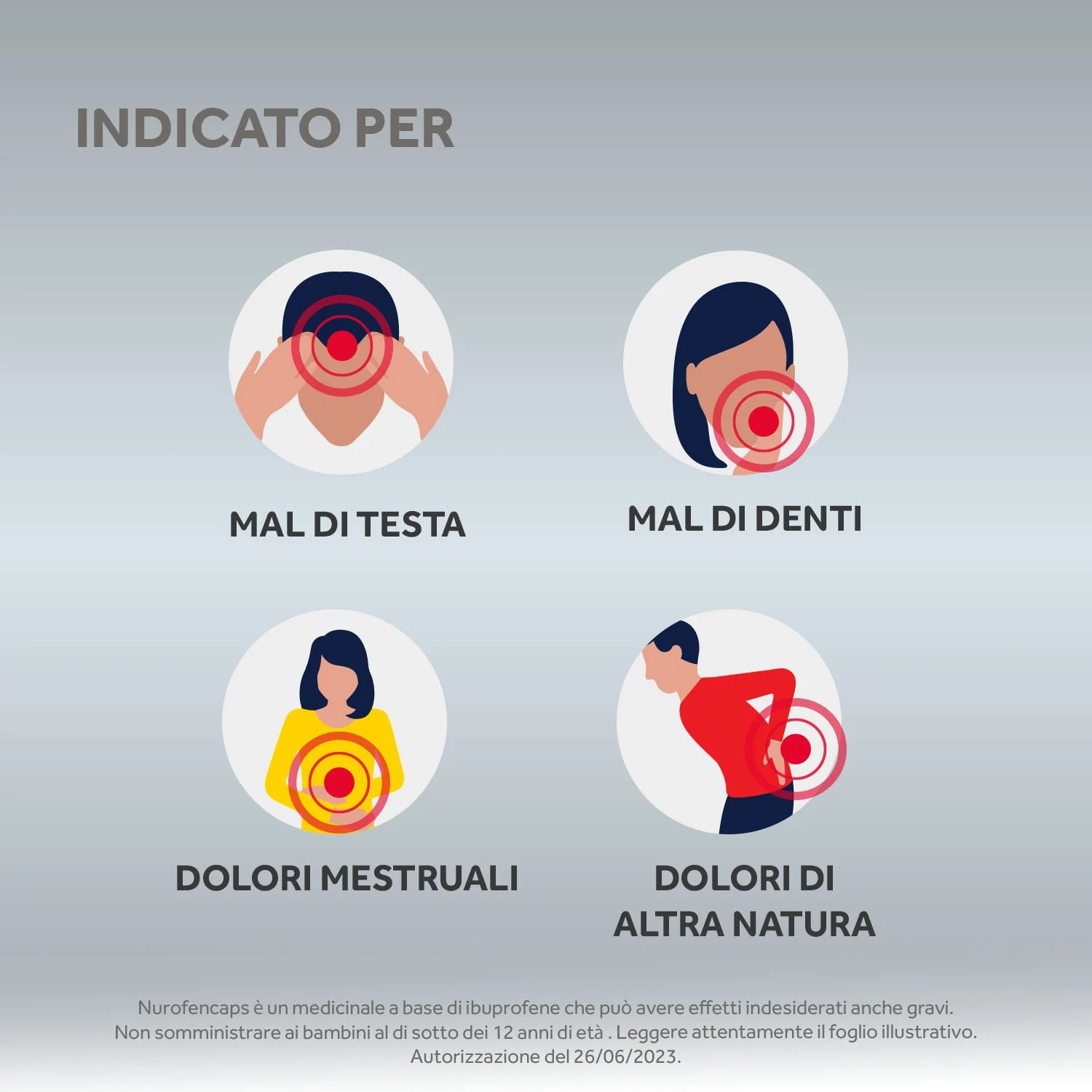
Nurofencaps is indicated in adults, children and adolescents weighing more than 40 kg (from 12 years of age) for the symptomatic treatment of mild to moderate pain, such as headache, menstrual cramps, toothache and pain associated with the common cold.
Ingredients and composition
ACTIVE INGREDIENTS:
Ibuprofen.
EXCIPIENTS:
Filling: macrogol 600, potassium hydroxide, purified water.
Gelatin shell: gelatin, sorbitol, liquid (E420), ponceau 4R (E124).
Ink: titanium dioxide (E171), propylene glycol, hypromellose (E464).
Processing aids: triglycerides (medium chain), lecithin (E322).
Directions for use and dosage
For oral use and only for a short period of treatment.
The capsules must not be chewed.
Undesirable effects can be minimised by using the lowest effective dose for the shortest duration of treatment necessary to control symptoms.
Adults, children and adolescents weighing more than 40 kg (from 12 years of age): the initial dose is one capsule to be taken with water.
Then, if necessary, one capsule every 6 hours.
Do not exceed the dose of 3 capsules (1200 mg) in 24 hours.
If the use of the medicine is necessary for more than 3 days in children and adolescents between 12 to 18 years of age, or in case of worsening of symptoms, a doctor should be consulted.
If in adults it is necessary to administer the product for more than 3 days in case of fever and 4 days for the treatment of pain, or if the symptoms worsen, consult your doctor.
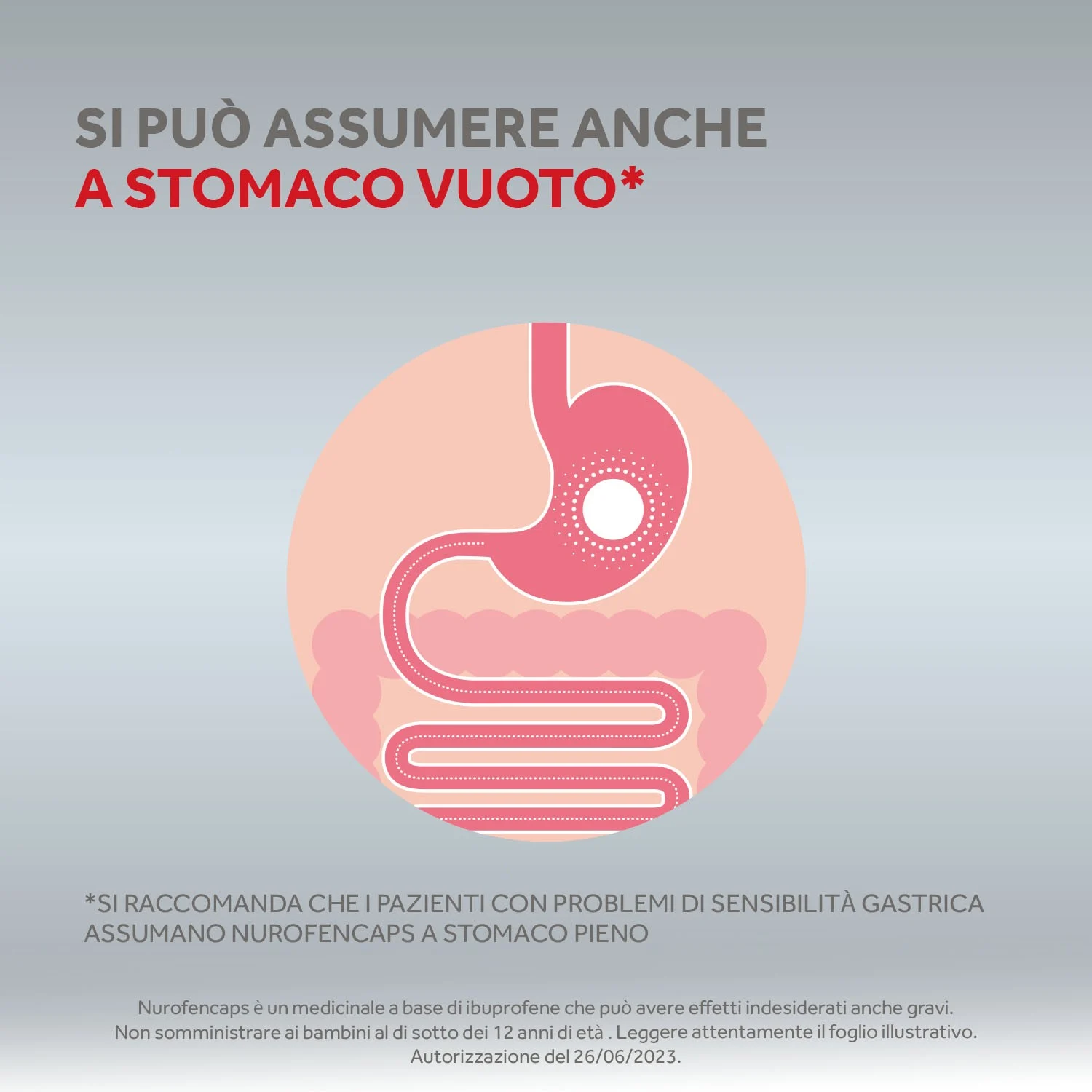
It is recommended that patients with gastric sensitivity problems take the medicine on a full stomach.
The onset of the effect may be delayed if the medicine is taken shortly after eating.
If this occurs, do not take a dose higher than the recommended one or wait until the necessary time has elapsed between one administration and the next.
Elderly: no special dose adjustment is required.
Due to the possible side effect profile, the elderly should be monitored with particular care.
Renal insufficiency: no dose reduction is required. Dose reduction in patients with mild to moderate renal impairment.
Hepatic impairment: No dose reduction is required in patients with mild to moderate hepatic impairment.
Warnings
Caution is required in patients with the following conditions, which may be exacerbated: - systemic lupus erythematosus and mixed connective tissue disease; - increased risk of aseptic meningitis; - congenital disorders of porphyrin metabolism (e.g. acute intermittent porphyria); - gastrointestinal disorders and chronic inflammatory bowel disease (ulcerative colitis, Crohn's disease; - hypertension and/or heart failure; - renal insufficiency, as renal function may be impaired; - liver dysfunction; - immediately after major surgery.
In patients who experience allergic reactions to other substances, as they are at higher risk of developing hypersensitivity reactions even during use; in patients who suffer from hay fever, nasal polyps, chronic obstructive respiratory disorders, or who have a history of allergic diseases, as there is an increased risk for these patients to develop allergic reactions.
These may manifest themselves in the form of asthma attacks, Quincke's edema or urticaria.
Gastrointestinal (GI) safety: concomitant use of other NSAIDs, including selective serotonin reuptake inhibitors (SNRIs), may increase the risk of developing allergic reactions. cyclooxygenase-2 increases the risk of adverse reactions and should be avoided.
Elderly: Elderly patients have an increased frequency of adverse reactions to NSAIDs, especially gastrointestinal bleeding and perforation, which may be fatal.
Gastrointestinal bleeding, ulceration and perforation: Gastrointestinal bleeding, ulceration and perforation, which can be fatal, have been reported with all NSAIDs at anytime during treatment, with or without warning symptoms or a previous history of serious gastrointestinal events.
When gastrointestinal bleeding or ulceration occurs following the administration of ibuprofen, treatment should be discontinued.
In the elderly and in patients with a history of ulcer, particularly if complicated with haemorrhage or perforation, the risk of gastrointestinal bleeding, ulceration or perforation is higher with increasing NSAID doses.
These patients should be started on ibuprofen at the usual time. treatment with the lowest available dose.
Concomitant use of protective agents (e.g.
misoprostol or proton pump inhibitors) should be considered for these patients and also for patients taking low-dose acetylsalicylic acid or other drugs likely to increase gastrointestinal risk.
Patients with a history of gastrointestinal toxicity, particularly when elderly, should report any unusual gastrointestinal symptoms (especially gastrointestinal bleeding) particularly in the initial stages of treatment.
Caution should be advised in patients receiving concomitant medications which could increase the risk of ulceration or bleeding, such as oral corticosteroids, anticoagulants such as warfarin, selective serotonin reuptake inhibitors (SSRIs) or anti-platelet agents such as acetylsalicylic acid.
NSAIDs should be administered with caution. With caution in patients with a history of gastrointestinal disease as these conditions may be exacerbated.
Skin reactions: Serious skin reactions, some of them fatal, including exfoliative dermatitis, Stevens-Johnson syndrome, and toxic epidermal necrolysis, have been reported very rarely in association with the use of NSAIDs.
Patients appear to be at higher risk early in the course of therapy: the onset of the reaction occurs in the majority of cases within the first month of treatment.
The product should be discontinued at the first appearance of skin rash, mucosal lesions, or any other sign of hypersensitivity.
Varicella may exceptionally be the cause of serious infectious complications of the skin and soft tissues.
Cardiovascular and cerebrovascular effects: Before starting treatment in patients with a history of If you have a positive test for hypertension and/or heart failure, caution is required (consult your doctor or pharmacist) since fluid retention, hypertension and edema have been reported in association with treatment with NSAIDs.
Clinical studies and epidemiological data suggest that the use of ibuprofen, particularly at high doses (2400 mg per day) and for long-term treatment, may be associated with a small increased risk of arterial thrombotic events (for example myocardial infarction or stroke).
Overall, epidemiological studies do not suggest that low doses of ibuprofen are associated with an increased risk of myocardial infarction.
Serious acute hypersensitivity reactions are observed very rarely.
At the first signs of a hypersensitivity reaction after administration/intake, therapy should be discontinued.
Medical rescue measures required Based on the symptoms, these should be undertaken by specialized personnel.
The active ingredient ibuprofen can temporarily inhibit platelet function, therefore it is recommended to carefully monitor patients with coagulation disorders.
In case of prolonged administration, regular monitoring of liver values, renal function and blood counts is required.
Prolonged use of any type of analgesic for headaches may worsen the symptoms.
If this situation occurs or is suspected, a doctor should be consulted and treatment should be discontinued.
The diagnosis of medication-overuse headache should be suspected in patients who experience frequent or daily headaches despite or because of the regular use of headache medications.
Habitual use of analgesics, especially combinations of different analgesic active ingredients, can lead to kidney damage. permanent with risk of developing renal failure.
This risk may be increased by salt loss and dehydration.
Undesirable effects related to the active substance, particularly those affecting the gastrointestinal tract or the central nervous system, may be increased when NSAIDs are taken in combination with alcohol.
There is some evidence that medicinal products that inhibit cyclooxygenase/prostaglandin synthesis may cause a weakening of female fertility by affecting ovulation.
This effect is reversible after discontinuation of treatment.
There is a risk of impaired renal function in dehydrated children and adolescents.
This medicinal product contains sorbitol: patients with rare hereditary problems of fructose intolerance should not take this medicine.
This medicinal product contains ponceau 4R (E124).
May cause reactions allergic.
Format
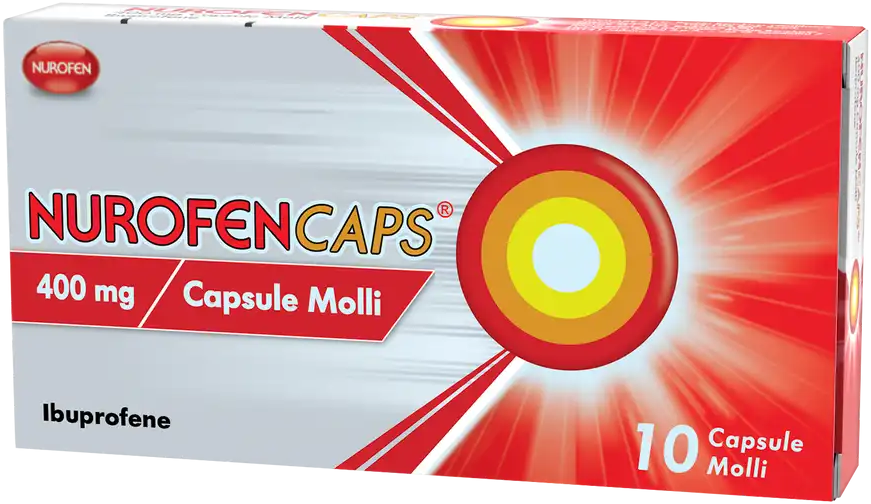
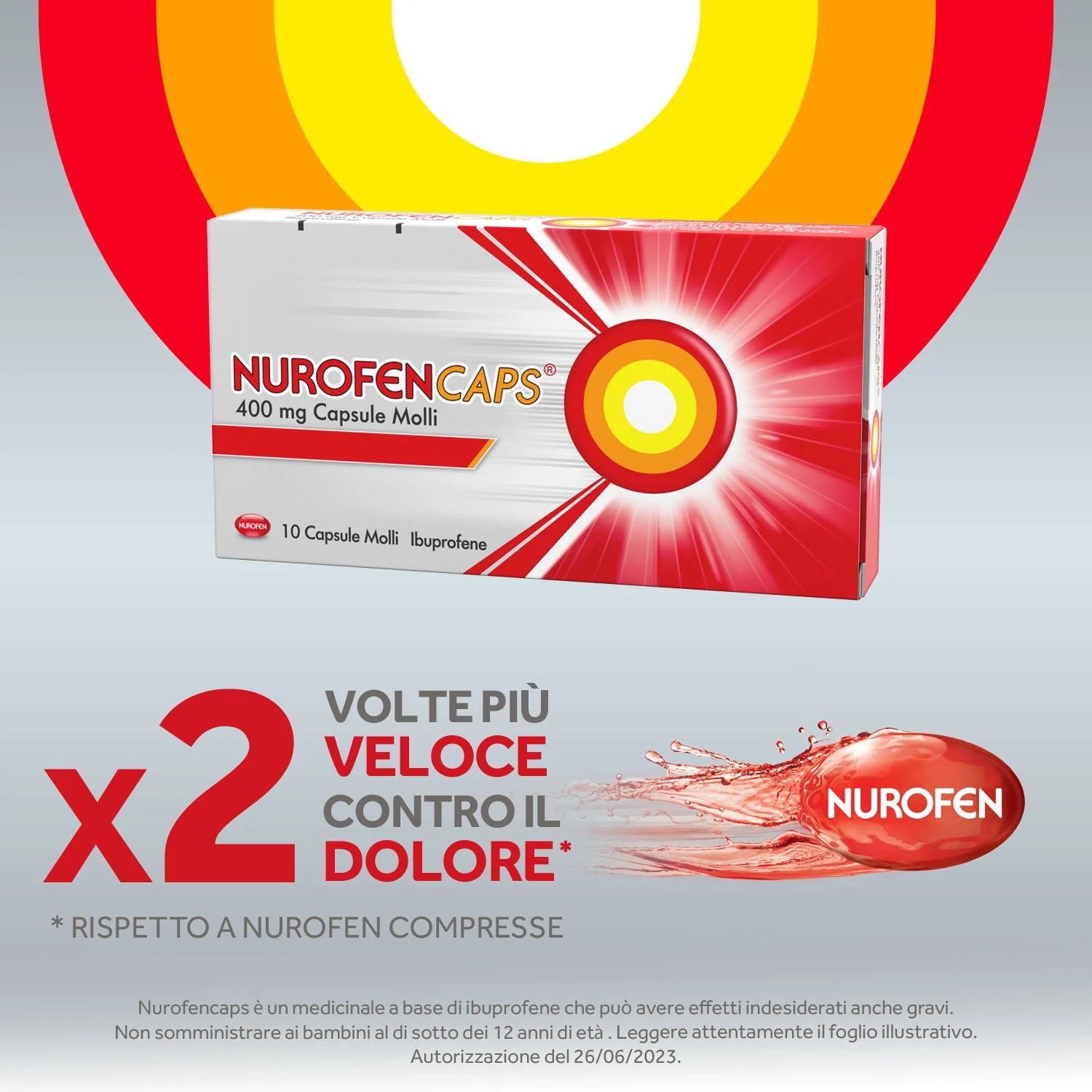
Pack of 10 soft capsules.
Product Code:FRCM082024






 Richiedi info sul prodotto