



- -23.47%

Recommended price

€22.19

 Richiedi info sul prodotto

Information on returns and shipments

Payment methods

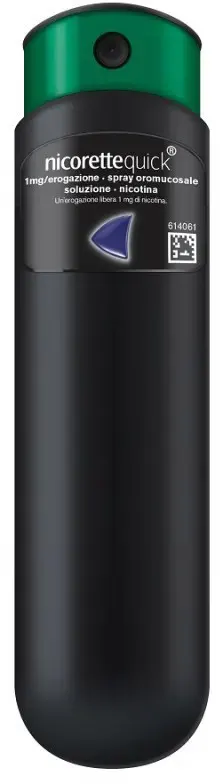
Medication used as an aid when trying to quit smoking.
Nicorettequick is used for the treatment of tobacco dependence in adults, by relieving nicotine withdrawal symptoms, including the craving to smoke during a smoking cessation attempt. The ultimate goal is permanent cessation of tobacco use. The use of Nicorettequick should preferably be combined with a behavioral support program.
One free spray 1 mg of nicotine in 0.07 ml of solution. 1 ml of solution contains 13.6 mg of nicotine. Excipients with known effect: Ethanol 7.1 mg/spray; Propylene glycol 11 mg/spray; Butylated hydroxytoluene 363 ng/spray. For the full list of excipients, see section 6.1.
Propylene glycol (E1520), Anhydrous ethanol, Trometamol, Poloxamer 407, Glycerol (E422), Sodium hydrogen carbonate, Levomenthol, Mint flavour, Refreshing flavour, Sucralose, Acesulfame potassium, Butylated hydroxytoluene (E321), Hydrochloric acid (for pH adjustment), Purified water.
Always use this medicine carefully according to the instructions on the package leaflet or as directed by your doctor or pharmacist. If you are not sure, consult your doctor or pharmacist.
NB: People under 18 years of age should not use Nicorettequick.
You must stop smoking completely during treatment with Nicorettquick.
The box below details the recommended procedure for using Nicorettequick®.
Use 1 or 2 puffs instead of the cigarette you would normally smoke or when you have a craving. Actuate once first and, if the craving does not go away after a few minutes, actuate a second time. If 2 puffs are needed, 2 consecutive puffs can be used in the future.
For most smokers, this is a good idea. This means 1 or 2 puffs every 30 minutes or 1 hour.
For example, if you smoke an average of 15 cigarettes a day, you should use 1 or 2 puffs at least 15 times throughout the day.
Do not use more than 2 puffs at a time or 4 puffs every hour over a 16-hour period. The maximum dose is 64 sprays over 16 hours in a 24-hour period.
Start reducing the number of sprays per day.
By the end of Week 9, the average number of sprays per day used in Phase 1 should be halved.
Continue reducing the number of sprays per day, so that you are using no more than 4 sprays per day by Week 12. When the number of sprays has been reduced to 2-4 per day, stop using Nicorettequick.
After stopping treatment, you may be tempted to start smoking again. Keep any remaining spray, as you may experience a sudden craving. If you feel the urge to smoke, use only one puff, or two puffs if the first one doesn't work within a few minutes.
Nicorettequick should normally be taken for a period of 3 to 6 months at most.
Consult your doctor if you need to use Nicorettequick for more than 6 months.
Nicorettequick should not be used by non-smokers. The benefits of quitting smoking outweigh any risks associated with the correct administration of nicotine replacement therapy (NRT). A benefit-risk assessment should be performed by appropriate medical professionals for patients with the following conditions:
Paediatric population
Doses of nicotine tolerated by smokers can cause serious toxicity in children, including fatal outcomes. Nicotine-containing products should not be left where they could be handled or ingested by children; See section.
Transmitted dependence: Transmitted dependence can occur, but is less harmful and easier to break than smoking dependence.
Smoking cessation
Polycyclic aromatic hydrocarbons in tobacco smoke induce the metabolism of drugs metabolized by CYP1A2 (and probably CYP1A1). When a smoker stops smoking, he or she may experience a slower metabolism, resulting in increased blood levels of these drugs. This is potentially more clinically relevant for products with a narrow therapeutic window, such as theophylline, tacrine, clozapine, and ropinirole. With cessation of tobacco use, the plasma concentrations of other medicinal products metabolized in part by CYP1A2 (e.g., imipramine, olanzapine, clomipramine, and fluvoxamine) may increase, although data to support this are limited and the possible clinical significance of this effect for these medicinal products is unknown. Limited data indicate that smoking may induce the metabolism of flecainide and pentazocine.
Excipients
The oromucosal spray contains small amounts of ethanol (alcohol), less than 100 mg per dose (1 or 2 actuations). This medicinal product contains less than 1 mmol (23 mg) sodium per actuation, i.e., it is essentially 'sodium-free'. This medicinal product contains 11 mg of propylene glycol per actuation, equivalent to 150 mg/mL. Due to the presence of butylated hydroxytoluene, Nicorettequick may cause localized skin reactions (e.g. contact dermatitis) or irritation to the eyes and mucous membranes. Care should be taken to avoid contact of the oromucosal spray with the eyes during administration.
If you smoke a cigarette while taking Nicorettequick®, you may experience an increased risk of developing adenosine. A nicotine overdose may occur.
If a child takes Nicorettequick® or if more Nicorettequick® has been used than should be, contact a doctor immediately or go to the nearest hospital. Doses of nicotine tolerated by adult smokers can cause serious symptoms of poisoning during treatment, even fatal, in children. Keep this medicine out of the sight and reach of children.
Symptoms of overdose are nausea, excessive salivation, stomach pain, diarrhoea, sweating, headache, dizziness, hearing impairment and extreme weakness. At high doses, the above symptoms may be followed by low blood pressure, a weak and irregular heartbeat, difficulty breathing, excessive tiredness, circulatory collapse, and generalized convulsions.
Nicotine withdrawal effects: Regardless of the means used, a variety of symptoms are known to be associated with the cessation of habitual tobacco use. These include emotional or cognitive effects such as dysphoria or depressed mood; insomnia; irritability, frustration, or anger; anxiety; difficulty concentrating; and restlessness or impatience.
Physical effects may also occur, such as a decrease in heart rate; increased appetite or weight gain, dizziness or presyncopal symptoms, cough, constipation, bleeding gums or aphthous ulceration, or nasopharyngitis. Additionally, and of clinical importance, nicotine cravings may be associated with the cessation of habitual tobacco use. cause a profound urge to smoke.
Nicorettequick may cause adverse reactions similar to those associated with nicotine taken in other ways and are mainly dose-dependent. In predisposed individuals, allergic reactions such as angioedema, urticaria, or anaphylaxis may occur. Local adverse effects of administration are similar to those observed with other forms taken orally.
In the first few days of treatment, irritation of the mouth and throat may occur; hiccups are also a particularly common effect. Tolerance is normal with prolonged use. Daily data collection from study subjects demonstrated that the most common adverse events were reported with an onset in the first 2-3 weeks of use of the oromucosal spray and then decreased.
Adverse reactions observed with oromucosal nicotine formulations identified from clinical studies and during post-marketing experience are presented below. The frequency category was estimated from clinical trials for adverse reactions identified during post-marketing experience. Very common (>1/10); common (>1/100 to <1/10); uncommon (>1/1,000 to <1/100); rare (>1/10,000 to <1/1,000); very rare (<1/10,000); not known (cannot be estimated from the available data).
| System Organ Class | Reported Adverse Reactions |
| Immune system disorders | |
| Common | Hypersensitivity |
| Not known | Allergic reactions, including angioedema and anaphylaxis |
| Psychiatric disorders | |
| Uncommon | Abnormal dreams |
| Nervous system disorders | |
| Very common | Headache |
| Common | Dysgeusia, paraesthesia |
| Eye disorders | |
| Not known | Blurred vision, increased lacrimation |
| Cardiac disorders | |
| Uncommon | Palpitations, tachycardia |
| Not known | Atrial fibrillation |
| Vascular disorders | |
| Uncommon | Flushing, hypertension |
| Respiratory, thoracic and mediastinal disorders: | |
| Very common | Hiccup, throat irritation |
| Uncommon | Bronchospasm, rhinorrhea, dysphonia, dyspnoea, nasal congestion, oropharyngeal pain, sneezing, throat tightness |
| Gastrointestinal disorders | |
| Very Common | Nausea |
| Common | Abdominal pain, dry mouth, diarrhoea, dyspepsia, flatulence, salivary hypersecretion, stomatitis, vomiting |
| Uncommon | Eructations, gingival bleeding, glossitis, oral mucosal blistering and peeling, oral paraesthesia |
| Rare | Dysphagia, oral hypoaesthesia, retching |
| Not known | Dry throat, gastrointestinal discomfort, lip pain. |
| Skin and subcutaneous tissue disorders | |
| Uncommon | Hyperhidrosis, pruritus, rash, urticaria |
| Not known | Erythema |
| General disorders and administration site conditions | |
| Common | Burning sensation, fatigue |
| Uncommon | Asthenia, chest discomfort and pain, malaise |
Women of childbearing potential / Contraception in males and females: The adverse effects of tobacco smoking on conception and human pregnancy are known, while the effects of nicotine-based therapeutic treatment are unknown. Therefore, since specific recommendations regarding the need for female contraception have not been considered necessary to date, the most common condition is the use of nicotine in pregnant women. It is prudent for women planning to become pregnant not to smoke or use NRT. For men, smoking is known to have adverse effects on male fertility, but there is no evidence that men need special contraceptive measures during NRT treatment.
Pregnancy: Smoking during pregnancy is associated with risks such as intrauterine growth retardation, premature birth, or stillbirth. Quitting smoking is the only truly effective intervention to improve the health of the pregnant smoker and her baby. The earlier abstinence is achieved, the better the outcome. Nicotine is transmitted to the fetus, affecting its respiratory movements and circulation. The effect on circulation is dose-dependent. Therefore, pregnant smokers should always be advised to quit smoking completely without resorting to nicotine replacement therapy. The risk of continuing to smoke may be significant. pose more serious risks to the fetus than the use of nicotine replacement products in a supervised tobacco cessation program. Use of Nicorettequick by a pregnant smoker should be undertaken only on the advice of a healthcare professional.
Breastfeeding: Nicotine passes freely into breast milk in quantities sufficient to affect the baby, even at therapeutic doses. Therefore, Nicorettequick should be avoided while breastfeeding. If smoking is not stopped, use of Nicorettequick by breastfeeding smokers should be undertaken only on the advice of a healthcare professional. Women should take the product immediately after breastfeeding and wait as long as possible (2 hours is recommended) before the next breastfeeding.
Fertility: Smoking increases the risk of infertility in women and men. In vitro studies have shown that nicotine can negatively affect human sperm quality. In rats, reduced fertility and impaired sperm quality have been demonstrated.
1 13ml vial (150 doses).
This product has been on sale since 16/03/2022
In the last 30 days, the product's lowest price was 35,14 €

Estimated delivery: 1-3 business days

Estimated delivery: 1-3 business days

Estimated delivery: 1-3 business days


