




- -41.94%

Recommended price

€8.71
 Richiedi info sul prodotto

Information on returns and shipments

Payment methods


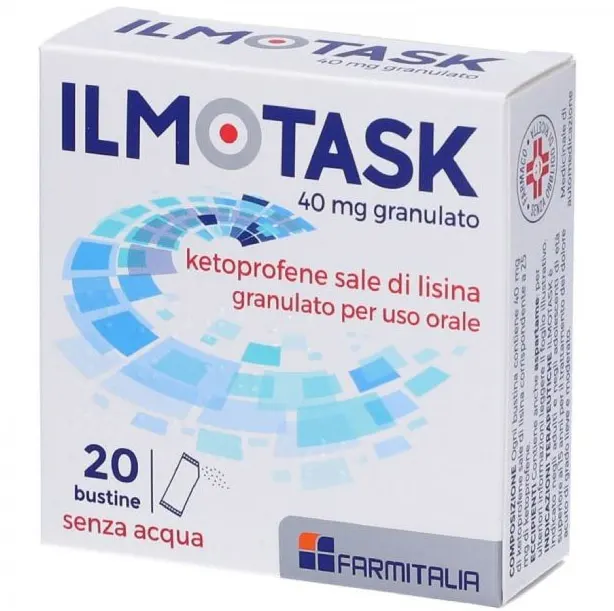
IlMotask sachets are indicated for the treatment of acute and moderate pain such as toothache, menstrual pain, neck pain, and headaches.
By taking IlMotask orodispersible sachets, it is possible to quickly relieve pain such as headache, menstrual pain, toothache, and neck pain thanks to its dual action that acts directly on inflammation, providing rapid relief.
One sachet contains; active ingredient: ketoprofen lysine salt 40 mg (corresponding to 25 mg of ketoprofen). Excipient with known effects: aspartame. For the full list of excipients.
Mannitol, Xylitol, Lime Flavoring, Lemon Flavoring, Frescofort Flavoring, Aspartame, Talc, Basic Butylated Methacrylate Copolymer, Magnesium Stearate, Hydrated Colloidal Silica, Hypromellose, Stearic Acid, Povidone, Sodium Lauryl Sulfate.
Unless otherwise specified, follow the instructions on the product packaging.
Administer with caution in patients with allergic reactions or a history of allergies. Treatment with ketoprofen lysine salt should be discontinued at the first appearance of skin rash, mucosal lesions, or any other sign of hypersensitivity. Undesirable effects can be minimized by using the lowest effective dose for the most effective treatment. shortest possible duration of treatment as needed to control symptoms. Concomitant use of ILMOTASK with other NSAIDs, including cyclooxygenase-2 selective inhibitors, should be avoided.
Elderly: Elderly patients have an increased frequency of adverse reactions to NSAIDs, especially gastrointestinal bleeding and perforation, which may be fatal. As with other NSAIDs, in the presence of an infection, it should be borne in mind that the anti-inflammatory, analgesic, and antipyretic properties of ketoprofen may mask common symptoms of the progression of the infection, such as fever.
Cardiovascular and cerebrovascular effects
Adequate monitoring and advice are necessary in patients with a history of hypertension and/or mild to moderate congestive heart failure, as fluid retention, hypertension, and edema have been reported in association with NSAID treatment. Clinical trials and epidemiological data suggest that the use of some NSAIDs (particularly at high doses and in long-term treatment) may be associated with a small increased risk of arterial thrombotic events (e.g., myocardial infarction or stroke). There are insufficient data to exclude a similar risk for ketoprofen lysine salt when administered at a daily dose of one sachet, as a single dose, or repeated 2-3 times a day. Patients with uncontrolled hypertension, congestive heart failure, established ischemic heart disease, peripheral arterial disease, and/or cerebrovascular disease should be treated with ketoprofen lysine salt, as with all NSAIDs, only after careful consideration. Similar consideration should be made before initiating long-term treatment in patients with risk factors for cardiovascular disease (e.g. hypertension, hyperlipidaemia, diabetes mellitus, smoking).
Gastrointestinal effects
Gastrointestinal bleeding, ulceration, and perforation, which can be fatal, have been reported with all NSAIDs at anytime during treatment, with or without warning symptoms or a previous history of serious gastrointestinal events. Some epidemiological evidence suggests that ketoprofen lysine salt may be associated with a higher risk of serious gastrointestinal toxicity compared to other NSAIDs, particularly at high doses. In the elderly and in patients with a history of ulcers, particularly if complicated with haemorrhage or perforation, the risk of gastrointestinal bleeding, ulceration, or perforation is higher with increasing NSAID doses. These patients should start treatment on the lowest available dose. Concomitant use of protective agents (misoprostol or proton pump inhibitors) should be considered for these patients, as well as for patients taking low-dose aspirin or other drugs that may increase the risk of gastrointestinal events. Patients with a history of gastrointestinal toxicity, particularly the elderly, should report any unusual gastrointestinal symptoms (especially gastrointestinal bleeding), particularly in the initial stages of treatment. Caution should be exercised in patients taking concomitant medications that may increase the risk of ulceration or bleeding, such as oral corticosteroids, anticoagulants such as warfarin, selective serotonin reuptake inhibitors, or antiplatelet agents such as aspirin. If gastrointestinal bleeding or ulceration occurs in patients taking Ketoprofen lysine salt, treatment should be discontinued. NSAIDs should be administered with caution to patients with a history of gastrointestinal disease (ulcerative colitis, Crohn's disease), as these conditions may be exacerbated.
Skin Effects
Serious skin reactions, some of them fatal, including exfoliative dermatitis, Stevens-Johnson syndrome, and toxic epidermal necrolysis, have been reported very rarely in association with the use of NSAIDs. Patients appear to be at highest risk early in the course of therapy, with the onset of the reaction occurring in most cases within the first month of treatment. Ketoprofen lysine salt should be discontinued at the first appearance of skin rash, mucosal lesions, or any other sign of hypersensitivity.
Renal and Hepatic Effects
As with all NSAIDs, the medicine may increase plasma urea nitrogen and creatinine. As with other prostaglandin synthesis inhibitors, ketoprofen lysine salt may be associated with adverse events on the renal system, which can lead to glomerular nephritis, renal papillary necrosis, nephrotic syndrome, and acute renal failure. Renal function should be carefully monitored at the beginning of treatment in patients with heart failure, cirrhosis and nephrosis, in patients on diuretic therapy, and in chronic renal failure, particularly if elderly. In these patients, the administration of ketoprofen lysine salt may cause a reduction in renal blood flow, caused by prostaglandin inhibition, and lead to renal impairment. As with other NSAIDs, the drug may cause small, transient increases in some liver parameters and also significant increases in SGOT and SGPT. If these parameters increase significantly, therapy should be discontinued. In patients with impaired liver function or previous liver disease, transaminases should be regularly assessed, particularly during long-term therapy. Cases of jaundice and hepatitis have been reported with ketoprofen lysine salt. Caution is required when administering ketoprofen lysine salt to patients with hepatic porphyria, as it may trigger an attack. Ketoprofen lysine salt should be administered with caution to patients with haematopoietic disorders, systemic lupus erythematosus, or mixed connective tissue diseases. The use of NSAIDs may impair fertility and is not recommended in women attempting to conceive. Ketoprofen should be discontinued in women who have difficulty conceiving or who are undergoing investigation of infertility. Treatment should be discontinued if visual disturbances such as blurred vision occur. Patients with asthma associated with chronic rhinitis and allergy, chronic sinusitis, and/or nasal polyps are at greater risk of allergy to aspirin and/or NSAIDs than the general population. Administration of this medicine may increase the risk of developing aspirin and/or NSAID allergy. cause asthma attacks or bronchospasm, especially in subjects allergic to acetylsalicylic acid (aspirin) or NSAIDs. Therefore, in these subjects, as well as in cases of chronic obstructive pulmonary disease or nephropathy, the medicine should only be used under medical supervision. To avoid possible hypersensitivity or photosensitivity reactions, it is advisable to avoid sun exposure during use.
Important information about some excipients
ILMOTASK contains 10.56 mg of aspartame per dose (1 sachet), equivalent to 31.78 mg per maximum recommended daily dose (3 sachets). Aspartame is a source of phenylalanine. It may cause asthma attacks or bronchospasm, especially in subjects allergic to acetylsalicylic acid (aspirin) or NSAIDs. be harmful in patients with phenylketonuria.
ILMOTASK must not be administered in the following cases:
The most commonly observed adverse events are gastrointestinal in nature. Peptic ulcers, perforation, or gastrointestinal bleeding, sometimes fatal, particularly in the elderly, may occur. The frequency and severity of these effects are reduced when the medicine is taken with food. Manifestations of hypersensitivity may take the form of severe systemic reactions (laryngeal edema, glottis edema, dyspnea, palpitations) up to anaphylactic shock. In these cases, immediate medical assistance is required. The following adverse reactions have been observed following the administration of ketoprofen lysine salt in adults. The frequency of adverse events is classified as follows: very common (>1/10); common (≥1/100, <1> Infections and infestations Not known: aseptic meningitis, lymphangitis
Blood and lymphatic system disorders: Rare: haemorrhagic anaemia. Not known: agranulocytosis, thrombocytopenia, bone marrow aplasia, haemolytic anaemia, leukopenia, neutropenia, aplastic anaemia, leukocytosis, thrombocytopenic purpura.
Immune system disorders: Not known: anaphylactic reactions (including shock), hypersensitivity.
Psychiatric disorders: Not known: depression, hallucinations, mood alterations, excitability, insomnia.
Nervous system disorders: Uncommon: headache, dizziness, somnolence. Rare: paraesthesia. Not known: syncope, convulsions, dysgeusia, tremor, hyperkinesia, dyskinesia, Dizziness.
Eye disorders: Rare: Blurred vision. Not known: Periorbital oedema.
Ear and labyrinth disorders: Rare: Tinnitus.
Cardiac disorders: Not known: Cardiac failure, palpitations, tachycardia.
Vascular disorders: Not known: Hypotension, hypertension, vasodilation, vasculitis.
Respiratory, thoracic and mediastinal disorders: Rare: Asthma. Not known: Laryngeal oedema, bronchospasm (especially in patients with known hypersensitivity to acetylsalicylic acid and other NSAIDs), rhinitis, dyspnoea, laryngospasm, acute respiratory failure.
Gastrointestinal disorders: Common: Nausea, vomiting, dyspepsia, abdominal pain. Uncommon: Constipation, diarrhoea, flatulence, gastritis. Rare: Ulcerative stomatitis, peptic ulcer. Not known: Note: Exacerbation of colitis and Crohn's disease, gastrointestinal bleeding and perforation, gastric ulcer, duodenal ulcer, pancreatitis, melaena, haematemesis, gastric pain, erosive gastritis, tongue edema.
Hepatobiliary disorders: Rare: Hepatitis, increased serum transaminase levels, elevated serum bilirubin levels due to liver disorders, jaundice.
Skin and subcutaneous tissue disorders: Uncommon: rash, pruritus. Not known: photosensitivity, alopecia, urticaria, angioedema, bullous eruptions, including Stevens-Johnson syndrome, Lyell syndrome and toxic epidermal necrolysis, erythema, exanthema, maculopapular rash, purpura, dermatitis.
Renal and urinary disorders: Not known: fluid retention, Haematuria, acute renal failure, tubulointerstitial nephritis, nephritic syndrome, glomerular nephritis, acute tubular necrosis, renal papillary necrosis, nephrotic syndrome, oliguria, renal function test abnormalities, dysuria.
General disorders and administration site conditions: Uncommon: edema, fatigue. Not known: chills, asthenia, facial edema, peripheral edema.
Investigations: Rare: weight gain.
Reporting of suspected adverse reactions Reporting suspected adverse reactions after authorisation of the medicinal product is important. It allows continued monitoring of the benefit/risk balance of the medicinal product.
Cases of overdose with doses greater than 2.5 g of ketoprofen lysine salt have been reported. In most cases, the symptoms observed include: Lethargy, drowsiness, nausea, vomiting, and epigastric pain. Symptoms of overdose may also include central nervous system disturbances, such as headache, dizziness, confusion, and loss of consciousness. Hypotension, respiratory depression, and cyanosis may occur. Renal failure, convulsions, and coma have also been reported. A single case of anxiety, visual hallucinations, hyperexcitability, and behavioral changes has been reported in a pediatric patient who had taken twice the recommended dose. The symptoms resolved spontaneously within 1-2 days. There are no specific antidotes for an overdose of ketoprofen lysine salt. If a serious overdose is suspected, gastric lavage and the institution of supportive and symptomatic therapies are recommended to compensate for dehydration, monitor renal function, and correct acidosis if present. In cases of renal failure, hemodialysis may be useful to remove the drug from the body. circulation.
Pregnancy
Inhibition of prostaglandin synthesis may adversely affect pregnancy and/or embryo/fetal development. Results of epidemiological studies suggest an increased risk of miscarriage and cardiac malformation and gastroschisis after use of a prostaglandin synthesis inhibitor in early pregnancy. The absolute risk of cardiac malformations increased from less than 1% to approximately 1.5%. The risk is believed to increase with dose and duration of therapy. In animals, administration of prostaglandin synthesis inhibitors has been shown to result in increased pre- and post-implantation loss, embryo-fetal mortality, and an increased incidence of various malformations, including cardiovascular. Therefore, ketoprofen should not be administered during the first and second trimesters of pregnancy unless strictly necessary. If the Ketoprofen is used in women attempting to conceive or during the first and second trimester of pregnancy. The dose and duration of treatment should be kept as low as possible. During the third trimester of pregnancy, all prostaglandin synthesis inhibitors may expose the fetus to:
ILMOTASK is therefore contraindicated. during the third trimester of pregnancy.
Breastfeeding
Since there are no data available on the secretion of ketoprofen lysine salt in breast milk, ketoprofen should not be administered during breastfeeding. Fertility The use of ketoprofen lysine salt, as with any drug inhibiting the synthesis of prostaglandins and cyclooxygenase, is not recommended in women attempting to conceive. Administration of ketoprofen lysine salt should be suspended in women who have fertility problems or who are undergoing fertility investigations.
Pack of 20 sachets.
This product has been on sale since 11/07/2024
In the last 30 days, the product's lowest price was 9,16 €

Estimated delivery: 1-3 business days

Estimated delivery: 1-3 business days

Estimated delivery: 1-3 business days

Estimated delivery: 1-3 business days


Estimated delivery: 1-3 business days

Estimated delivery: 1-3 business days