Symptomatic treatment of irritation-inflammatory conditions of the throat.
Indications
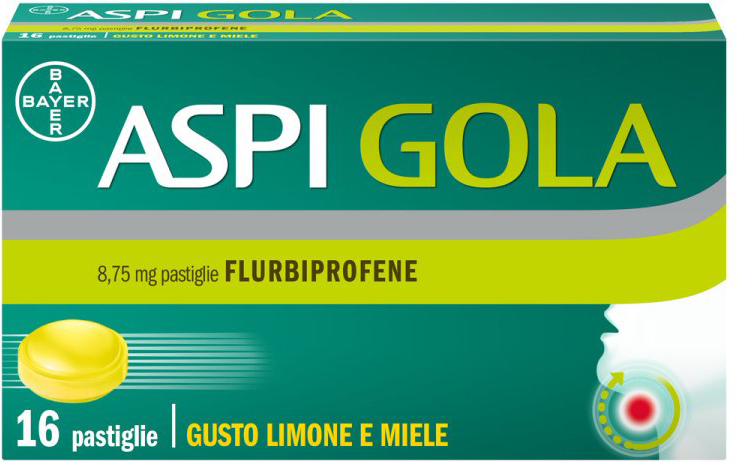
Aspi Gola Lemon and Honey Flavored Lozenges Symptomatic treatment of irritation-inflammatory conditions also associated with pain in the oropharyngeal cavity (e.g. gingivitis, stomatitis, pharyngitis).
Active ingredients
flurbiprofen 8.75mg Excipients with known effects: Glucose, sucrose.
Excipients
macrogol, potassium hydroxide, lemon flavoring, levomenthol, honey.
How to use
Undesirable effects can be minimized by using the lowest effective dose for the highest effective dose. Shortest possible duration of treatment needed to control symptoms.
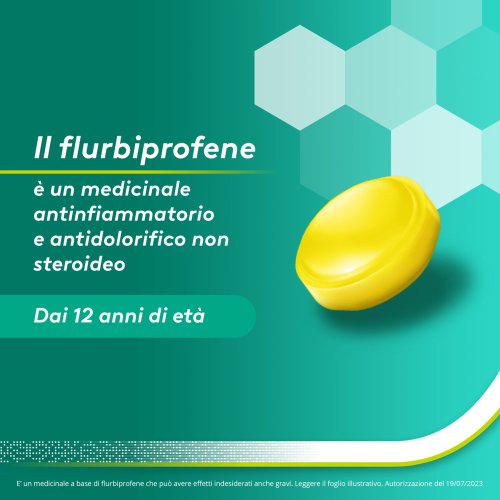
Aspi Gola Lemon and Honey Flavored Lozenges Adults and children over 12 years: 1 lozenge to dissolve slowly in the mouth every 3-6 hours, as needed. Do not exceed 8 lozenges in 24 hours. Do not administer to children under 12 years of age.
No dosage changes are necessary for elderly people.
Warnings
At the recommended doses, when using the product in its various pharmaceutical forms, any swallowing does not cause any harm to the patient, as the dose of flurbiprofen is much lower than that commonly used in systemic treatments. Use of the product, especially if prolonged, may give rise to sensitization or local irritation; in such cases, treatment should be discontinued and a doctor should be consulted to institute appropriate therapy, if necessary. In patients with renal, cardiac, or hepatic insufficiency, the product should be used with caution. It is advisable not to combine the product with other NSAIDs.
Cases of bronchospasm have been reported with flurbiprofen in patients with a history of bronchial asthma. Gastrointestinal Effects: Flurbiprofen should be administered with caution to patients with a history of peptic ulcer and other gastrointestinal diseases, as these conditions may be exacerbated.
The risk of gastrointestinal bleeding, ulceration, or perforation is higher with increasing flurbiprofen dosage in patients with a history of ulcer, particularly if complicated by hemorrhage and perforation, and in the elderly.
These patients should initiate treatment with the lowest available dose. Gastrointestinal bleeding, ulceration, or perforation have been reported with all NSAIDs at any time during treatment.
These adverse events can be fatal and may occur with or without warning symptoms or in the case of a previous history of serious gastrointestinal events. Patients with a history of gastrointestinal disease, especially when elderly, should report any unusual abdominal symptoms (especially gastrointestinal bleeding) early in the course of treatment.
Elderly patients have an increased frequency of adverse reactions to NSAIDs, especially gastrointestinal bleeding and perforation, which may be fatal.
Undesirable effects may be minimised by using the lowest effective dose for the shortest duration necessary to control symptoms.
Important information about some of the excipients Aspi Gola Lemon and Honey Flavour Lozenges contain: 1.095 g glucose and 1.375 g sucrose per lozenge.
Patients with rare hereditary problems of fructose intolerance, glucose-galactose malabsorption, or sucrase-isomaltase insufficiency should not take this medicine.
Do not use for long-term treatment.
After short periods of treatment without appreciable results, consult your doctor.
Contraindications
Flurbiprofen is contraindicated in patients with known hypersensitivity (asthma, bronchospasm, urticaria, or allergic-type) to flurbiprofen or to any of the excipients, and to acetylsalicylic acid or other nonsteroidal anti-inflammatory drugs (NSAIDs). Flurbiprofen is also contraindicated in patients with a history of gastrointestinal bleeding or perforation related to previous NSAID treatment.
Flurbiprofen should not be taken by patients with active or a history of ulcerative colitis, Crohn's disease, recurrent peptic ulcer, or gastrointestinal bleeding (defined as two or more distinct episodes of proven ulceration or bleeding). Flurbiprofen is contraindicated in patients with severe heart failure. Third trimester of pregnancy.
Interactions
Caution should be exercised in patients treated with any of the following medications, as interactions have been reported in some patients. However, inform your doctor if you are taking other medications.
Aspirin: As with other NSAID-containing medicines, concomitant administration of flurbiprofen and aspirin is generally not recommended due to the potential for increased adverse effects. Antiplatelet agents: Increased risk of gastrointestinal bleeding. Selective serotonin reuptake inhibitors (SSRIs): Increased risk of gastrointestinal bleeding. Corticosteroids: Increased risk of gastrointestinal ulceration or bleeding with NSAIDs. Cox-2 inhibitors and other NSAIDs: Concomitant use of other NSAIDs, including cyclooxygenase-2 selective inhibitors, should be avoided due to potential additive effects.
Undesirable effects
The following undesirable effects have been reported, particularly after administration of systemic formulations:Blood and lymphatic system disorders Thrombocytopenia, aplastic anaemia and agranulocytosis Immune system disorders Anaphylaxis, angioedema, allergic reaction Nervous system disorders Dizziness, cerebrovascular accident, visual disturbance, optic neuritis, migraine, paraesthesia, depression, confusion, hallucination, vertigo, discomfort, fatigue and drowsinessEar and labyrinth disorders TinnitusRespiratory, thoracic and mediastinal disorders Respiratory tract reactivity (asthma, bronchospasm and dyspnoea) Gastrointestinal disorders The most commonly observed adverse events are gastrointestinal in nature. Nausea, vomiting, diarrhoea, flatulence, constipation, dyspepsia, abdominal pain, melaena, haematemesis, ulcerative stomatitis, gastrointestinal haemorrhage and exacerbation of colitis and Crohn's disease have been reported following administration of flurbiprofen. Less frequently, gastritis, peptic ulcer, perforation, and ulcer haemorrhage have been observed.Skin and subcutaneous tissue disordersSkin disorders including rash, pruritus, urticaria, purpura, and very rarely bullous dermatoses (including Stevens-Johnson syndrome, toxic epidermal necrolysis, and erythema multiforme).Renal and urinary disordersNephrotoxicity in various forms, including interstitial nephritis and nephrotic syndrome. As with other NSAIDs, rare cases of renal failure have been reported. Topical use of the product, especially if prolonged, may give rise to sensitization or local irritation. Dissolution of the product in tablet form in the oral cavity may be accompanied by sensations of heat or tingling in the oropharynx. In such cases, treatment should be discontinued and appropriate therapy instituted, if necessary.
Overdose
Given the low active ingredient content and local use, overdose is unlikely to occur. Symptoms Symptoms of overdose may include nausea, vomiting, and gastrointestinal irritation. Treatment Treatment should include gastric lavage and, if necessary, correction of serum electrolyte levels. There is no specific antidote for flurbiprofen.
Pregnancy and breastfeeding
During the first and second trimester of pregnancy, flurbiprofen should not be administered unless strictly necessary. Administration of flurbiprofen is not recommended in nursing mothers.
Format
16 tablets.
Product Code:FRCM117013










 Richiedi info sul prodotto