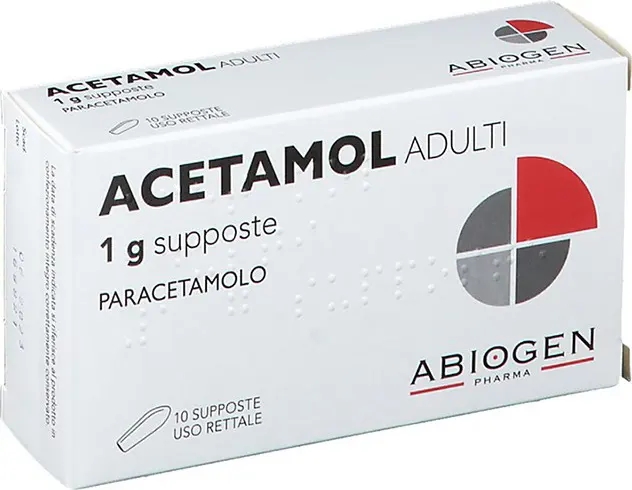
Suppositories
Composition:
ACETAMOL 300 mg effervescent granules One sachet contains: Active ingredient: paracetamol 300 mg ACETAMOL adults 500 mg tablets One tablet contains: Active ingredient: paracetamol 500 mg ACETAMOL early childhood 25 mg/mL syrup 1 ml of syrup contains: Active ingredient: paracetamol 25 mg 100 ml of syrup contain: Active ingredient: paracetamol 2.5 g ACETAMOL early childhood 100 mg / mL oral drops, solution 30 ml of oral drops contain: Active ingredient: paracetamol 3 g One drop contains: Active ingredient: paracetamol 2.8 mg ACETAMOL adults 1 g suppositories One suppository contains: Active ingredient: paracetamol 1 g ACETAMOL 500 mg suppositories One suppository contains: Active ingredient: paracetamol 500 mg ACETAMOL children 250 mg suppositories One suppository contains: Active ingredient: paracetamol 250 mgACETAMOL infants 125 mg suppositories One suppository contains: Active ingredient: paracetamol 125 mg
Excipients
ACETAMOL 300 mg effervescent granules: Citric acid, sodium bicarbonate, compressible sugar. ACETAMOL adults 500 mg tablets: Potato starch, polyvinylpyrrolidone, magnesium stearate. ACETAMOL infants 25 mg/mL syrup: Macrogol 6000, glycerol, methyl parahydroxybenzoate, propyl parahydroxybenzoate, sucrose, disodium phosphate dihydrate, monobasic sodium phosphate dihydrate, strawberry cream flavouring, purified water. ACETAMOL early childhood 100 mg / mL oral drops, solution: Macrogol 300, glycerol, diethylene glycol monoethyl ether, sorbitol, sodium saccharin, propyl gallate, orange flavoring, lemon flavoring, purified water. ACETAMOL suppositories: Semi-synthetic glycerides, soy lecithin.
Therapeutic indications
Symptomatic treatment of fever and mild to moderate pain.
Contraindications
Hypersensitivity to the active substance, to any of the excipients or other closely related substances from a chemical point of view, in particular to other analgesics and antipyretics.
Dosage
Under three months, in case of jaundice, it is advisable to reduce the single oral dose. For children, it is essential to follow the dosage established based on their body weight and therefore choose the appropriate formulation. In adults, the maximum oral dosage is 3000 mg and rectally 4000 mg of paracetamol per day. ACETAMOL 300 mg effervescent granules Children aged 8 to 12 years and weighing more than 25 kg Use the medicine only after consulting your doctor and follow his instructions regarding doses and duration of treatment. One 300 mg sachet every 4–6 hours (never less than 4 hours between each one). Do not exceed 6 sachets in 24 hours. Adolescents aged 12 to 18 years and weighing more than 40 kg One 300 mg sachet every 4–6 hours (never less than 4 hours between each one). If necessary, the dose can be increased up to 600 mg by taking two sachets together. Do not exceed 3 g (10 sachets) in 24 hours. Adults One dose of 600–900 mg of paracetamol (corresponding to 2–3 sachets), which can be repeated, if necessary, every 4–6 hours. Do not exceed 3 g (10 sachets) in 24 hours. Duration of treatment Generally, common causes of fever or pain resolve quickly. Consult your doctor if the symptoms last more than three days. ACETAMOL adults 500 mg tabletsAdolescents aged 12 to 18 years and weighing more than 40 kg One 500 mg tablet every 4–6 hours (never less than 4 hours between each tablet). Do not exceed 3 g (6 tablets) in 24 hours. Adults One dose of 500–1000 mg of paracetamol (1–2 tablets) every 4–6 hours (never less than 4 hours between each tablet). Do not exceed 3 g (6 tablets) in 24 hours. Duration of treatment Common causes of fever or pain generally resolve quickly. Consult your doctor if the symptoms last more than three days. ACETAMOL early childhood 25 mg/mL syrup Use the medicine only after consulting your doctor and follow his instructions regarding doses and duration of treatment. The package contains a 5 mL measuring syringe for oral administration, graduated with 0.5 mL marks, one mark corresponding to 12.5 mg of paracetamol. Children up to 18 months and weighing more than 3 kg Normally can The dose of 25 mg should be administered for every 2 kg of weight, corresponding to 1 milliliter (mL) of syrup every 6 hours (never less than 4 hours between one dose and the next). The table contains some examples in relation to weight.
| | Dose to be administered every 6 hours |
| weight in kg | in milliliters of syrup | NEVER exceed 4 doses in 24 hours |
| 3 | 1.5 |
| 4 | 2 |
| 5 | 2.5 |
| 8 | 4 |
| 10 | 5 |
Children over 18 months and weighing more than 11 kg Normally, the dose of 25 mg for every 2 kg of weight corresponding to 1 millilitre (mL) of syrup can be administered every 4 hours (never less than 4 hours between one dose and the next). The table contains some examples in relation to weight.
| | Dose to be administered every 4 hours |
| weight in kg | in milliliters of syrup | NEVER exceed 6 doses in 24 hours |
| 11 | 5.5 |
| 12 | 6 |
| 13 | 6.5 |
| 14 | 7 |
| 15 | 7.5 |
ACETAMOL early childhood 25 mg/mL syrup can be taken by children of any age by calculating the correct dose based on weight. However, the medicine is identified as Early Childhood because, being packaged in 100 mL bottles, it may be insufficient for children weighing more than 15 kg and not be able to cover an adequate number of days of treatment. ACETAMOL early childhood 100 mg/mL oral drops, solution Use the medicine only after consulting your doctor and follow his/her instructions regarding doses and duration of treatment.Children up to 18 months and weighing more than 3 kg One drop of ACETAMOL 100 mg/mL oral drops solution contains 2.8 mg of paracetamol. Normally, a dose of 4 drops per kg of body weight can be administered every 6 hours (never less than 4 hours between one dose and the next). The table contains some examples in relation to weight.
| | Dose to be administered every 6 hours |
| weight in kg | in drops of solution | NEVER exceed 4 doses in 24 hours |
| 3 | 12 |
| 4 | 16 |
| 5 | 20 |
| 6 | 24 |
| 8 | 32 |
| 10 | 40 |
Children over 18 months and weighing more than 11 kg One drop of ACETAMOL 100 mg/mL oral drops solution contains 2.8 mg of paracetamol. Normally, a dose of 4 drops per kg of body weight can be administered every 4 hours (never less than 4 hours between one dose and the next). The table contains some examples in relation to weight.
| | Dose to be administered every 4 hours |
| weight in kg | in drops of solution | NEVER exceed 6 doses in 24 hours |
| 11 | 44 |
| 12 | 48 |
| 13 | 52 |
| 14 | 56 |
| 15 | 60 |
ACETAMOL early childhood 100 mg/mL oral drops solution can be taken by children of any age by calculating the correct dose based on weight. However, the medicine is identified as Early Childhood because, being packaged in 30 mL bottles, it may be insufficient for children weighing more than 15 kg and not be able to cover an adequate number of days of treatment. ACETAMOL adults 1 g suppositoriesAdolescents from 12 to 18 years and weighing more than 40 kg One 1 g suppository every 4–6 hours (never less than 4 hours between each one). Do not exceed 3 suppositories in 24 hours. Adults One 1 g suppository every 4–6 hours (never less than 4 hours between each one). Do not exceed 4 suppositories in 24 hours.Duration of treatment Generally, the common causes of fever or pain resolve quickly. Consult your doctor if the symptoms last more than three days. ACETAMOL 500 mg suppositories Children aged 8 to 12 years and weighing more than 25 kg Use the medicine only after consulting your doctor and follow his/her instructions regarding doses and duration of treatment. One 500 mg suppository every 4–6 hours (never less than 4 hours between each one). Do not exceed 4 suppositories in 24 hours. Adolescents aged 12 to 18 years and weighing more than 40 kg One 500 mg suppository every 4–6 hours (never less than 4 hours between each one). Do not exceed 6 suppositories in 24 hours. Adults One 500 mg suppository every 4–6 hours (never less than 4 hours between each one). Do not exceed 8 suppositories in 24 hours Duration of treatment Generally, the common causes of fever or pain resolve quickly. Consult your doctor if the symptoms last more than three days. ACETAMOL children 250 mg suppositories Use the medicine only after consulting your doctor and follow his/her instructions regarding doses and duration of treatment. Children aged 2 to 8 years and weighing more than 12 kg One 250 mg suppository every 4–6 hours (never less than 4 hours between each suppository). Do not exceed 4 suppositories in 24 hours. ACETAMOL early childhood 125 mg suppositories Use the medicine only after consulting your doctor and follow his instructions regarding doses and duration of treatment. Children aged 3 to 24 months and weighing more than 6 kg One 125 mg suppository every 4–6 hours (never less than 4 hours between each suppository). The maximum number of suppositories in 24 hours is 4 for children weighing 6–7 kg, 5 for those weighing 7–10 kg. In children weighing more than 6, however, no more than 6 suppositories may be administered.
Warnings and precautions
Children Consult your doctor before administering this medicine to a child. Adolescents (12–18 years) and adults Consult your doctor if the cause of the pain or fever is unclear. To avoid toxicity even at therapeutic doses of paracetamol, the recommended dosages should be reduced in cases of excessive alcohol consumption, fasting, or poor nutritional status. In such situations, it is advisable to consult your doctor. High or prolonged doses of the product can cause high-risk liver disease and alterations to the kidneys and blood, which can be serious. Paracetamol should be administered with caution to patients with renal insufficiency, mild to moderate hepatocellular insufficiency (including Gilbert's syndrome), severe hepatic insufficiency, acute hepatitis, concomitant treatment with drugs that alter liver function, glucose-6-phosphate dehydrogenase deficiency, or haemolytic anaemia. During treatment with paracetamol, before taking any other medication, check that it does not contain the same active ingredient, as serious adverse reactions may occur if paracetamol is taken in high doses. Instruct the patient to contact their doctor before combining any other medication. See also section 4.5. During therapy with oral anticoagulants, it is advisable to reduce the dose. Do not take the medicine together with other analgesics, antipyretics, or nonsteroidal anti-inflammatory drugs. In rare cases of allergic reactions, administration should be suspended and appropriate treatment should be initiated. Do not administer for more than 3 consecutive days without consulting your doctor. Warnings related to excipients Oral drops: Patients with rare hereditary problems of fructose intolerance should not take this medicine. Any browning of the solution does not affect the efficacy and tolerability of the product in any way. Effervescent granules, syrup: Patients with rare hereditary problems of fructose intolerance, glucose-galactose malabsorption, or sucrase-isomaltase insufficiency should not take this medicine. The product contains sugar; therefore, do not take this medicine. should be taken into account when administering to diabetics or those on low-calorie diets. Syrup: contains parahydroxybenzoates which may cause allergic reactions (even delayed).
Interactions
Oral absorption of paracetamol depends on the rate of gastric emptying. Therefore, concomitant administration of drugs that slow (e.g. anticholinergics, opioids) or increase (e.g. prokinetics) the rate of gastric emptying may result in a decrease or increase, respectively, in the bioavailability of the product. Concomitant administration of cholestyramine reduces the absorption of paracetamol. Concomitant intake of paracetamol and chloramphenicol may lead to an increase in the half-life of chloramphenicol, with the risk of increasing its toxicity. Concomitant use of paracetamol (4 g daily for at least 4 days) with oral anticoagulants may cause slight variations in INR values. In these cases, more frequent monitoring of INR values should be conducted during concomitant use and after its discontinuation. The drug should be used with caution in patients undergoing therapy with tranquilizers and antidepressants. Use with extreme caution and under close supervision during chronic treatment with drugs that can induce hepatic monooxygenase or in case of exposure to substances that can have this effect (for example, rifampicin, cimetidine, antiepileptics such as glutethimide, phenobarbital, carbamazepine). The same applies in cases of alcoholism and in patients treated with zidovudine. Paracetamol administration may interfere with the determination of uric acid (using the phospho-tungstic acid method) and blood glucose (using the glucose-oxidase-peroxidase method). Interactions with substances used as antidotes are known and are reported in section 4.9.
Undesirable effects
Skin reactions of various types and severity have been reported with the use of paracetamol, including cases of erythema multiforme, Stevens-Johnson syndrome, and epidermal necrolysis. Hypersensitivity reactions such as angioedema, laryngeal edema, and anaphylactic shock have been reported. Furthermore, the following side effects have been reported: thrombocytopenia, leukopenia, anemia, agranulocytosis, liver function abnormalities and hepatitis, renal disorders (acute renal failure, interstitial nephritis, hematuria, anuria), gastrointestinal reactions, and dizziness.
Pregnancy and breastfeeding
Although clinical studies in pregnant or breastfeeding patients have not revealed any particular contraindications to the use of paracetamol, nor have it caused any side effects in the mother or child, it is recommended to administer the product only in cases of real need and under the direct supervision of a doctor.
Product Code:FRCM244791





 Richiedi info sul prodotto