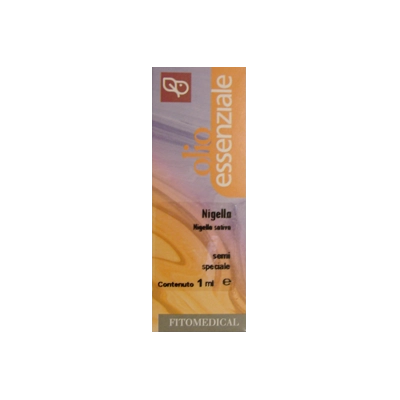
Blackcurrant (Nigella sativa) is an annual herbaceous plant belonging to the Ranunculaceae family, originally from Asia. Its properties have been known since the time of the ancient Egyptians, who used it in mummification and body preservation ceremonies, and in Ancient Greece, where it was used to treat gastrointestinal and genital disorders. In recent decades, however, the beneficial effects of blackcurrant on cancer cells, especially pancreatic cancer, have come to light. Blackcurrant appears to be able to kill these cells and, consequently, inhibit the development of pancreatic cancer, thanks to its protective and anti-inflammatory properties. This discovery was made thanks to a team of scientists from the American Association for Cancer Research, who focused on the action of thymoquinone, the main constituent of the plant's essential oil, obtained by steam extraction. Thymoquinone plays a key role in inhibiting the activity of a specific enzyme, histone deacetylase, responsible for the inflammatory conditions associated with this type of tumor, which leads to the formation of chronic pancreatitis. This research therefore compared the anti-inflammatory activity of thymoquinone with that of trichostatin A, another substance that inhibits the enzyme during pancreatic cancer. Other recent studies have also highlighted thymoquinone's effective action on inflammatory prostaglandin D2 (PGD2), which would explain why nigella has been considered a remedy for numerous pathologies and inflammatory conditions for centuries. It is considered useful against colds, asthma, and whooping cough; it restores respiratory function; it is a remedy for sore throats, angina, and lung diseases; it reduces swelling; it is effective against headaches and migraines; it fights acne; it is also useful against psoriasis and protects and thickens hair. This effect on skin conditions makes nigella a truly "orthodermic" substance. This alone would be enough to justify the inclusion of nigella among the products on this site, but just recently, studies by renowned researcher Prof. Cotsarelis of the University of Bologna have highlighted its potential. of Pennsylvania, have highlighted an important role for PGD2 in androgenetic alopecia, in which this prostaglandin and its metabolite contribute to the miniaturization of the follicle and thus the development and maintenance of vellus hair, similar to the small depigmented hairs characteristic of common baldness. This likely prevents stem cells from maturing into progenitor cells and, from there, into new terminal hairs, i.e., normal, thick, and pigmented hairs. In addition, Nigella sativa also inhibits the activation and synthesis of NF-kB, a pro-inflammatory transcription factor, which is also involved in the most common alopecias. Part used: seeds (distillate) Therapeutic profile: allergic rhinitis, asthma, bronchitis, sore throat, migraine, psoriasis, acne, inflammatory conditions, including autoimmune conditions. Possible side effects: none reported. Rare cases of hypersensitivity. Contraindications: Hypersensitive individuals, pregnancy, children. Use: Externally in hydroalcoholic, oily, or essential oil solutions. N.B.: Do not use internally as it may cause irritation. Suggestions for use: We recommend using Nigella sativa essential oil diluted in a ratio of approximately 1:100 in ready-made hydroalcoholic solutions for easy application to the scalp. Among the lotions available on this site, we recommend Vitatonic, a "technical" lotion used to promote the absorption of any commonly used hair care product.
Product Code:FRCM023749





 Richiedi info sul prodotto


