



- -20.7%

Recommended price

€14.43

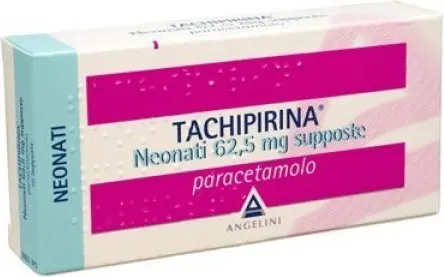
 Richiedi info sul prodotto
Estimated delivery: 1-3 business days

Information on returns and shipments

Payment methods

TACHIPIRINA 500 mg tablets Each tablet contains: active ingredient: paracetamol 500 mg. TACHIPIRINA 500 mg effervescent granules Each sachet contains: active ingredient: paracetamol 500 mg excipients: aspartame, maltitol, 12.3 mmol of sodium per sachet TACHIPIRINA 125 mg effervescent granules Each sachet contains: active ingredient: paracetamol 125 mg excipients: aspartame, maltitol, 3.07 mmol sodium per sachet TACHIPIRINA 120 mg/5 ml syrup 5 ml of syrup contain active ingredient: paracetamol 120 mg excipients: sucrose, methyl parahydroxybenzoate. TACHIPIRINA 120 mg/5 ml sugar-free syrup 5 ml of syrup contain active ingredient: paracetamol 120 mg excipients: sorbitol, methyl parahydroxybenzoate. TACHIPIRINA 100 mg/ml oral drops, solution 1 ml of solution contains active ingredient: paracetamol 100 mg excipients: sorbitol, propylene glycol TACHIPIRINA Neonati 62.5 mg suppositories Each suppository contains active ingredient: paracetamol 62.5 mg TACHIPIRINA Prima Infanzia 125 mg suppositories Each suppository contains active ingredient: paracetamol 125 mg TACHIPIRINA Bambini 250 mg suppositories Each suppository contains active ingredient: paracetamol 250 mg TACHIPIRINA Children 500 mg suppositories Each suppository contains active ingredient: paracetamol 500 mg TACHIPIRINA Adults 1000 mg suppositories Each suppository contains active ingredient: paracetamol 1000 mg For the full list of excipients, see section 6.1.
Excipients
• Tablets: microcrystalline cellulose, povidone, croscarmellose sodium, magnesium stearate, precipitated silica. Effervescent granules: maltitol, mannitol, sodium bicarbonate, anhydrous citric acid, citrus flavoring, aspartame, sodium docusate. Syrup: sucrose, sodium citrate, sodium saccharin, methyl parahydroxybenzoate, potassium sorbate, macrogol 6000, citric acid monohydrate, strawberry flavoring, mandarin flavoring, purified water. Sugar-free syrup: macrogol, glycerol, sorbitol, xylitol, sodium citrate, xanthan gum, citric acid, mandarin flavoring, potassium sorbate, methyl parahydroxybenzoate, strawberry flavoring, sucralose, purified water. Oral drops: propylene glycol, Macrogol 6000, sorbitol, sodium saccharin, citrus vanilla flavoring, propyl gallate, caramel (E150a), sodium edetate, purified water. • Suppositories: solid semi-synthetic glycerides.
Therapeutic indications
As an antipyretic: symptomatic treatment of febrile conditions such as influenza, exanthematous diseases, acute respiratory tract conditions, etc. As an analgesic: headaches, neuralgia, myalgia and other moderately severe pain of various origins.
Contraindications
• Hypersensitivity to paracetamol or to any of the excipients. • Patients with severe haemolytic anaemia (this contraindication does not apply to the 500 mg oral formulations). • Severe hepatocellular insufficiency (this contraindication does not apply to the 500 mg oral formulations).
Dosage
For children, it is essential to respect the dosage defined based on their body weight, and therefore choose the appropriate formulation. The approximate ages based on body weight are given for information purposes only. Under three months, in case of jaundice, it is advisable to reduce the single oral dose. In adults, the maximum oral dosage is 3000 mg and 4000 mg of paracetamol per day for the rectal route (see section 4.9). The doctor must evaluate the need for treatment for more than 3 consecutive days. The dosage schedule for Tachipirina in relation to body weight and administration route is as follows: 500 mg tablets • Children weighing 21 to 25 kg (approximately 6 to 10 years): 12 tablets at a time, to be repeated if necessary after 4 hours, without exceeding 6 administrations per day (3 tablets). Children weighing 26 to 40 kg (approximately 8 to 13 years): 1 tablet at a time, to be repeated if necessary after 6 hours, without exceeding 4 administrations per day. Children weighing 41 to 50 kg (approximately 12 to 15 years): 1 tablet at a time, to be repeated if necessary after 4 hours, without exceeding 6 administrations per day. Children weighing more than 50 kg (approximately over 15 years): 1 tablet at a time, to be repeated if necessary after 4 hours, without exceeding 6 administrations per day. Adults: 1 tablet at a time, to be repeated if necessary after 4 hours, without exceeding 6 administrations per day. In case of severe pain or high fever, 2 500 mg tablets, to be repeated if necessary after no less than 4 hours. 500 mg effervescent granules in sachets: Dissolve the effervescent granules in a glass of water. Children weighing between 26 and 40 kg (approximately 8 and 13 years): 1 sachet at a time, to be repeated if necessary after 6 hours, without exceeding 4 administrations per day. Children weighing between 41 and 50 kg (approximately 12 and 15 years): 1 sachet at a time, to be repeated if necessary after 4 hours, without exceeding 6 administrations per day. Children weighing more than 50 kg (approximately 15 years of age): 1 sachet at a time, to be repeated if necessary after 4 hours, without exceeding 6 administrations per day. Adults: 1 sachet at a time, to be repeated if necessary after 4 hours, without exceeding 6 administrations per day. In case of severe pain or high fever, 2 sachets of 500 mg, to be repeated if necessary after no less than 4 hours. 125 mg effervescent granules in sachets: Dissolve the effervescent granules in a glass of water. Children weighing between 7 and 10 kg (approximately 6 and 18 months): 1 sachet at a time, to be repeated if necessary after 6 hours, without exceeding 4 administrations per day. Children weighing 11 to 12 kg (approximately 18 to 24 months): 1 sachet at a time, to be repeated if necessary after 4 hours, without exceeding 6 administrations per day. Children weighing 13 to 20 kg (approximately 2 to 7 years): 2 sachets at a time (corresponding to 250 mg of paracetamol), to be repeated if necessary after 6 hours, without exceeding 4 administrations per day. Children weighing 21 to 25 kg (approximately 6 to 10 years): 2 sachets at a time (corresponding to 250 mg of paracetamol), to be repeated if necessary after 4 hours, without exceeding 6 administrations per day. 120 mg/5 ml syrup The package includes a measuring cup with level marks corresponding to the capacities of 5 ml, 7.5 ml, 10 ml, 15 ml and 20 ml. 120 mg/5 ml sugar-free syrup The package includes a measuring syringe with level marks corresponding to the capacities of 2.5 ml and 5 ml and a measuring cup with level marks corresponding to the capacities of 5 ml, 7.5 ml, 10 ml, 15 ml and 20 ml. • Children weighing between 7 and 10 kg (approximately between 6 and 18 months): 5 ml at a time (corresponding to 120 mg of paracetamol), to be repeated if necessary after 6 hours, without exceeding 4 administrations per day. • Children weighing between 11 and 12 kg (approximately 18 and 24 months): 5 ml at a time (corresponding to 120 mg of paracetamol), to be repeated if necessary after 4 hours, without exceeding 6 administrations per day. • Children weighing between 13 and 20 kg (approximately 2 and 7 years): 7.5 – 10 ml at a time (corresponding to 180 and 240 mg of paracetamol respectively), to be repeated if necessary after 6 hours, without exceeding 4 administrations per day. • Children weighing between 21 and 25 kg (approximately 6 and 10 years): 10 ml at a time (corresponding to 240 mg of paracetamol), to be repeated if necessary after 4 hours, without exceeding 6 administrations per day. • Children weighing 26 to 40 kg (approximately 8 to 13 years): 15–20 ml at a time (corresponding to 360 and 480 mg of paracetamol respectively), to be repeated if necessary after 6 hours, without exceeding 4 administrations per day. Children weighing 41 to 50 kg (approximately 12 to 15 years): 20 ml at a time (corresponding to 480 mg of paracetamol), to be repeated if necessary after 4 hours, without exceeding 6 administrations per day. Children weighing more than 50 kg (approximately over 15 years): 20 ml at a time (corresponding to 480 mg of paracetamol), to be repeated if necessary after 4 hours, without exceeding 6 administrations per day. Adults: 20 ml at a time (corresponding to 480 mg), to be repeated if necessary after 4 hours, without exceeding 6 administrations per day. The syrup package contains a dosage slider to facilitate the calculation of the product dose based on body weight. Oral drops, 100 mg/ml solution. One drop of Tachipirina oral drops corresponds to 3.1 mg. Children weighing between 3.2 and 6 kg (approximately between birth and 6 months): 14–20 drops at a time (corresponding to 43.4 and 62 mg of paracetamol respectively), to be repeated if necessary after 6 hours, without exceeding 4 administrations per day. Children weighing between 7 and 10 kg (approximately between 6 and 18 months): 35–40 drops at a time (corresponding to 108.5 and 124 mg of paracetamol respectively), to be repeated if necessary after 6 hours, without exceeding 4 administrations per day. •Children weighing between 11 and 12 kg (approximately between 18 and 24 months): 35–40 drops at a time (corresponding to 108.5 and 124 mg of paracetamol respectively), to be repeated if necessary after 4 hours, without exceeding 6 administrations per day. Suppositories Newborns 62.5 mg • Children weighing between 3.2 and 5 kg (approximately between birth and 3 months): 1 suppository at a time, to be repeated if necessary after 6 hours, without exceeding 4 administrations per day. 125 mg Infant Suppositories • Children weighing between 6 and 7 kg (approximately between 3 and 6 months): 1 suppository at a time, to be repeated if necessary after 6 hours, without exceeding 4 administrations per day. • Children weighing between 7 and 10 kg (approximately between 6 and 18 months): 1 suppository at a time, to be repeated if necessary after 4 – 6 hours, without exceeding 5 administrations per day. • Children weighing between 11 and 12 kg (approximately between 18 and 24 months): 1 suppository at a time, to be repeated if necessary after 4 hours, without exceeding 6 administrations per day. Suppositories Children 250 mg •Children weighing between 11 and 12 kg (approximately 18 and 24 months): 1 suppository at a time, to be repeated if necessary after 8 hours, without exceeding 3 administrations per day. • Children weighing between 13 and 20 kg (approximately 2 and 7 years): 1 suppository at a time, to be repeated if necessary after 6 hours, without exceeding 4 administrations per day. Suppositories Children 500 mg • Children weighing between 21 and 25 kg (approximately 6 and 10 years): 1 suppository at a time, to be repeated if necessary after 8 hours, without exceeding 3 administrations per day. • Children weighing 26 to 40 kg (approximately 8 to 13 years): 1 suppository at a time, to be repeated if necessary after 6 hours, without exceeding 4 administrations per day. Adult Suppositories 1000 mg • Children weighing 41 to 50 kg (approximately 12 to 15 years): 1 suppository at a time, to be repeated if necessary after 8 hours, without exceeding 3 administrations per day. • Children weighing more than 50 kg (approximately over 15 years): 1 suppository at a time, to be repeated if necessary after 6 hours, without exceeding 4 administrations per day. • Adults: 1 suppository at a time, to be repeated if necessary after 6 hours, without exceeding 4 administrations per day. Renal impairment: In case of severe renal impairment (creatinine clearance less than 10 ml/min), the interval between administrations must be at least 8 hours.
Warnings and precautions
In rare cases of allergic reactions, administration must be suspended and appropriate treatment must be initiated. Use with caution in cases of chronic alcoholism, excessive alcohol intake (3 or more alcoholic drinks per day), anorexia, bulimia, or cachexia, chronic malnutrition (low hepatic glutathione reserves), dehydration, hypovolemia. Paracetamol should be administered with caution to patients with mild to moderate hepatocellular insufficiency (including Gilbert's syndrome), severe hepatic insufficiency (Child-Pugh>9), acute hepatitis, concomitant treatment with drugs that alter liver function, glucose-6-phosphate dehydrogenase deficiency, or hemolytic anemia. High or prolonged doses of the product can cause kidney and blood disorders, even serious ones, therefore, administration to patients with renal insufficiency should be performed only if truly necessary and under direct medical supervision. In case of prolonged use, it is advisable to monitor liver and kidney function and blood count. During treatment with paracetamol, before taking any other medication, check that it does not contain the same active ingredient, since serious adverse reactions may occur if paracetamol is taken in high doses. Instruct the patient to contact the doctor before combining any other medication. See also section. 4.5. Important information about some of the excipients Tachipirina drops, solution contains: – sorbitol: use with caution in patients with rare hereditary problems of fructose intolerance. – propylene glycol, which can cause symptoms similar to those caused by alcohol. Tachipirina syrup contains: – sucrose: use with caution in patients with rare hereditary problems of fructose intolerance, glucose-galactose malabsorption, or sucrase-isomaltase insufficiency. This should also be taken into account for use in diabetic patients and in patients on low-calorie diets. Tachipirina syrup and "sugar-free" syrup contain: – methyl parahydroxybenzoate, which can cause allergic reactions (possibly delayed). Tachipirina sugar-free syrup contains: – Sorbitol: Use with caution in patients with rare hereditary problems of fructose intolerance. Tachipirina 125 mg effervescent granules contain: – aspartame, a source of phenylalanine. May be harmful in case of phenylketonuria (deficiency of the enzyme phenylalanine hydroxylase) due to the risk associated with accumulation of the amino acid phenylalanine. Maltitol: Use with caution in patients with rare hereditary problems of fructose intolerance. – 3.07 mmol of sodium per sachet: to be taken into consideration by patients with reduced kidney function or on a low-sodium diet. Tachipirina 500 mg effervescent granules contain: – aspartame, a source of phenylalanine. May be harmful in case of phenylketonuria (deficiency of the enzyme phenylalanine hydroxylase) due to the risk associated with accumulation of the amino acid phenylalanine. May be harmful in case of phenylketonuria (phenylalanine hydroxylase enzyme deficiency) due to the risk associated with accumulation of the amino acid phenylalanine. – maltitol: use with caution in patients with rare hereditary problems of fructose intolerance. 12.3 mmol of sodium per sachet: to be taken into consideration by patients with reduced kidney function or on a low-sodium diet.
Interactions
The oral absorption of paracetamol depends on the rate of gastric emptying. Therefore, concomitant administration of drugs that slow (e.g. anticholinergics, opioids) or increase (e.g. prokinetics) the rate of gastric emptying can result in a decrease or increase in the bioavailability of the product, respectively. Concomitant administration of cholestyramine reduces the absorption of paracetamol. Concomitant use of paracetamol and chloramphenicol may increase the half-life of chloramphenicol, with the risk of increasing its toxicity. Concomitant use of paracetamol (4 g daily for at least 4 days) with oral anticoagulants may cause slight changes in INR values. In these cases, more frequent monitoring of INR values should be conducted during concomitant use and after its discontinuation. Use with extreme caution and under close supervision during chronic treatment with drugs that can induce hepatic monooxygenase or in case of exposure to substances that can have this effect (for example, rifampicin, cimetidine, antiepileptics such as glutethimide, phenobarbital, carbamazepine). The same applies in cases of alcoholism and in patients treated with zidovudine. Paracetamol administration may increase the risk of serious side effects. interfere with the determination of uric acid (using the phosphotungstic acid method) and with that of blood glucose (using the glucose-oxidase-peroxidase method).
Undesirable effects
Below are the undesirable effects of paracetamol organized according to the MedDRA system organ classification. There are insufficient data to establish the frequency of the individual effects listed.
Blood and lymphatic system disorders Thrombocytopenia, leukopenia, anaemia, agranulocytosis
Immune system disorders Hypersensitivity reactions (urticaria, laryngeal edema, angioedema, anaphylactic shock)
Nervous system disorders Dizziness
Gastrointestinal disorders Gastrointestinal reaction
Hepatobiliary disorders Abnormal liver function, hepatitis
Skin and subcutaneous tissue disorders Erythema multiforme, Stevens-Johnson syndrome, epidermal necrolysis, rash
Renal and urinary disorders Acute renal failure, interstitial nephritis, haematuria, anuria
Pregnancy and breastfeeding
Although clinical studies in pregnant or breastfeeding patients have not revealed any particular contraindications, Since the use of paracetamol has not caused any adverse effects on the mother or child, it is recommended to administer the product only in cases of real need and under the direct supervision of a doctor.
This product has been on sale since 25/09/2017
In the last 30 days, the product's lowest price was 4,64 €


Estimated delivery: 1-3 business days

Estimated delivery: 1-3 business days

Estimated delivery: 1-3 business days

Estimated delivery: 1-3 business days

Estimated delivery: 1-3 business days

Estimated delivery: 1-3 business days