



- -16.04%

Recommended price

€33.50

 Richiedi info sul prodotto

Information on returns and shipments

Payment methods

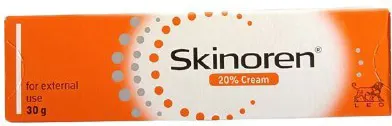
Medication for the treatment of acne.
Skinoren 20% cream is indicated for the treatment of acne (acne vulgaris) in its various forms, characterized by the presence of comedones, papules, pustules, and small nodules.
1 g of Skinoren cream contains 200 mg (20%) of azelaic acid. Excipients with known effects: benzoic acid, propylene glycol. For a full list of excipients, see section 6.1.
Benzoic acid (E210), cetearyl octanoate + isopropyl myristate (PCL Liquid), glycerol 85%, glyceryl stearate + cetearyl alcohol + cetyl palmitate + cocoglycerides (CUTINA CBS), propylene glycol, purified water, stearoyl macrogolglycerides.
Method of administration: Cutaneous use. Dosage. Skinoren cream should be applied to the affected areas of the skin twice daily (morning and evening), massaging it in gently.
Approximately 2.5 cm of cream is sufficient to treat the entire face. Before applying Skinoren cream, wash the skin thoroughly with water and dry it. You can also use a gentle skin cleanser. It is important to use Skinoren cream regularly throughout the entire treatment period. The duration of treatment with Skinoren cream may vary from patient to patient and depending on the severity of the condition. For optimal results, Skinoren cream should be used continuously for several months.
There is clinical experience with the continuous application of Skinoren cream for up to a year. In patients with acne, a noticeable improvement is generally observed after about 4 weeks. If skin irritation occurs, reduce the amount of cream per application, or reduce the frequency of use of Skinoren cream to once a day until the irritation subsides.
If necessary, discontinue treatment for a few days. After a short period of treatment without noticeable results, a medical evaluation is necessary.
Pediatric population: Use in adolescents (12-18 years). No dosage changes are expected when Skinoren cream is used in adolescents aged 12 to 18 years. The safety and efficacy of Skinoren cream in children under 12 years of age have not been established.
Geriatric population: No specific studies have been conducted in patients aged 65 years and over.
Patients with liver disease: No specific studies have been conducted in patients with liver disease.
Patients with kidney disease: No specific studies have been conducted in patients with kidney disease.
For external use only. Care should be taken when using Skinoren cream to avoid contact with eyes, mouth, and other mucous membranes, and patients should be adequately instructed accordingly. In case of accidental contact, rinse the affected eyes, mouth, and/or mucous membranes with plenty of water. If eye irritation persists, consult a doctor.
Wash hands after each application of Skinoren cream.
Skinoren cream contains 2 mg of benzoic acid per gram. Benzoic acid may cause local irritation.
Skinoren cream contains 125 mg of propylene glycol per gram. Minimize the concomitant use of cosmetic preparations, alcoholic or aggressive cleansers, dyes, astringent or abrasive substances, or exfoliating agents during treatment.
During post-marketing surveillance, worsening of asthma has been reported rarely in patients treated with azelaic acid.
Hypersensitivity to the active substance or to any of the excipients listed in section 6.1.
The most frequently observed adverse reactions in clinical studies and post-marketing surveillance include burning, itching, and erythema at the application site. The frequencies of adverse reactions observed during clinical trials and post-marketing surveillance and listed in the following table are defined according to the MedDRA frequency convention: Very common (≥1/10) Common (≥1/100, <1/10) Uncommon (≥1/1,000, <1/100) Rare (≥1/10,000, <1/1,000) Very rare (<1/10,000) Not known (frequency cannot be estimated from the available data)
| System Organ Class | Very common | Common | Uncommon | Rare | |
| Immune system disorders | Drug hypersensitivity (which may occur with one or more of the following adverse reactions: angioedema¹, contact dermatitis¹, eye swelling¹, facial swelling¹) | ||||
| asthma (see section 4.4) | |||||
| Skin and subcutaneous tissue disorders | Seborrhea | Urticaria¹, Cheilitis | |||
| Skin depigmentation | Rash¹ | ||||
| Acne | |||||
| General and application site disorders | Burning at the application site | Pain at the application site | Paresthesia at the application site | Sensation of heat at the application site | |
| Itching at the application site | Desquamation at the application site | Dermatitis at the application site | Vesicles at the application site | ||
| Erythema at the application site | Dryness at the application site | Discomfort at the application site | Eczema at the application site | ||
| Discoloration at the application site Application | Application site edema | Application site ulcer | |||
| Application site irritation |
1 The following additional adverse reactions have been reported during post-marketing use of Skinoren cream. Symptoms of local skin irritation generally resolve during the course of treatment.
Paediatric population In clinical studies involving adolescents aged 12-18 years (454/1,336; 34%), the local tolerability of Skinoren cream was shown to be similar in the paediatric and adult populations.
30 g
This product has been on sale since 25/09/2017
In the last 30 days, the product's lowest price was 17,33 €
Crema medicinale efficace contro l 'acne

Estimated delivery: 2-5 working days


Estimated delivery: 2-5 working days

Estimated delivery: 2-5 working days

Estimated delivery: 2-5 working days


Estimated delivery: 2-5 working days