Drug in the form of eye drops useful in case of ocular symptoms caused by allergies
Indications
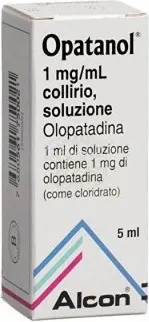
Opatanol is a drug based on Olopatadine indicated in the treatment of ocular signs and symptoms of seasonal allergic conjunctivitis.
Composition
Active ingredients
One mL of solution contains 1 mg of olopatadine (as hydrochloride)
Excipients with known effects: Benzalkonium chloride 0.1 mg/ml.
Excipients
Benzalkonium chloride Sodium chloride Disodium phosphate dodecahydrate (E339) Hydrochloric acid (E507) (to adjust pH) Sodium hydroxide (E524) (to adjust pH) Water
Directions for use and Dosage
The dose is one drop of Opatanol in the conjunctival sac of the affected eye(s) twice daily (every 8 hours).
Treatment may be extended for up to four months if considered necessary.
Use in the elderly: No dose adjustment is necessary in elderly patients.
Paediatric population:Opatanol can be used in pediatric patients (3 years and older) at the same dose as in adults. The safety and efficacy of Opatanol in children under 3 years of age have not yet been established. No data are available.
Use in patients with hepatic and renal impairment:Olopatadine, in the form of eye drops (Opatanol), has not been studied in patients with liver or kidney disease. However, in cases of hepatic or renal impairment, no dosage adjustment is considered necessary.
Method of administration
For ophthalmic use only. After the cap has been removed, if the safety ring has loosened, remove it before using the product. To prevent contamination of the dropper tip and solution, take special care not to touch the eyelids, surrounding areas, or other surfaces with the dropper tip of the bottle. Keep the bottle tightly closed when not in use. If concomitant therapy with other topical ocular medications is being used, an interval of five minutes should be left between one administration and the next. Eye ointments should be administered last.
Warnings
Opatanol is an antiallergic/antihistamine that, although administered topically, is absorbed systemically. In case of severe reactions or hypersensitivity, discontinue treatment. Opatanol contains benzalkonium chloride, which may cause eye irritation. Benzalkonium chloride has been reported to cause punctate keratopathy and/or toxic ulcerative keratopathy. Patients with dry eyes or other conditions where the cornea is compromised should be carefully monitored with frequent or prolonged use. Contact lenses: Benzalkonium is known to discolor soft contact lenses. Avoid contact with soft contact lenses. Patients should be instructed to remove contact lenses before administering the eye drops and to wait at least 15 minutes after instillation before reinserting contact lenses.
Contraindications
Hypersensitivity to the active substance or to any of the excipients listed in section 6.
Undesirable effects
The following adverse reactions have been reported during clinical trials and post-marketing data and are classified according to the following convention: very common (>1/10), common (>1/100 to <1/10), uncommon (>1/1,000 to <1/100), rare (>1/10,000 to <1/1,000), very rare (<1/10,000) or not known (frequency cannot be estimated from the available data). Within each frequency grouping, adverse reactions are presented in order of decreasing seriousness.
| System organ class | Frequency | Adverse reactions |
| Infections and infestations | Uncommon | Rhinitis |
| Immune system disorders | Not known | Hypersensitivity, swelling of the face |
| Nervous system disorders | Common | Headache, dysgeusia |
| Uncommon | Dizziness, hypoesthesia |
| Not known | Drowsiness |
| Eye disorders | Common | Eye pain, eye irritation, dry eye, abnormal sensation in eye |
| Uncommon | Corneal erosion, corneal epithelial defect, corneal epithelial disorder, punctate keratitis, keratitis, corneal staining, eye discharge, photophobia, vision blurred, visual acuity reduced, blepharospasm, ocular discomfort, eye pruritus, conjunctival follicles, conjunctival disorder, foreign body sensation in eyes, lacrimation increased, eyelid erythema, eyelid oedema, eyelid disorder, ocular hyperaemia |
| Not known | Corneal oedema, eye oedema, eye swelling, conjunctivitis, mydriasis, vision disturbance, eyelid margin crusting |
| Respiratory, thoracic and mediastinal disorders | Common | Nasal dryness |
| Not known | Dyspnoea, sinusitis |
| Gastrointestinal disorders | Not known | Nausea, vomiting |
| Skin and subcutaneous tissue disorders | Uncommon | Contact dermatitis, burning sensation of the skin, dry skin |
| Not known | Bermatitis, erythema |
| General disorders and administration site conditions | Common | Fatigue |
| Not known | Asthenia, malaise |
Cases of corneal calcification have been reported very rarely in association with the use of phosphate-containing eye drops in some patients with significantly damaged corneas.
Overdose
There are no data available regarding overdose in humans following accidental or deliberate ingestion.
Olopatadine is characterized by low-order acute toxicity in animals. Accidental ingestion of the entire contents of a vial of Opatanol would result in a maximum systemic exposure of 5 mg of olopatadine. This exposure would be equivalent to a final dose of 0.5 mg/kg in a 10-kg child, assuming 100% absorption.
QTc interval prolongation was observed in dogs only at exposures considered sufficiently in excess of the maximum human exposure, indicating minimal clinical relevance. An oral dose of 5 mg was administered twice daily for 2.5 days to 102 healthy young and elderly male and female volunteers without any significant QTc prolongation compared to placebo.
The range of steady-state peak plasma olopatadine concentrations (35 to 127 ng/ml) observed in this study represents at least a 70-fold safety margin for topical olopatadine with respect to effects on cardiac repolarization. In case of overdose, appropriate patient monitoring and management should be performed.
Pregnancy and breastfeeding
Pregnancy: There are no or limited amount of data from the use of ophthalmic olopatadine in pregnant women. Animal studies have shown reproductive toxicity following systemic administration (see section 5.3). Olopatadine is not recommended during pregnancy and in women of childbearing potential not using contraception.
Breastfeeding: Available data in animals have shown excretion of olopatadine in milk following oral administration (for details see section 5.3). A risk to newborns/infants cannot be excluded. Opatanol should not be used during breastfeeding.
Fertility: No studies have been performed to evaluate the effect on human fertility of topical ophthalmic administration of olopatadine.
Format
5 ml
Product Code:FRCM046916




 Richiedi info sul prodotto