










- -20.7%

Recommended price

€14.43



 Richiedi info sul prodotto
Estimated delivery: 1-3 business days

Information on returns and shipments

Payment methods


ACTIVE INGREDIENTS
100 mg of ibuprofen.
EXCIPIENTS
Gelatin, purified water, liquid glucose, sucrose, fumaric acid (E297), sucralose, citric acid (E330), acesulfame K (E950), sodium edetate, glycerin, orange flavouring, red iron oxide (E172), yellow iron oxide (E172), capsule ink, titanium dioxide (E171), propylene glycol HPMC 2910/hypromellose 3cP (E464), processing aids, medium chain triglycerides, lecithin (derived from soya), stearic acid.
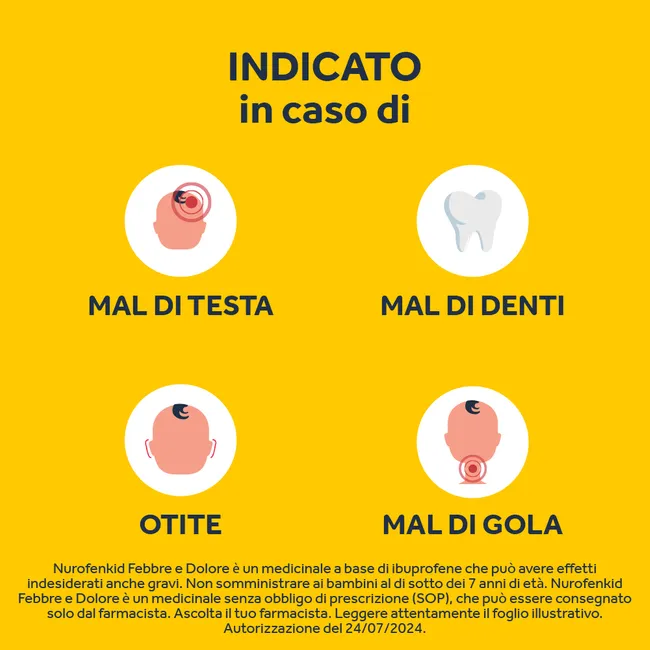
The medicine is indicated in children with a body weight between 20 kg (7 years) and 40 kg (12 years). Short-term symptomatic treatment of mild to moderate pain such as toothache, headache, and fever and pain associated with the common cold.
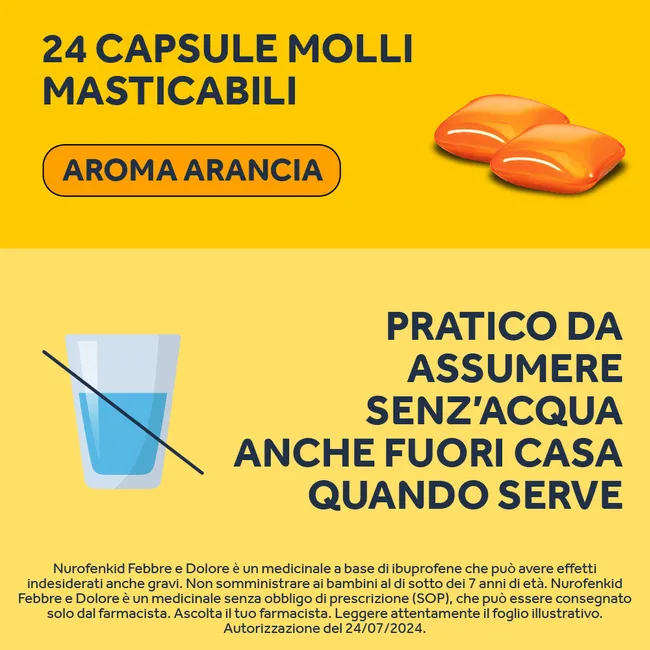
Oral use and for short-term treatment. In children, the dose of ibuprofen depends on body weight, usually 5 - 10 mg/kg of body weight as a single dose. The maximum daily dosage is 20-30 mg/kg of body weight. Child body weight (kg) 20-29, age 7-9 years: single dose 200 mg of ibuprofen (corresponding to 2 capsules) and maximum dose 600 mg of ibuprofen (corresponding to 6 capsules); Child (kg) 30-40, age 10-12 years: single dose 300 mg of ibuprofen (corresponding to 3 capsules) and maximum dose 900 mg of ibuprofen (corresponding to 9 capsules). Doses should be administered approximately every 6-8 hours (or with a minimum interval of 6 hours between doses). Do not use in children under 7 years of age or with a body weight less than 20 kg. No dose reduction is required in patients with mild or moderate renal impairment. No dose reduction is required in patients with mild or moderate hepatic impairment. The product must be chewed before swallowing. Water is not required.
Elderly subjects have a higher frequency of adverse reactions to NSAIDs, especially gastrointestinal bleeding and perforation, sometimes fatal. Bronchospasm may worsen in patients with or a history of bronchial asthma or allergic disease. The use of ibuprofen in conjunction with other NSAIDs should be avoided. Patients with systemic lupus erythematosus (SLE) and mixed connective tissue disease may be at increased risk of aseptic meningitis. Caution is advised in patients with congenital disorders of porphyrin metabolism. Renal impairment may be further exacerbated. There is a risk of renal failure in dehydrated children. Habitual use of analgesics may lead to permanent renal damage with the risk of renal failure. Hepatic impairment: Liver dysfunction. Caution is advised immediately after major surgery. Caution is advised in patients with allergic reactions to other substances. Patients with hay fever, nasal polyps, or chronic obstructive pulmonary disease are at increased risk of allergic reactions. Severe acute hypersensitivity reactions are observed very rarely. At the first signs of hypersensitivity reactions after use, treatment should be discontinued. Caution is advised before initiating treatment in patients with a history of hypertension and/or heart failure. The use of ibuprofen, particularly at high doses (2400 mg daily), may be associated with a modest increase in the risk of arterial thrombotic events. Epidemiological studies do not indicate that low doses of ibuprofen are associated with an increased risk of arterial thrombotic events. Patients with uncontrolled hypertension, congestive heart failure (NYHA II-III), overt ischemic heart disease, peripheral arterial disease, and/or cerebrovascular disease should be treated with ibuprofen only after careful consideration, and high doses (2400 mg daily) should be avoided. Particular caution should also be exercised before initiating long-term treatment in patients with risk factors for cardiovascular events, especially if high doses of ibuprofen are required. There is limited evidence that drugs that inhibit cyclooxygenase/prostaglandin synthesis may cause impairment of female fertility. This is reversible upon discontinuation of treatment. NSAIDs should be administered with caution to patients with a history of gastrointestinal disease. Gastrointestinal bleeding, ulceration, or perforation, which can be fatal, have been reported with all NSAIDs at any time during treatment. Combination therapy with protective agents should be considered for patients taking concomitant low-dose aspirin or other drugs that may increase the risk of gastrointestinal events. Patients with a history of gastrointestinal toxicity should report any unusual abdominal symptoms. Caution is advised in patients taking concomitant medications that could increase the risk of ulceration or bleeding. If gastrointestinal bleeding or ulceration occurs in patients taking ibuprofen, treatment should be discontinued. Serious skin reactions, some of them fatal, have been reported very rarely in association with the use of NSAIDs. Ibuprofen should be discontinued at the first appearance of skin rash, mucosal lesions, or any other sign of hypersensitivity. Avoid the drug if you have chickenpox. NSAIDs should be used with caution in patients with idiopathic thrombocytopenic purpura (ITP) and bleeding diathesis. With prolonged administration, periodic monitoring of liver function, renal function, and blood counts is necessary. Prolonged use of any type of painkiller for headaches can worsen symptoms; treatment should be discontinued. The diagnosis of medication overuse headache (MOH) should be suspected in patients who experience frequent or daily headaches despite (or because of) the regular use of headache medications. Adverse drug reactions related to the active ingredient may increase if alcohol is consumed concomitantly while using NSAIDs. NSAIDs may mask symptoms of infection and fever. Contains glucose and sucrose.
INTERACTIONS
Ibuprofen should be avoided in combination with: other NSAIDs, including cyclooxygenase-2 selective inhibitors. Concomitant administration of ibuprofen and acetylsalicylic acid is generally not recommended. Ibuprofen may competitively inhibit the effect of low-dose acetylsalicylic acid on platelet aggregation when the two drugs are administered concomitantly. The possibility that regular, long-term use of ibuprofen may reduce the cardioprotective effect of low-dose acetylsalicylic acid cannot be excluded. No clinically relevant effect is considered likely following occasional use of ibuprofen. Ibuprofen should be used with caution in combination with: anticoagulants; NSAIDs may enhance the effects of anticoagulants, such as warfarin. Antihypertensives and diuretics: NSAIDs may reduce the effect of these drugs. Diuretics may increase the risk of nephrotoxicity of NSAIDs. In some patients with compromised renal function, the co-administration of an ACE inhibitor, a beta-blocker, or an angiotensin II antagonist and agents that inhibit cyclooxygenase may result in further deterioration of renal function, including possible acute renal failure, which is usually reversible. Therefore, these combinations should be administered with caution, especially in elderly patients. Patients should be adequately hydrated, and renal function should be monitored at the initiation of concomitant therapy and periodically thereafter. Concomitant use of potassium-sparing diuretics may increase the risk of hyperkalemia. Corticosteroids: Increased risk of gastrointestinal ulceration or bleeding. Antiplatelet agents and selective serotonin reuptake inhibitors (SSRIs): Increased risk of gastrointestinal bleeding. Cardiac glycosides: NSAIDs may worsen heart failure, reduce glomerular filtration rate, and increase plasma glycoside levels. Concomitant use of the drug with digoxin-containing preparations may increase serum digoxin levels. Monitoring of serum digoxin levels is not usually required if the drug is used correctly (for a maximum of 3 days). There is evidence of a potential increase in plasma lithium levels when co-administered with ibuprofen. When used correctly, monitoring plasma lithium or phenytoin concentrations is not necessary. Medicines containing probenecid and sulfinpyrazone may delay the elimination of ibuprofen. There is a possibility of increased plasma methotrexate. Cyclosporins: increased risk of nephrotoxicity. NSAIDs should not be used for 8-12 days after mifepristone administration as they may reduce the effect of mifepristone. Possible increased risk of nephrotoxicity when NSAIDs are administered with tacrolimus. Increased risk of hematological toxicity when NSAIDs are administered concomitantly with zidovudine. There is evidence of an increased risk of hemarthrosis and hematomas in HIV-positive haemophiliac patients treated concomitantly with zidovudine and ibuprofen. NSAIDs may increase the risk of seizures associated with the use of quinolone antibiotics. Patients taking NSAIDs and quinolones may be at increased risk of developing seizures. Inhibition of the metabolism of drugs containing sulfonylureas, prolonged half-life, and increased risk of hypoglycemia. NSAIDs may reduce the excretion of aminoglycosides. Children: Use caution when taking ibuprofen and aminoglycosides concomitantly. Concomitant administration of ibuprofen and CYP2C9 inhibitors may increase exposure to ibuprofen (a CYP2C9 substrate). In a study with voriconazole and fluconazole (CYP2C9 inhibitors), an increase in exposure to S(+)-ibuprofen of approximately 80-100% was demonstrated. A reduction in the ibuprofen dose should be considered when co-administering potent CYP2C9 inhibitors, particularly when high doses of ibuprofen are administered with voriconazole or fluconazole.
SIDE EFFECTS
The list of side effects reported below refers to all adverse reactions reported during treatment with ibuprofen, including those observed during long-term, high-dose treatment in patients with rheumatism. The reported frequencies, which occur with an incidence greater than very rare cases, refer to short-term use of daily doses of up to a maximum of 1200 mg of ibuprofen for the oral dosage form and a maximum of 1800 mg for suppositories. It should be noted that the following adverse reactions are predominantly dose-dependent and vary from individual to individual. Adverse reactions associated with the use of ibuprofen are listed below by system organ class and frequency. Frequencies are defined as follows: very common (>= 1/10), common (from>= 1/100 to <1/10), uncommon (from >= 1/1,000 to <1/100), rare (from >= 1/10,000 to <1/1,000), very rare (<1/10,000), not known (frequency cannot be estimated from the available data). The most commonly observed adverse reactions are gastrointestinal in nature. Adverse reactions are dose-dependent in most cases, in particular the risk of gastrointestinal bleeding depends on the dosage and duration of treatment. Peptic ulceration, perforation, or gastrointestinal bleeding, sometimes fatal, especially in the elderly, may occur. Nausea, vomiting, diarrhea, flatulence, constipation, dyspepsia, abdominal pain, melaena, hematemesis, ulcerative stomatitis, and worsening of colitis and Crohn's disease have been reported following administration of the drug. Gastritis has been observed less frequently. Edema, hypertension, and heart failure have been reported in association with NSAID treatment. Clinical studies suggest that the use of ibuprofen, particularly at high doses (2400 mg daily), may be associated with a modest increased risk of arterial thrombotic events (e.g., myocardial infarction or stroke). Worsening of infection-related inflammation (e.g., development of fasciitis) has been observed with the use of nonsteroidal anti-inflammatory drugs. This is likely related to the mechanism of action of nonsteroidal anti-inflammatory drugs. If signs of infection occur or worsen while using the drug, the patient is advised to contact their doctor immediately, who will determine whether antimicrobial/antibiotic therapy is indicated. Blood counts should be monitored regularly during long-term treatment. The patient should be instructed to inform their doctor immediately and discontinue treatment if any symptoms of hypersensitivity reactions occur; this can also occur during the first use, in which case immediate medical attention should be sought. The patient should be instructed to discontinue taking the drug and consult a doctor immediately if severe upper abdominal pain occurs or if melena or hematemesis occurs. Infections and infestations. Very rare: worsening of infection-related inflammation (e.g., development of necrotizing fasciitis). In exceptional cases, severe skin infections and soft tissue complications may occur during a chickenpox infection. Blood and lymphatic system disorders. Very rare: haematopoietic disorders (anaemia, leukopenia, thrombocytopenia, pancytopenia, agranulocytosis). The first signs may be: fever, sore throat, superficial mouth ulcers, flu-like symptoms, severe fatigue, nosebleeds, skin bleeding, and bruising. In these cases, the patient should be advised to stop taking the drug, avoid self-medication with analgesics or antipyretics, and consult a doctor. Immune system disorders. Uncommon: hypersensitivity reactions characterized by urticaria and itching; very rare: severe hypersensitivity reactions. Symptoms may include: swelling of the face, tongue, and larynx, dyspnea, tachycardia, hypotension (anaphylaxis, angioedema, or severe shock), exacerbation of asthma; not known: airway reactivity including asthma, bronchospasm, or dyspnea. Psychiatric disorders. Very rare: psychotic reactions, depression. Nervous system disorders. Uncommon: central nervous system disorders, such as headache, dizziness, insomnia, agitation, irritability, or fatigue; very rare: aseptic meningitis. Eye disorders. Uncommon: visual disturbances. Ear and labyrinth disorders. Rare: tinnitus. Cardiac disorders. Very rare: cardiac failure, palpitations, and edema, myocardial infarction. Very rare: hypertension, vasculitis. Gastrointestinal disorders. Common: Gastrointestinal disorders, such as abdominal pain, nausea, and dyspepsia. Diarrhea, flatulence, constipation, heartburn, vomiting, mild gastrointestinal bleeding which in exceptional cases may cause anaemia. Uncommon: Gastrointestinal ulcers, gastrointestinal perforation or bleeding, ulcerative stomatitis, worsening of colitis and Crohn's disease, gastritis. Very rare: Esophagitis, diaphragmatic-like intestinal stricture formation, pancreatitis. Hepatobiliary disorders. Very rare: Liver dysfunction, liver damage, especially with prolonged therapy, liver failure, acute hepatitis. Skin and subcutaneous tissue disorders. Uncommon: Various types of skin rashes; very rare: Severe forms of skin reactions, such as bullous reactions including Stevens-Johnson syndrome, erythema multiforme, and toxic epidermal necrolysis, alopecia. Renal and urinary disorders. Rare: Renal tissue damage (papillary necrosis) and elevated blood urea concentrations may also be observed; elevated blood uric acid concentrations; very rare: edema formation, especially in patients with arterial hypertension or renal insufficiency, nephrotic syndrome, interstitial nephritis, which may be accompanied by acute renal failure. Diagnostic tests. Rare: decreased haemoglobin levels. Report any suspected adverse reactions via the national reporting system.
PREGNANCY AND BREASTFEEDING
Inhibition of prostaglandin synthesis may adversely affect pregnancy and/or embryo/fetal development. Results of epidemiological studies indicate an increased risk of spontaneous abortion, cardiac malformations, and gastroschisis after use of a prostaglandin synthesis inhibitor in early pregnancy. The absolute risk of cardiovascular malformations was increased from less than 1% to approximately 1.5%. In animals, administration of a prostaglandin synthesis inhibitor has been shown to result in increased pre- and post-implantation loss and embryo-fetal mortality. Additionally, an increased incidence of various malformations, including cardiovascular, has been reported in animals treated with a prostaglandin synthesis inhibitor during organogenesis. During the first and second trimesters of pregnancy, ibuprofen should not be administered. If ibuprofen is used by a woman attempting to conceive or during the first and second trimesters of pregnancy, the dose should be kept as low as possible and the duration of treatment should be as short as possible. During the third trimester of pregnancy, all prostaglandin synthesis inhibitors may expose the fetus to cardiopulmonary toxicity and renal dysfunction; the mother and newborn, at the end of pregnancy, may experience prolonged bleeding time; Inhibition of uterine contractions which may result in a delay or prolongation of labor: ibuprofen is contraindicated during the third trimester of pregnancy. Ibuprofen and its metabolites pass into breast milk only in low concentrations: it is not necessary to interrupt breastfeeding. There is some evidence that drugs that inhibit cyclooxygenase/prostaglandin synthesis may impair female fertility by affecting ovulation: reversible after discontinuation of treatment.
This product has been on sale since 17/01/2019
In the last 30 days, the product's lowest price was 13,13 €
Ottimo gusto e pratiche da assumere. Nurofen sempre una certezza.

Estimated delivery: 1-3 business days


Estimated delivery: 1-3 business days

Estimated delivery: 1-3 business days

Estimated delivery: 1-3 business days

Estimated delivery: 1-3 business days

Estimated delivery: 1-3 business days