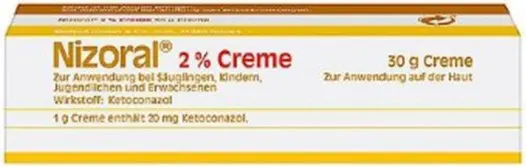
Nizoral 2%
Dermatological Cream
Active Ingredients
Each gram of cream contains: active ingredient: ketoconazole 20 mg; excipients with known effect: propylene glycol and cetyl alcohol. For the full list of excipients, see section 6.1.
Excipients
Propylene glycol; Stearyl alcohol, cetyl alcohol, polysorbate 60, isopropyl myristate, anhydrous sodium sulfite BP 80, polysorbate 80, sorbitan monostearate, distilled water.
Indications
Skin infections caused by Candida and dermatophytes (tinea corporis, cruris, manus, pedis, versicolor). Treatment of seborrheic dermatitis. Nizoral 2% cream can be used by adults.
Contraindications
Hypersensitivity to the active substance or to any of the excipients listed in section 6.1.
Dosage
Adults - Yeasts and T. versicolor: Once a day for 2-3 weeks; - T. cruris: Once a day for 2-4 weeks; - T. corporis: once daily for 3-4 weeks; - T. pedis: once daily for 4-6 weeks; - Seborrheic dermatitis: once or twice daily, depending on the severity of the infection, for 2-4 weeks. For maintenance therapy, apply once or twice a week. Treatment should be continued uninterruptedly at least until a few days after the symptoms disappear. If no improvement in clinical symptoms is noted after 4 weeks of treatment, the diagnosis should be reconsidered. The medicine usually acts very rapidly on itching. Method of administration: topical use. Apply NIZORAL cream to the affected area, without occlusion.
Storage
Store at a temperature not exceeding 25 degrees C. Keep out of the reach and sight of children.
Warnings
NIZORAL cream is not for ophthalmic use. Given the poor percutaneous absorption of ketoconazole, systemic side effects are not expected following use of the product. However, elderly patients, those with a history of liver disease, and those previously treated with griseofulvin should be treated with extreme caution. Treatment should be discontinued if signs of a hepatic reaction develop. Use of the drug, especially if prolonged, may result in sensitization; in this case, discontinue treatment and consult your doctor. During treatment with NIZORAL cream, if administered simultaneously with a topical corticosteroid, to prevent rebound effects after discontinuation of prolonged topical corticosteroid treatment, it is recommended to continue applying a small amount of corticosteroid in the morning and apply NIZORAL cream in the evening. Subsequently, the topical corticosteroid dose should be tapered over a period of approximately 2-3 weeks until discontinuation. It is advisable to apply hygienic measures to avoid sources of infection and reinfection. Important information about some of the excipients NIZORAL cream contains: propylene glycol: may cause skin irritation; cetyl alcohol: may cause local skin reactions (e.g. contact dermatitis).
Interactions
No interaction studies have been performed.
Undesirable Effects
The following table shows the adverse reactions, including those above, that have been reported with the use of NIZORAL 2% cream, from clinical studies or post-marketing experience. The frequency categories found use the following convention: very common (>= 1/10); common (>= 1/100 and <1/10); uncommon (>= 1/1,000 and <1/100); rare (>= 1/10,000 and <1 / 1,000); very rare (<1/10,000); Not known (frequency cannot be estimated from the available clinical data). The safety of NIZORAL 2% cream has been evaluated in 1,079 subjects who participated in 30 clinical studies. NIZORAL 2% cream was applied topically to the skin. Skin and subcutaneous tissue disorders: Common: burning sensation of the skin; uncommon: bullous eruption, contact dermatitis, rash, skin exfoliation, sticky skin; not known: urticaria. General disorders and administration site conditions: Common: erythema at the administration site, pruritus at the administration site; Uncommon: administration site bleeding, administration site discomfort, administration site dryness, administration site inflammation, administration site irritation, administration site paraesthesia, administration site reaction. Immune system disorders. Uncommon: hypersensitivity. Reporting of suspected adverse reactions: Reporting suspected adverse reactions that occur after authorization of the medicinal product is important, as it allows continued monitoring of the benefit/risk balance of the medicinal product. Healthcare professionals are asked to report any suspected adverse reactions via the national reporting system at "www.agenziafarmaco.gov.it/it/responsabili".
Pregnancy and Breastfeeding
There are no adequate and well-controlled studies in pregnancy or breastfeeding. After topical application of NIZORAL cream in non-pregnant women, plasma concentrations of ketoconazole are undetectable. There are no known risks associated with the use of NIZORAL cream during pregnancy and breastfeeding.
Product Code:FRCM046009




 Richiedi info sul prodotto