Ideal medicine for counteracting cold symptoms.
Indications
Rinazina double action is indicated for the symptomatic treatment of nasal congestion and rhinorrhea associated with common colds.
Composition
Active ingredients
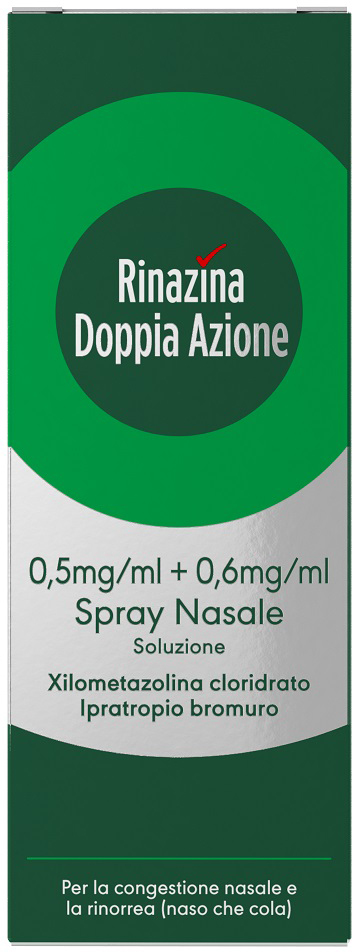
1 ml contains 0.5 mg of xylometazoline hydrochloride and 0.6 mg of ipratropium bromide. 1 spray (approximately 140 microliters) contains 70 mcg of xylometazoline hydrochloride and 84 mcg of ipratropium bromide.
Excipients
Disodium edetate Glycerol (85%) Hydrochloric acid (for pH adjustment) Sodium hydroxide (for pH adjustment) Purified water
Directions for use and Dosage
Adults: 1 spray in each nostril up to 3 times a day. At least 6 hours must pass between two doses. Do not exceed 3 applications per day in each nostril. The duration of treatment should not exceed 7 days.
It is recommended to discontinue treatment when symptoms have decreased, even before the maximum treatment duration of 7 days, in order to minimize the risk of adverse reactions.
Paediatric population: the use of Rinazina Double Action is not recommended in children and adolescents under 18 years of age due to lack of sufficient documentation.
Elderly: there is only limited experience of use in patients over 70 years of age. Method of administration
Warnings
The medicinal product should be administered with caution in patients with: hypertension, cardiovascular disease, hyperthyroidism, diabetes mellitus, prostatic hypertrophy, ureteral stenosis, pheochromocytoma. Caution is recommended in patients predisposed to: angle-closure glaucoma, epistaxis (e.g. elderly), paralytic ileus, cystic fibrosis. It may Immediate hypersensitivity may occur, including urticaria, angioedema, rash, bronchospasm, pharyngeal edema, and anaphylaxis.
The medicinal product should be used with caution in patients who are sensitive to adrenergic agents, which may cause symptoms such as sleep disturbances, dizziness, tremor, cardiac arrhythmias, or hypertension.
The duration of treatment should not exceed 7 days, as chronic treatment with xylometazoline hydrochloride may cause swelling of the nasal mucosa and hypersecretion due to increased cellular sensitivity, a "rebound effect" (rhinitis medicamentosa).
Patients should be instructed to avoid spraying Rinazina Double Action around or in the eyes. If Rinazina Double Action comes into contact with the eyes, the following may occur: temporary blurred vision, irritation, pain, red eyes. Worsening of narrow-angle glaucoma may occur. The patient should be instructed to rinse their eyes with cold water if Rinazina Double Action comes into direct contact with the eyes and to contact a doctor if they feel pain in the eyes or have blurred vision.
The use of Rinazina Double Action is not recommended in children and adolescents under 18 years of age as adequate information on safety and efficacy is not available.
Contraindications
Rinazina Double Action should not be administered to children under 18 years of age due to lack of sufficient documentation.
Hypersensitivity to the active substances or to any of the excipients.
Known hypersensitivity to atropine or similar substances, such as hyoscyamine and scopolamine. After surgical procedures in which the dura mater may have been exposed: transsphenoidal hypophysectomy or other transnasal procedures.
In patients with glaucoma.
In patients with rhinitis sicca.
Undesirable effects
| Classification | Very common | Common | Uncommon | Rare | Not known |
| Immune system disorders | - | - | - | - | Hypersensitivity |
| Disorders psychiatric | - | - | Insomnia | - | - |
| Pathologies of nervous system | - | Dysgeusia, headache | Parosmia, dizziness, tremor | - | - |
| Eye disorders | - | - | Eye irritation, dry eye | - | Accommodation disorder, worsening of narrow-angle glaucoma, eye pain, photopsia, increased intraocular pressure, blurred vision, mydriasis, visual halos |
| Cardiac disorders | - | - | Palpitations, tachycardia | - | Atrial fibrillation |
| Respiratory, thoracic and mediastinal disorders | Epistaxis, nasal dryness | Nasal discomfort, nasal congestion, dry mouth, throat irritation, rhinalgia | Nasal ulcer, sneezing, oropharyngeal pain, cough, dysphonia | Rhinorrhea | Sinus discomfort, laryngospasm, pharyngeal oedema |
| Gastrointestinal disorders | - | Dry mouth | Dyspepsia, nausea | - | Dysphagia |
| Skin and subcutaneous tissue disorders | - | - | - | - | Itching, rash, urticaria |
| Kidney and urinary disorders | - | - | - | - | Urinary retention |
| General disorders and conditions relating to the administration site | - | - | Discomfort, fatigue | - | Chest discomfort, thirst |
Overdose
An overdose of xylometazoline hydrochloride or excessive topical administration may cause severe dizziness, sweating, sudden hypothermia, headache, bradycardia, hypertension, respiratory depression, coma, and convulsions. Hypertension may be followed by hypotension.
Young children are more sensitive to toxicity than adults. Because absorption is very poor after nasal or oral administration, acute overdose following intranasal ipratropium bromide is unlikely, but if overdose occurs, symptoms include dry mouth, difficulty with visual accommodation, and tachycardia.
Treatment is symptomatic. A substantial overdose may result in anticholinergic CNS symptoms such as hallucinations, which should be treated with anticholinesterases. Appropriate supportive measures should be initiated in all persons with suspected overdose, and, when warranted, urgent symptomatic treatment under medical supervision is indicated. This includes observation of the subject for at least 6 hours.
In case of a severe overdose with cardiac arrest, resuscitation must be continued for at least 1 hour.
Pregnancy and breastfeeding
Pregnancy: There is insufficient evidence regarding the use of Rinazina Double Action in pregnant women. Animal studies are insufficient with respect to the effects on pregnancy, embryonic/fetal development, parturition and postnatal development. The potential risk in humans is unknown. Rinazina Double Action should not be used during pregnancy unless clearly necessary.
Breastfeeding: It is not known whether ipratropium bromide and xylometazoline hydrochloride are excreted in human milk. Systemic exposure to ipratropium bromide and xylometazoline hydrochloride is low. Effects on the breastfed infant are therefore unlikely. The mother's need for treatment with Rinazina Dual Action and the benefits of breastfeeding must be weighed against the potential risks to the infant.
Format
10 ml
Product Code:FRCM046132









 Richiedi info sul prodotto