




- -28.78%

Recommended price

€19.87
 Richiedi info sul prodotto
Estimated delivery: 1-3 business days

Information on returns and shipments

Payment methods


Drug useful in case of diarrhea
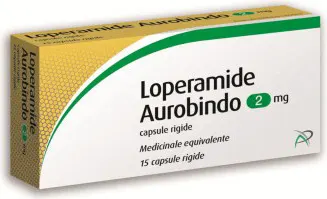
Loperamide aurobindo 2 mg hard capsules is indicated for the symptomatic treatment of acute diarrhea in adults and children aged 12 years and over.
Each hard capsule contains 2 mg of loperamide hydrochloride. .
Excipient with known effect: Each hard capsule contains 144.6 mg of lactose monohydrate.
Capsule content: Lactose monohydrate Maize starch Talc Magnesium stearate
Capsule shell: Titanium dioxide (E171) Gelatin Printing ink: Shellac Black iron oxide (E172)
Dosage Adults and children over 12 years of age: two capsules to be taken initially, followed by one capsule after each diarrhoeal discharge, up to a maximum of six capsules in 24 hours.
Children under 12 years of age Age: Not recommended.
Use in the elderly: No dose adjustment is necessary.
Renal impairment: No dose adjustment is necessary for patients with renal impairment.
Hepatic impairment: Although no pharmacokinetic data are available in patients with hepatic impairment, Loperamide Aurobindo should be used with caution in these patients due to reduced first-pass metabolism.
Treatment of diarrhea with loperamide is only symptomatic. If appropriate, specific treatment should be administered whenever an underlying etiology can be determined. In acute diarrhea, the priority is the prevention or reversal of fluid and electrolyte depletion. This is particularly important in patients with hepatic impairment. is particularly important in young children and frail and elderly patients with acute diarrhea.
The use of loperamide hydrochloride does not preclude the administration of electrolyte replacement therapy. Since persistent diarrhea may be an indicator of potentially more serious conditions, loperamide hydrochloride should not be used for prolonged periods until the underlying cause of the diarrhea has been investigated.
Loperamide hydrochloride should be used with caution when the liver function required for drug metabolism is imperfect (e.g., in cases of severe liver disease), as this could result in relative overdose leading to CNS toxicity.
AIDS patients treated with loperamide hydrochloride for diarrhea should discontinue therapy at the first sign of abdominal distension. Isolated cases of toxic megacolon have been reported in AIDS patients with infectious colitis caused by both bacterial and viral pathogens treated with loperamide hydrochloride.
When no clinical changes in acute diarrhea are observed within 48 hours, loperamide administration should be discontinued and patients should be advised to consult their physician. Treatment with loperamide should be discontinued immediately if constipation, abdominal distension, or subileus develops.
Cardiac events, including QT prolongation, QRS prolongation, and torsades de pointes, have been reported in association with overdose.
Overdose may unmask Brugada syndrome. Patients should not exceed the recommended dose and/or recommended duration of therapy. Patients with rare hereditary problems of galactose intolerance, the Lapp lactase deficiency or glucose-galactose malabsorption should not take this medicine.
Hypersensitivity to the active substance or to any of the excipients listed.
When it is necessary to avoid inhibition of peristalsis due to a possible risk of significant sequelae including ileus, megacolon, toxic megacolon and some poisonings in particular:
Loperamide Aurobindo should not be used alone in acute dysentery, which is characterised by blood in the stool and high body temperature.
| System organ class | Indication | ||
| Common | Uncommon | Rare | |
| Immune system disorders | - | - | Hypersensitivity reactions, Anaphylactic reaction (including anaphylactic shock), Anaphylactoid reaction |
| Nervous system disorders | Headache, Dizziness | Drowsiness | Loss of consciousness, Stupor, Depressed level of consciousness, Hypertonia, Coordination abnormal |
| Eye disorders | - | - | Miosis |
| Gastrointestinal disorders | Constipation, Nausea, Flatulence | Abdominal pain, Abdominal discomfort, Dry mouth, Abdominal pain upper, Vomiting, Dyspepsia | Ileus (including paralytic ileus), Megacolon (including toxic megacolonb), Glossodynia, Abdominal distension |
| Skin and subcutaneous tissue disorders | - | Rash | Bullying rash (including Stevens-Johnson syndrome, toxic epidermal necrolysis and erythema multiforme), Angioedema, Urticaria, Pruritus |
| Renal and urinary disorders | - | - | Urinary retention |
| General disorders and administration site conditions | - | - | Fatigue |
Symptoms In cases of overdose (including relative overdose due to hepatic dysfunction), CNS depression (stupor, abnormal coordination, somnolence, miosis, muscle hypertonia, and respiratory depression), urinary retention, and ileus may occur. Children may be even more sensitive to CNS effects than adults. Cardiac events such as prolongation of the QT interval and QRS complex, torsade de pointes, other serious ventricular arrhythmias, cardiac arrest, and syncope have been observed in patients who have ingested excessive doses of loperamide (see section 4.4). Fatal cases have also been reported. Overdose may unmask the presence of Brugada syndrome. Treatment If symptoms of overdose occur, naxolone may be administered as an antidote. Since the duration of action of loperamide is longer than that of naxolone (1-3 hours), repeated treatment with naxolone may be indicated. Therefore, the patient should be closely monitored for at least 48 hours for any possible signs of CNS depression.
Pregnancy: Limited data are available on the use of loperamide in pregnant women. In one of two epidemiological studies, the use of loperamide during early pregnancy suggested a possible moderate increase in the risk of hypospadias, however, no increased risk of major malformations could be identified. Animal studies do not indicate direct or indirect harmful effects with respect to reproductive toxicity (see section 5.3). Safety in human pregnancy has not been established, although animal studies have not indicated that loperamide hydrochloride has teratogenic or embryotoxic properties. If possible, the use of loperamide should be avoided during the first trimester of pregnancy, however, it can be used during the second and third trimesters.
Breastfeeding: Small amounts of loperamide may appear in breast milk. Therefore, this medicine is not recommended during breastfeeding. Pregnant or breastfeeding women should therefore be advised to consult their doctor for appropriate treatment.
Fertility: Only high doses of loperamide hydrochloride have affected female fertility in non-clinical studies (see section 5.3).
15 capsules
This product has been on sale since 24/05/2024
In the last 30 days, the product's lowest price was 3,08 €
Sostituisce tranquillamente l'originale e costa meno
Prezzo bassissimo e stesso principio attivo dell originale con effetto immediato. Lo consiglio vivamente, non buttate 12 euro per un farmaco IDENTICO

Estimated delivery: 1-3 business days


Estimated delivery: 1-3 business days

Estimated delivery: 1-3 business days

Estimated delivery: 1-3 business days


Estimated delivery: 1-3 business days