Sanofi Aventis
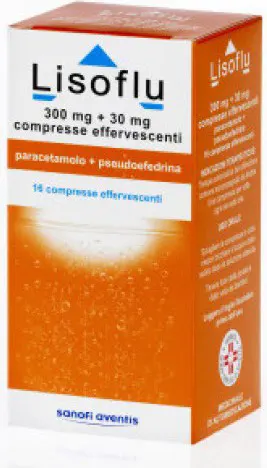
Cold With Fever Treatment
Symptomatic treatment of the common cold accompanied by fever.
Composition
One effervescent tablet contains: Active ingredients: paracetamol 300 mg. Pseudoephedrine hydrochloride 30 mg. Excipients with known effects: aspartame, sorbitol, sodium hydrogen carbonate, anhydrous sodium carbonate, sodium saccharin, sodium docusate.
Contraindications
– Hypersensitivity to the active substances or to any of the excipients. – Pregnancy and breastfeeding. – Subjects under 12 years of age. – Subjects suffering from a severe form of the following diseases: • coronary heart disease (angina, previous heart attack); • hypertension; • liver failure; • kidney failure; • hyperthyroidism; • asthma; • diabetes; • urination disorders caused by prostatic hypertrophy or other diseases; • glaucoma; • haemolytic anaemia. – Subjects who are being treated with dihydroergotamine or monoamine oxidase inhibitors or who have stopped this treatment less than two weeks ago (see "Interactions with other medicinal products and other forms of interaction").
Dosage
Adults and adolescents: One tablet every six to seven hours, i.e. no more than three to four tablets in a 24-hour period. Use the lowest effective dose. That is, start treatment at the lowest recommended dose and increase the dose only if symptoms are not sufficiently controlled. The maximum dose (both for a single administration and for the total daily dose) must never be exceeded. In adolescents, the elderly, or subjects with impaired liver or kidney function, it may be necessary to reduce the dosage in relation to the patient's clinical condition; in these cases, the patient must be advised to consult a doctor before using LISOFLU. Use the medicine for the shortest possible period; do not exceed 3 days of treatment without first consulting a doctor. Method of administration The medicine should be taken on a full stomach. Dissolve the tablet in about half a glass of water and drink the resulting solution immediately afterwards.
Warnings and precautions
During treatment with paracetamol, before taking any other medicine, check that it does not contain the same active ingredient, since if paracetamol is taken in high doses, serious adverse reactions can occur. This medicine must be used correctly, respecting the instructions for use and in particular the authorised dosage. Hepatotoxicity may occur with paracetamol even at therapeutic doses, after short-term treatment, and in patients without pre-existing liver dysfunction (see section 4.8). Caution is recommended in patients with a history of sensitivity to aspirin and/or nonsteroidal anti-inflammatory drugs (NSAIDs). The risk of serious adverse effects is also increased when paracetamol is taken with other antipyretic analgesics; therefore, concomitant use of these types of medicines should be avoided. This medicine can cause adverse effects, including serious ones (see the section "Undesirable Effects"); the patient should be advised to discontinue the medicine and consult a doctor immediately if they suspect the onset of a serious adverse effect. Serious skin reactions: Life-threatening reactions such as Stevens-Johnson syndrome (SJS), toxic epidermal necrolysis (TEN), and acute generalized exanthematous pustulosis have been reported with the use of paracetamol. Patients should be informed of the signs and symptoms and carefully monitored for skin reactions. If symptoms or signs of Stevens-Johnson syndrome, toxic epidermal necrolysis, or acute generalized exanthematous pustulosis (e.g., progressive skin rash associated with blisters or mucosal lesions) occur, the patient should immediately discontinue paracetamol treatment and consult a doctor. The use of the medicine requires a careful risk/benefit assessment in the elderly and in subjects with mild/moderate forms of the following diseases: – coronary heart disease (angina, previous heart attack); – hypertension; – arrhythmias; – liver failure; – renal failure; – hyperthyroidism; – asthma; – diabetes; – urinary disorders caused by prostatic hypertrophy or other diseases; – glaucoma; – haemolytic anaemia; – glucose-6-phosphate dehydrogenase deficiency. In these cases, therefore, it is necessary to consult a doctor before taking LISOFLU. Patients taking paracetamol should avoid alcoholic beverages because alcohol increases the risk of liver damage. Heavy alcohol consumers should consult their doctor before taking a medicine containing paracetamol. While using LISOFLU, avoid drinking bitter orange juice (see "Interactions with other medicinal products and other forms of interaction"). During treatment with oral anticoagulants, the administration of paracetamol may increase the effect of the anticoagulants, requiring closer monitoring of the anticoagulant therapy. Furthermore, potentially harmful interactions are also possible with several other drugs (see "Interactions with other medicinal products and other forms of interaction"). In these cases, LISOFLU can only be used under strict medical supervision. The patient should be advised to consult a doctor if he or she is already being treated with other medications. Important information about some of the ingredients: The aspartame in this medicine is a source of phenylalanine. It may be harmful for people with phenylketonuria. This medicine contains sorbitol. Patients with rare hereditary problems of fructose intolerance should not take this medicine. This medicine contains 15 mmol sodium per effervescent tablet. To be taken into consideration by patients with reduced kidney function or on a controlled sodium diet.
Interactions
Interactions related to paracetamol Use with extreme caution and under close monitoring during chronic treatment with drugs that can induce hepatic monooxygenases or in case of exposure to substances that can have this effect (for example cimetidine and ranitidine). The risk of paracetamol toxicity may be increased in patients taking other potentially hepatotoxic drugs or drugs that induce hepatic microsomal enzymes, such as some antiepileptics (such as phenobarbital, phenytoin, carbamazepine, topiramate), rifampicin and alcohol. Paracetamol administration may interfere with the determination of uric acid levels (using the phosphotungstic acid method) and blood glucose levels (using the glucose-oxidase-peroxidase method). Anticoagulants: Paracetamol may increase the risk of bleeding in patients taking warfarin and other vitamin K antagonists. Patients taking paracetamol and vitamin K antagonists should be monitored for appropriate coagulation and the occurrence of bleeding. Flucloxacillin: Co-administration of flucloxacillin with paracetamol may lead to metabolic acidosis in patients with risk factors for glutathione depletion. Cytotoxics: Possible inhibition of the metabolism of intravenous busulfan (the manufacturer of busulfan recommends caution within 72 hours following paracetamol use). Domperidone: Increased absorption of paracetamol. Lipid-lowering drugs: reduction of paracetamol absorption with cholestyramine. Metoclopramide: increased paracetamol absorption (increased effect). Interactions related to pseudoephedrine. Due to the possibility of serious reactions, concomitant administration of pseudoephedrine and the following is contraindicated: – monoamine oxidase inhibitors (MAOIs) (see "Contraindications"). Monoamine oxidase inhibitors are used in therapy as: – antiparkinsonian drugs (such as selegiline or rasagiline) or as: – antidepressants (such as isocarboxazid, nialamide, phenelzine, tranylcypromine, iproniazid, iproclozide, moclobemide, and toloxatone); – antineoplastic agents (such as procarbazine). The concomitant use of pseudoephedrine and MAOIs can trigger a serious hypertensive crisis (hypertension, hyperpyrexia, headache). The use of pseudoephedrine is also contraindicated in patients who have stopped treatment with MAOIs less than two weeks ago. • dihydroergotamine: the combination of the two drugs can cause a dangerous increase in blood pressure. Due to the possible effects caused by their interaction, the combination of pseudoephedrine with certain medicines is possible only under strict medical supervision, who will evaluate the risk/benefit ratio in each individual case. Use LISOFLU only under strict medical supervision when you are already being treated with one of these drugs: • linezolid: the combination of the two drugs can cause an increase in blood pressure; • methyldopa: reduction of the antihypertensive effect of methyldopa; • midodrine: increase of the hypertensive effect of midodrine. Bitter orange: Bitter orange (also known as bitter orange) can trigger a serious hypertensive crisis (hypertension, hyperpyrexia, headache) in patients taking pseudoephedrine.
Undesirable effects
Undesirable effects due to paracetamol – Blood and lymphatic system disorders: thrombocytopenia, neutropenia, leukopenia, agranulocytosis, haemolytic anaemia in patients with basic glucose-6-phosphate dehydrogenase deficiency. – Nervous system disorders: dizziness. – Immune system disorders: hypersensitivity reactions such as angioedema, laryngeal edema, anaphylactic shock. – Cardiac disorders: Kounis syndrome. – Respiratory, thoracic and mediastinal disorders: bronchospasm, pneumonia. – Gastrointestinal disorders: gastrointestinal haemorrhage; gastrointestinal reactions. – Renal and urinary disorders: nephrotoxicity. Renal changes (acute renal failure, interstitial nephritis, hematuria, anuria). – Skin and subcutaneous tissue disorders: erythema, urticaria, rash, fixed drug eruption. Very rare cases of serious skin reactions such as toxic epidermal necrolysis (TEN), Stevens–Johnson syndrome (SJS), and acute generalized exanthematous pustulosis have been reported (see section 4.4 'Special warnings and precautions for use'). – Hepatobiliary disorders: hepatotoxicity; impaired liver function and hepatitis. Cytolytic hepatitis which can lead to acute liver failure. Adverse reactions due to pseudoephedrine. – Cardiac disorders: myocardial infarction, atrial fibrillation, tachyarrhythmia, hypertension, hypotension, ventricular extrasystoles. – Nervous system disorders: convulsions, insomnia, tremors, ataxia. – Eye disorders: mydriasis. – Gastrointestinal disorders: ischemic colitis, taste disturbances. – Skin and subcutaneous tissue disorders: eczema, fixed erythema, pseudo-scarlet fever. – Metabolism and nutrition disorders: hyperthermia. – Psychiatric disorders: anxiety, agitation, nervousness, irritability, confusion, hallucinations. Reporting of suspected adverse reactions Reporting suspected adverse reactions that occur after authorization of the medicinal product is important. It allows continued monitoring of the benefit/risk balance of the medicinal product. Healthcare professionals are asked to report any suspected adverse reactions via the Italian Medicines Agency, Website: http://www.agenziafarmaco.gov.it/it/responsabili.
Pregnancy and breastfeeding
LISOFLU is contraindicated during pregnancy, whether confirmed or suspected, and during breastfeeding.
Storage
Do not store above 30°C. Store in the original package to protect from moisture.
Format
Pack with 16 effervescent tablets.
Product Code:FRCM046494




 Richiedi info sul prodotto