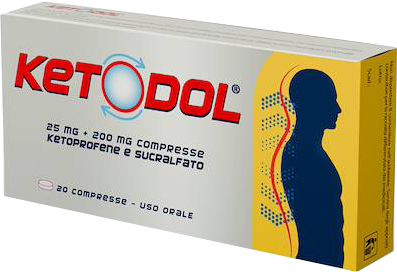
Ketodol 20 tablets 25 mg + 200 mg modified release This is an anti-inflammatory drug used for pain of various origins and nature such as headache, toothache, neuralgia, muscle pain and menstrual pain.
Active ingredients
One tablet contains: Active ingredients: Core: ketoprofen 25 mg Coating: sucralfate 200 mg Excipients: Lactose For the full list of excipients, see section 6.1.
Excipients
Core: Lactose, Carboxymethyl starch, Povidone, Magnesium stearate. Coating: Maize starch, Carboxymethyl starch, Povidone, Talc, magnesium stearate, Cochineal red (E120).
Contraindications
Ketodol is contraindicated in patients with a history of hypersensitivity reactions, such as bronchospasm, asthma attacks, rhinitis, urticaria or other allergic-type reactions, to ketoprofen, acetylsalicylic acid (ASA) or other nonsteroidal anti-inflammatory drugs (NSAIDs). Serious, rarely fatal, anaphylactic reactions have been reported in these patients (see section 4.8).
Ketodol is also contraindicated in the following cases:
– hypersensitivity to the active substances or to any of the excipients listed in section 6.1;
– during intensive diuretic therapy;
– chronic dyspepsia;
- gastritis;
- severe renal insufficiency;
- severe forms of liver insufficiency (liver cirrhosis, severe hepatitis);
- porphyria, leukopenia and thrombocytopenia;
- subjects with active haemorrhages;
- haemorrhagic diathesis;
- subjects with haemostatic disorders;
- severe heart failure;
- active peptic ulcer or previous history of gastrointestinal bleeding, ulceration or perforation;
- history of gastrointestinal bleeding or perforation following previous NSAID therapy;
- Do not administer during antibiotic treatments with tetracyclines to avoid the formation of complex salts with inactivation of the antibiotic itself upon contact with sucralfate.
Ketodol is also contraindicated during the third trimester of pregnancy, during breastfeeding (see section 4.6) and in pediatric age.
Dosage Ketodol 20 tablets 25 mg + 200 mg
Adults and children over 15 years: 1 tablet in a single dose or repeated 2–3 times a day, for more intense painful forms. It is preferable to take the product on a full stomach (with a glass of water). Do not exceed the recommended doses: elderly patients in particular should stick to the minimum doses indicated above. The duration of therapy should be limited to overcoming the painful episode. Side effects can be minimized by using the lowest effective dose for the most intense pain. shortest possible duration of treatment necessary to control symptoms (see section 4.4).
Special populations
Patients with renal impairment and the elderly
It is recommended to reduce the initial dose and maintain therapy with the lowest effective dose. Individualized adjustments can be considered only after establishing good tolerability of the drug (see section 5.2).
Patients with hepatic impairment
Patients with mild or moderate hepatic impairment should be monitored closely and treated with the minimum effective daily dose (see sections 4.3, 4.4 and 5.2).
Paediatric population
The safety and efficacy of ketoprofen have not been studied in children.
Pregnancy and breastfeeding
Pregnancy The use of ketoprofen during the first and second trimester of pregnancy should be avoided. Inhibition of prostaglandin synthesis may adversely affect the pregnancy and/or embryo/foetal development. Results of epidemiological studies suggest an increased risk of miscarriage, cardiac malformation, and gastroschisis after use of a prostaglandin synthesis inhibitor in early pregnancy. The absolute risk of cardiac malformations increased from less than 1% to approximately 1.5%. The risk has been estimated to increase with dose and duration of therapy. In animals, administration of prostaglandin synthesis inhibitors has been shown to result in increased pre- and post-implantation loss and embryo-fetal mortality. Additionally, an increased incidence of various malformations, including cardiovascular, has been reported in animals administered prostaglandin synthesis inhibitors during the organogenetic period. During the first and second trimesters of pregnancy, Ketodol should be used only when clearly needed. If Ketodol is used by women attempting to conceive or during the first and second trimesters of pregnancy, the dose should be as low as possible. The dose should be as low as possible and the duration of treatment as short as possible. During the third trimester of pregnancy, all prostaglandin synthesis inhibitors may expose the fetus to: – cardiopulmonary toxicity (with premature closure of the ductus arteriosus and pulmonary hypertension); – renal dysfunction, which may progress to renal failure with oligo-hydroamniosis; the mother and the newborn, at the end of pregnancy, to: – possible prolongation of bleeding time, and antiaggregant effect which may occur even at very low doses; – inhibition of uterine contractions resulting in delayed or prolonged labor. Use of the drug close to delivery may cause alterations in the haemodynamics of the small circulation of the newborn with serious consequences for respiration. Consequently, ketoprofen is contraindicated during the third trimester of pregnancy.
Breastfeeding There is no information available on the excretion of ketoprofen in human milk. Ketoprofen is not recommended during breastfeeding.
Fertility The use of NSAIDs may impair female fertility and is not recommended in women attempting to conceive.
In women who have fertility problems or who are undergoing investigation of fertility, discontinuation of treatment should be considered.
Storage
This medicinal product does not require any special storage conditions
Warnings
Warnings Undesirable effects may be minimised by using the lowest effective dose for the highest effective dose. shortest possible duration of treatment as needed to control symptoms (see section 4.2 and the following sections). The concomitant use of Ketodol with other NSAIDs, including cyclooxygenase-2 selective inhibitors, should be avoided.
Gastrointestinal bleeding, ulceration and perforation:
Gastrointestinal bleeding, ulceration and perforation, which can be fatal, have been reported with all NSAIDs at anytime during treatment, with or without warning symptoms or a previous history of serious gastrointestinal events. The risk of gastrointestinal bleeding, ulceration or perforation is higher with increasing NSAID doses in the elderly and in patients with a history of ulcer, particularly if complicated with haemorrhage or perforation (see section 4.3). These patients should start treatment on the lowest available dose. Concomitant use of protective agents (misoprostol or proton pump inhibitors) should be considered for these patients, and also for patients taking low-dose aspirin or other drugs that may increase the risk of gastrointestinal events (see below and section 4.5). Patients with a history of gastrointestinal toxicity, particularly the elderly, should report any abdominal symptoms (especially gastrointestinal bleeding), particularly in the initial stages of treatment. Caution should be exercised in patients taking concomitant medications which could increase the risk of ulceration or bleeding, such as oral corticosteroids, anticoagulants such as warfarin, selective serotonin reuptake inhibitors, or antiplatelet agents such as aspirin (see section 4.5). If gastrointestinal bleeding or ulceration occurs in patients taking Ketodol, treatment should be discontinued immediately. NSAIDs should be administered with caution to patients with a history of gastrointestinal disease (ulcerative colitis, Crohn's disease) as they may increase the risk of ulceration or bleeding. such conditions may be exacerbated (see section 4.8). Some epidemiological evidence suggests that ketoprofen may be associated with a higher risk of serious gastrointestinal toxicity compared with other NSAIDs, particularly at high doses (see sections 4.2 and 4.3).
Elderly:
Elderly patients have an increased frequency of adverse reactions to NSAIDs, especially gastrointestinal bleeding and perforation, which may be fatal (see section 4.2).
Skin reactions:
Serious skin reactions, some of them fatal, including exfoliative dermatitis, Stevens-Johnson syndrome, and toxic epidermal necrolysis, have been reported very rarely in association with the use of NSAIDs (see section 4.8). In the early stages of therapy, patients appear to be at higher risk: the onset of the reaction occurs in most cases within the first month of treatment. Ketodol should be discontinued at the first appearance of skin rash, mucosal lesions, or any other sign of hypersensitivity. To avoid possible hypersensitivity or photosensitivity phenomena, it is advisable to avoid sun exposure during use.
Precautions
Cardiovascular, renal, and hepatic dysfunction: Renal function must be carefully monitored at the beginning of treatment in patients with heart failure, cirrhosis, and nephrosis, in patients on diuretic therapy, and in chronic renal failure, particularly if elderly. In these patients, the administration of ketoprofen may cause a reduction in renal blood flow, caused by prostaglandin inhibition, and lead to renal failure (see section 4.3 Contraindications). In patients with impaired liver function tests or previous liver disease, transaminase levels should be regularly assessed, particularly during long-term therapy. Cases of jaundice and hepatitis have been reported with ketoprofen. The product, like all nonsteroidal anti-inflammatory drugs, interferes with the synthesis of prostaglandins and their important intermediates that are involved in physiological functions. The drug, therefore, requires special precautions, or its use must be excluded, when the following conditions are present in the patient: renal hypoperfusion, renal disease, heart failure, mild to moderate hepatic insufficiency, advanced age.
Cardiovascular and cerebrovascular effects:
Caution is required in patients with a history of hypertension and/or mild to moderate congestive heart failure since ketoprofen may increase the risk of serious side effects. Fluid retention and edema have been reported in association with NSAID treatment. Clinical trial and epidemiological data suggest that the use of some NSAIDs (particularly at high doses and in long-term treatment) may be associated with an increased risk of arterial thrombotic events (e.g., myocardial infarction or stroke). There are insufficient data to exclude a similar risk for ketoprofen. Patients with uncontrolled hypertension, congestive heart failure, established ischemic heart disease, peripheral arterial disease, and/or cerebrovascular disease should only be treated with ketoprofen after careful consideration. Similar consideration should be made before initiating long-term treatment in patients with risk factors for cardiovascular disease (e.g., hypertension, hyperlipidaemia, diabetes mellitus, smoking). An increased risk of atrial fibrillation associated with the use of NSAIDs has been reported. This may be due to the increased risk of atrial fibrillation. Hyperkalaemia may occur, especially in patients with underlying diabetes, renal insufficiency, and/or concomitant treatment with agents that promote hyperkalaemia (see section 4.5). In these circumstances, potassium levels should be monitored. Infections: As with other nonsteroidal anti-inflammatory drugs, in the presence of infection, the anti-inflammatory, analgesic, and antipyretic effects of ketoprofen may mask the symptoms of infection progression, such as fever.
Respiratory disorders:
Patients with asthma associated with chronic rhinitis, chronic sinusitis, and/or nasal polyps have a higher risk of allergies to aspirin and/or NSAIDs than the rest of the population. Administration of this medicine may cause asthma attacks or bronchospasm, particularly in subjects allergic to aspirin or NSAIDs (see section 4.3). Due to the drug's interaction with arachidonic acid metabolism, asthmatics and predisposed individuals may experience bronchospasm attacks and possibly shock and other allergic reactions.
Visual disturbances:
If visual disturbances such as blurred vision occur, treatment should be discontinued. The use of ketoprofen, as with any drug that inhibits the synthesis of prostaglandins and cyclooxygenase, is not recommended in women intending to become pregnant. Ketoprofen should be discontinued in women who have fertility problems or who are undergoing fertility investigations. The presence of sucralfate may alter the bioavailability of other drugs; therefore, an interval of at least two hours should be left between taking the product and that of another drug. For these reasons, patients undergoing any other treatment should consult their doctor before taking the product. Cases of bezoar formation associated with sucralfate administration have been reported. The majority of these were in intensive care patients. Therefore, extreme caution should be exercised when treating intensive care patients, especially those receiving enteral nutrition, or in patients with predisposing factors such as delayed gastric emptying. After three days of treatment without noticeable results, consult your doctor. Warnings on excipients: Patients with rare hereditary problems of galactose intolerance, the Lapp lactase deficiency, or glucose-galactose malabsorption should not take this medicine.
Interactions
COMBINATIONS NOT RECOMMENDED
- Other non-steroidal anti-inflammatory drugs (including selective cyclooxygenase-2 inhibitors) and salicylates at high doses: it is advisable not to combine Ketodol with acetylsalicylic acid or with other non-steroidal anti-inflammatory drugs (including selective cyclooxygenase-2 inhibitors): increased risk of gastrointestinal ulcers and bleeding.
- Anticoagulants (heparin and warfarin) and antiplatelet agents (e.g. ticlopidine, clopidogrel): increased risk of bleeding (see section 4.4). NSAIDs may enhance the effects of anticoagulants such as warfarin. If concomitant administration cannot be avoided, patients should be monitored closely.
- Lithium: risk of increased lithium plasma levels, which can sometimes reach toxic levels due to reduced renal excretion of lithium. Where necessary, lithium plasma levels should be monitored with possible dosage adjustment during and after NSAID therapy.
- Methotrexate at doses greater than 15 mg/week: increased risk of haematological toxicity from methotrexate, particularly when administered at high doses (>15 mg/week), probably due to displacement of protein-bound methotrexate and reduced renal clearance. In patients already being treated with ketoprofen, therapy should be stopped at least 12 hours before administration of methotrexate. If ketoprofen is to be administered at the end of methotrexate therapy, it is necessary to wait 12 hours before administration.
COMBINATIONS REQUIRING CAUTION - Drugs or therapeutic categories that can promote hyperkalemia (e.g. potassium salts, potassium-sparing diuretics, ACE inhibitors and angiotensin II antagonists, NSAIDs, heparins (low molecular weight or unfractionated), ciclosporin, tacrolimus, trimethoprim): the occurrence of hyperkalemia may depend on the presence of cofactors. The risk of hyperkalemia is increased when the above-mentioned drugs are administered concomitantly (see section 4.5).
- Corticosteroids: increased risk of gastrointestinal ulceration or bleeding (see section 4.4).
- Diuretics: patients taking diuretics, including particularly dehydrated patients, are at high risk of developing renal failure due to decreased renal blood flow caused by prostaglandin inhibition. These patients should be rehydrated before starting co-administration, and their renal function should be monitored when starting treatment (see section 4.4). NSAIDs may reduce the effect of diuretics.
- ACE inhibitors and angiotensin II antagonists: In patients with compromised renal function (e.g. dehydrated patients or elderly patients), co-administration of an ACE inhibitor or an angiotensin II antagonist and agents that inhibit the cyclooxygenase system may lead to further deterioration of renal function, including possible acute renal failure. These interactions should be considered in patients taking Ketodol concomitantly with ACE inhibitors or angiotensin II antagonists. Therefore, the combination should be administered with caution, especially in elderly patients. Patients should be adequately hydrated and consideration should be given to monitoring renal function after initiation of concomitant therapy (see section 4.4).
- Methotrexate at doses less than 15 mg/week: during the first weeks of combination therapy, a complete blood count should be performed weekly. In the presence of even mild impairment of renal function or in elderly patients, monitoring should be more frequent.
- Sulfonylureas: possible interactions with oral hypoglycaemics should also be taken into account.
- Pentoxifylline: increased risk of bleeding. Closer clinical monitoring and monitoring of bleeding time are required.
- Tenofovir: concomitant administration of tenofovir disoproxil fumarate and NSAIDs may increase the risk of bleeding. increase the risk of renal failure.
- Cardiac glycosides: NSAIDs may exacerbate heart failure, reduce the glomerular filtration rate, and increase cardiac glycoside levels; however, the pharmacokinetic interaction between ketoprofen and cardiac glycosides has not been demonstrated. COMBINATIONS TO CONSIDER
- Antihypertensives (beta-blockers, angiotensin-converting enzyme inhibitors, diuretics): risk of decreased antihypertensive activity (inhibition of prostaglandin vasodilation caused by NSAIDs).
- Thrombolytics: increased risk of bleeding. Several substances are involved in interactions due to their antiplatelet effect: tirofiban, eptifibatide, abciximab, and iloprost. The use of various antiplatelet drugs increases the risk of bleeding.
- Probenecid: Concomitant administration of probenecid may significantly reduce the plasma clearance of ketoprofen.
- Selective serotonin reuptake inhibitors (SSRIs): Increased risk of gastrointestinal bleeding (see section 4.4).
- Gemeprost: Reduced efficacy of gemeprost.
- Intrauterine contraceptive devices (IUDs): The efficacy of the device may be reduced. be reduced resulting in pregnancy.
- Mifepristone: The efficacy of the method may theoretically be reduced due to the antiprostaglandin properties of nonsteroidal anti-inflammatory drugs (NSAIDs) including aspirin (acetylsalicylic acid). There is some evidence to suggest that concomitant administration of NSAIDs on the day of administration of the prostaglandin dose does not adversely influence the effects of mifepristone and the prostaglandin on cervical ripening or uterine contractility and does not reduce the clinical efficacy of medical termination of pregnancy.
- Cyclosporine and Tacrolimus: Concomitant treatment with NSAIDs may carry a risk of greater nephrotoxicity, especially in elderly subjects.
- Quinolone antibiotics: Animal data indicate that NSAIDs may increase the risk of convulsions associated with quinolone antibiotics. Patients taking NSAIDs and quinolones may have an increased risk of developing convulsions.
- Diphenylhydantoin and sulphonamides: Since the protein binding of ketoprofen is high, it may be necessary to reduce the dosage of diphenylhydantoin or sulphonamides administered concomitantly.
Side effects
Like all medicines, Ketodol can cause side effects, although not everybody gets them. The most commonly observed adverse events are gastrointestinal in nature. Peptic ulcers, perforation or gastrointestinal bleeding, sometimes fatal, particularly in the elderly, may occur (see section 4.4). Classification of expected frequencies: very common (>1/10); common (>1/100 to <1/10); uncommon (>1/1,000 to <1/100); rare (>1/10,000 to <1/1,000); very rare (<1/10,000); not known (cannot be estimated from the available data).
- Blood and lymphatic system disorders Rare: anaemia due to bleeding, leukopenia. Not known: agranulocytosis, thrombocytopenia, bone marrow aplasia, haemolytic anaemia.
- Immune system disorders Not known: anaphylactic reactions (including shock).
- Metabolism and nutrition disorders Not known: hyponatraemia, hyperkalaemia (see sections 4.4 and 4.5).
- Psychiatric disorders Not known: depression, hallucinations, confusion, mood alterations, insomnia.
- Nervous system disorders Uncommon: headache, dizziness, somnolence. Rare: paraesthesia, dyskinesia. Not known: aseptic meningitis, convulsions, dysgeusia. P
- Eye disorders Rare: blurred vision (see section 4.4).
- Ear and labyrinth disorders Rare: tinnitus, vertigo.
- Cardiac disorders Not known: cardiac failure, atrial fibrillation, palpitations and tachycardia.
- Vascular disorders Not known: hypertension, vasodilation, vasculitis (including leukocytoclastic vasculitis).
- Respiratory, thoracic and mediastinal disorders Rare: asthma attacks, laryngeal edema. Not known: bronchospasm (particularly in patients with known hypersensitivity to acetylsalicylic acid and other NSAIDs), rhinitis, dyspnoea.
- Gastrointestinal disorders The most commonly observed adverse events are gastrointestinal in nature. Common: dyspepsia, nausea, abdominal pain, vomiting, gastralgia, heartburn. Uncommon: constipation, diarrhoea, flatulence, gastritis. Rare: ulcerative stomatitis, peptic ulcers, colitis. Not known: exacerbation of colitis and Crohn's disease, perforation or gastrointestinal haemorrhage, sometimes fatal, particularly in the elderly (see section 4.4), pancreatitis, melaena, haematemesis. The frequency and extent of these effects are significantly reduced when taking the drug on a full stomach (during meals or with milk).
- Hepatobiliary disorders Rare: hepatitis, increased transaminase levels, increased serum bilirubin due to liver disease, jaundice.
- Skin and subcutaneous tissue disorders Uncommon: rash, pruritus. Not known: photosensitivity, alopecia, urticaria, angioedema, erythema, bullous reactions, including Stevens-Johnson syndrome, toxic epidermal necrolysis, acute generalized exanthematous pustulosis, dermatitis, eczema.
- Renal and urinary disorders Not known: renal function test abnormalities, acute renal failure, tubular interstitial nephritis, nephrotic syndrome, dysuria.
- General disorders and administration site conditions Uncommon: oedema, fatigue. Rare: asthenia.
- Investigations Rare: weight gain. Clinical trial and epidemiological data suggest that use of NSAIDs (particularly at high doses and in long-term treatment) may be associated with a small increased risk of arterial thrombotic events (for example, myocardial infarction and stroke) (see section 4.4). Very rare cases of bezoar formation associated with sucralfate administration have been reported.
- Reporting of suspected adverse reactions Reporting suspected adverse reactions after authorisation of the medicinal product is important. It allows continued monitoring of the benefit/risk balance of the medicinal product. Healthcare professionals are asked to report any suspected adverse reactions via the national reporting system at www.agenziafarmaco.gov.it/it/responsabili.
Overdose
Symptoms of overdose may include central nervous system disorders, such as headache, dizziness, vertigo, drowsiness, confusion, and loss of consciousness, as well as abdominal pain, nausea, vomiting, and diarrhea. In cases of severe overdose, hypotension, respiratory depression, cyanosis, and gastrointestinal bleeding have been observed. Cases of overdose with doses of up to 2.5 g of ketoprofen have been reported. In most cases, the symptoms observed were benign and limited to lethargy, drowsiness, nausea, vomiting, and epigastric pain. There are no specific antidotes for a ketoprofen overdose. If a serious overdose is suspected, gastric lavage and supportive and symptomatic therapy are recommended to compensate for dehydration, monitor renal function, and correct acidosis, if present. In cases of renal failure, hemodialysis may be useful to remove the drug from the circulation.
Format
20 tablets.
Product Code:FRCM047010




 Richiedi info sul prodotto