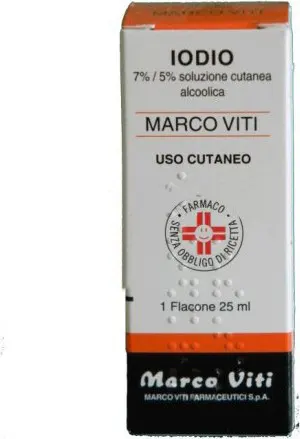
Alcoholic Cutaneous Solution
Composition:
100 ml contain Active ingredients: Iodine 7 g Potassium iodide 5 g For the full list of excipients, see section 6.1.
Excipients
Ethanol, purified water.
Therapeutic indications
Disinfection of intact skin for occasional treatments.
Contraindications
Hypersensitivity to the active ingredients or to any of the excipients. Generally contraindicated in pregnancy (see section 4.6). Do not use on children under 6 months.
Dosage
Brush on the area to be treated.
Warnings and precautions
For external use only. Do not ingest. Avoid contact with eyes. Prolonged application may cause irritation and causticity of the treated surface; therefore, the medicine should not be used for prolonged treatments. The medicine should be applied only to intact, unbroken skin, as in addition to causing irritation, it delays the healing of wounds and abrasions. Use, especially if prolonged, may give rise to sensitization phenomena. In this case, discontinue treatment and adopt appropriate therapeutic measures. To avoid excessive absorption of iodine, do not cover the treated skin area with occlusive bandages. If used for prolonged periods on large body surfaces, on mucous membranes, or under occlusive dressings, particularly in children and patients with thyroid disorders, thyroid function tests should be performed. Since iodine can alter thyroid function, caution is recommended in subjects with thyroid disease, patients over 45 years of age, or patients with goiter. In pediatric patients, use only if clearly needed and under medical supervision. Discontinue treatment at least 10 days before undergoing a radioactive iodine scan. Treatment may alter the results of thyroid function tests, especially in premature infants.
Interactions
If it comes into contact with acetone, elemental iodine forms a pungent, irritating compound. When evaluating interactions with other drugs, the possible systemic effects of iodine should be considered, although when administered locally as recommended, it is absorbed only in small amounts. The effects of iodine and iodides on the thyroid may be altered by other compounds, including amiodarone and lithium.
Undesirable effects
The following are the undesirable effects of iodine, organized according to the MedDRA system organ classification. There are insufficient data to determine the frequency of the individual effects listed. Skin and subcutaneous tissue disorders: Burning or irritation, acneiform eruptions, iododerma, delayed healing of damaged tissue. Inhalation of iodine vapors is highly irritating to mucous membranes. Immune system disorders: Hypersensitivity reactions including urticaria, angioedema, skin haemorrhages or purpura, fever, arthralgia, lymphadenopathy, and eosinophilia. Iodine, when administered topically as recommended, is absorbed only in small amounts with minimal systemic effects. However, the following adverse reactions are due to systemic effects of the drug, which may occur in cases of abnormal absorption (abundant, prolonged use, or with occlusion of the treated skin area). Endocrine disorders: Effects on the thyroid can cause goiter and hypothyroidism, as well as hyperthyroidism (Basedow's disease). Goiter and hypothyroidism can also occur in newborns exposed to iodides during pregnancy. Iodine can interfere with thyroid function tests. Psychiatric disorders: Depression, insomnia. Nervous system disorders: Headache. Gastrointestinal disorders: Nausea, vomiting, diarrhea. Reproductive system and breast disorders: Impotence. Injury, poisoning, and procedural complications: Prolonged use can cause a series of adverse effects collectively referred to as "iodism," some of which may be due to hypersensitivity. These adverse effects include a metallic taste, increased salivation, burning, and sore mouth; acute rhinitis, coryza-like syndrome, swelling and inflammation of the throat, irritation and swelling of the eyes, and increased lacrimation may also occur. Pulmonary edema, dyspnea, and bronchitis may develop.
Pregnancy and breastfeeding
Iodine is poorly absorbed when used as directed. Iodine that reaches the systemic circulation crosses the placenta, and excess iodine is harmful to the fetus: iodine use during pregnancy has been associated with goiter, hypothyroidism, respiratory problems, an enlarged heart, tracheal compression, and neonatal death. Iodine is excreted in breast milk. The use of excessive doses of iodine in breastfeeding mothers can increase the iodine level in breast milk and cause transient hypothyroidism in infants. The use of iodine, even when applied topically, is generally avoided during pregnancy and breastfeeding.
Product Code:FRCM046167




 Richiedi info sul prodotto