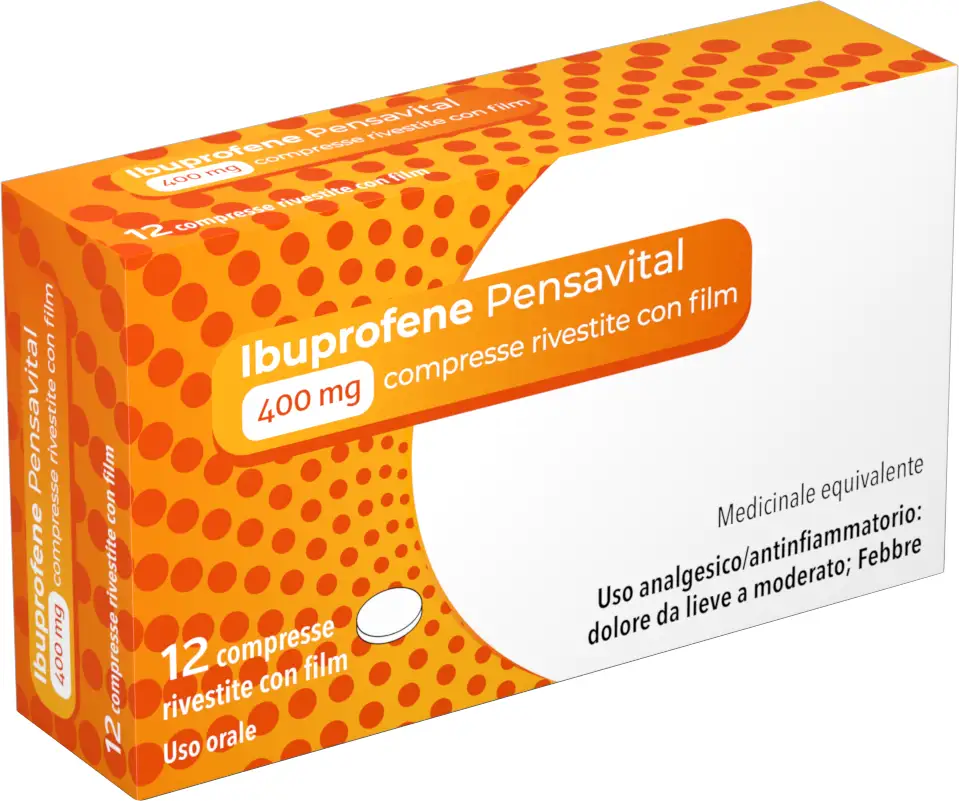
Medicine for analgesic/anti-inflammatory use: mild to moderate pain; Fever.
Indications
IBUPROFENE PENSAVITAL belongs to a group of medicines called NSAIDs (non-steroidal anti-inflammatory drugs) that work by reducing pain, inflammation and fever.
IBUPROFENE PENSAVITAL 400 mg is used for the symptomatic treatment of mild to moderate pain such as headache, dental pain, menstrual pain and fever (less than 3 days).
Composition
Active substances
Each film-coated tablet contains 400 mg of ibuprofen.
Excipients with known effect: each tablet contains 30 mg of lactose (as monohydrate) and 0.87 mg of sodium (as croscarmellose sodium).
Excipients
Tablet core: hypromellose, Croscarmellose sodium, lactose monohydrate, microcrystalline cellulose, pregelatinized maize starch, colloidal anhydrous silica, magnesium stearate.
Coating excipients: hypromellose, titanium dioxide (E-171), talc, propylene glycol.
Warnings
Talk to your doctor or pharmacist before taking IBUPROFENE PENSAVITAL.
Undesirable effects can be minimised by using the lowest effective dose to control symptoms for the longest period of treatment. as soon as possible.
You should discuss your treatment with your doctor or pharmacist before taking Ibuprofen Pensavital if:
- you suffer from systemic lupus erythematosus (SLE, sometimes known as lupus) or connective tissue disease (an autoimmune disease affecting the connective tissue); you have or have had gastrointestinal diseases (such as ulcerative colitis, Crohn's disease) as your condition may worsen;
- you suffer from certain inherited blood formation disorders (e.g. acute intermittent porphyria);
- you have reduced liver and kidney function;
- you have recently undergone major surgery;
- you suffer from hay fever, nasal polyps or chronic obstructive respiratory disease, as there is an increased risk of allergic reactions. Allergic reactions may present as asthma attacks (so-called analgesic asthma), Quincke's edema (rapid swelling) or urticaria.
- you are dehydrated;
- you have an infection.
Effects on the gastrointestinal tract
The combined use of IBUPROFENE PENSAVITAL with another non-steroidal anti-inflammatory drug (NSAID), a so-called COX-2 inhibitor (cyclooxygenase-2 inhibitor), should be avoided.
Bleeding in the gastrointestinal tract, ulcers and perforations
Bleeding in the gastrointestinal tract, ulcers and perforations, sometimes with fatal outcomes, have been reported with all NSAIDs. These have occurred at any time during therapy, with or without preceding warning symptoms or a history of serious gastrointestinal events.
The risk of gastrointestinal bleeding, ulcers, and perforation increases with increasing NSAID dose and is greater in patients with a history of ulcers, especially with complications of bleeding or perforation, and in elderly patients. These patients should start treatment at the lowest available dose.
For these patients, as well as As with patients requiring additional treatment with low-dose aspirin or other medicinal products that may increase the risk of gastrointestinal disorders, combination treatment with protective medicinal products (e.g. misoprostol or proton pump inhibitors) should be considered.
If you have a history of gastrointestinal side effects, especially if you are elderly, you should contact a doctor if you experience any unusual abdominal symptoms (especially gastrointestinal bleeding), particularly at the start of therapy.
Caution is advised if you are also taking other medicinal products that may increase the risk of ulcers or bleeding, e.g. Oral corticosteroids, anticoagulants (blood thinners) such as warfarin, selective serotonin reuptake inhibitors (used to treat psychiatric disorders including depression), or platelet aggregation inhibitors such as acetylsalicylic acid.
Treatment should be stopped and a doctor should be consulted if you develop gastrointestinal bleeding or ulcers during treatment with Ibuprofen Pensavital.
Effects on the cardiovascular system
Anti-inflammatory/pain-relieving medicines such as ibuprofen may be associated with a small increased risk of heart attack or stroke, especially when used in high doses. Do not exceed the recommended dose or duration of treatment.
You should discuss your treatment with your doctor or pharmacist before taking IBUPROFENE PENSAVITAL if:
- you have heart problems including heart failure and angina pectoris (chest pain), or if you have had a heart attack, bypass surgery, peripheral artery disease (poor blood circulation in the legs or feet due to narrow or blocked arteries) or any type of stroke (including “mini-stroke” or “transient ischemic attack“TIA”).
- you have high blood pressure, diabetes or high cholesterol, have a family history of heart disease or stroke or if you are a smoker.
Kidney effects
Caution should be exercised when starting treatment with ibuprofen in patients with significant dehydration. There is a risk of renal impairment, especially in dehydrated children, adolescents, and the elderly.
As with other NSAIDs, long-term administration of ibuprofen has caused renal papillary necrosis and other pathological renal changes. Renal toxicity has also been observed in patients in whom renal prostaglandins have a compensatory role in maintaining renal perfusion. In these patients, administration of an NSAID may cause a dose-dependent reduction in prostaglandin formation and, secondarily, renal blood flow, which may impair renal function. cause renal failure.
Patients at greatest risk of this reaction are those with impaired renal function, heart failure, liver dysfunction, those taking diuretics and ACE inhibitors, and the elderly.
Discontinuation of NSAID therapy is usually followed by recovery to the pre-treatment state.
Skin reactions
Severe skin reactions have been reported in association with ibuprofen treatment. Stop taking IBUPROFENE PENSAVITAL and contact your doctor immediately if you develop any skin rash, lesions of the mucous membranes, blisters, or other signs of allergy, as these may be the first signs of a very serious skin reaction.
During chickenpox infection (varicella infection), it is advisable to avoid the use of IBUPROFENE PENSAVITAL.
Infections
IBUPROFENE PENSAVITAL may cause serious skin reactions. Hide signs of infection such as fever and pain. It is therefore possible that IBUPROFENE PENSAVITAL may delay appropriate treatment of the infection, which may lead to an increased risk of complications. This has been observed in pneumonia caused by bacteria and bacterial skin infections related to chickenpox. If you take this medicine while you have an infection and the symptoms of the infection persist or worsen, consult a doctor immediately.
Respiratory disorders and hypersensitivity reactions
Severe acute hypersensitivity reactions (e.g., anaphylactic shock) have been observed very rarely.
At the first signs of a hypersensitivity reaction after taking/administering IBUPROFENE PENSAVITAL, treatment should be stopped and a doctor should be consulted. Necessary medical measures, in line with the symptoms, should be initiated by a healthcare professional.
Hematological effects
Ibuprofen may temporarily inhibit platelet function (platelet aggregation). Patients with blood clotting disorders should therefore be carefully monitored.
During prolonged use of IBUPROFENE PENSAVITAL, regular monitoring of liver function tests, kidney function and blood count is necessary.
If IBUPROFENE PENSAVITAL is taken before surgery, a doctor or dentist should be consulted/informed.
SLE and mixed connective tissue disease
In patients with systemic lupus erythematosus (SLE) and mixed connective tissue disorders, Ibuprofen may temporarily inhibit platelet function (platelet aggregation). There may be an increased risk of aseptic meningitis.
Aseptic meningitis
Aseptic meningitis has been observed on rare occasions in patients receiving ibuprofen. Although it is probably more likely to occur in patients with systemic lupus erythematosus and related connective tissue diseases, it has been reported in patients without an underlying chronic disease.
Patients who report eye disorders during treatment with ibuprofen should discontinue therapy and undergo ophthalmological examinations.
When using NSAIDs, adverse reactions, particularly those affecting the gastrointestinal tract or the central nervous system, may be increased by concomitant alcohol consumption.
Elderly
In elderly patients, side effects occur more frequently. frequently after the use of nonsteroidal anti-inflammatory drugs, in particular gastrointestinal bleeding and perforation, which in some cases can be life-threatening. For this reason, particularly close medical supervision is necessary in elderly patients.
Children and adolescents
There is a risk of renal impairment in dehydrated adolescents.
Side effects
Do not take IBUPROFENE PENSAVITAL if:
- you are allergic to ibuprofen or any other ingredient of this medicine. Symptoms of an allergic reaction may include swelling of the eyelids, lips, tongue or throat;
- if you have ever had an allergic reaction (such as bronchospasm (tightening of the lung muscles which can cause asthma and shortness of breath), asthma attacks, runny nose, swelling of the airways, skin reactions or sudden swelling) after taking acetylsalicylic acid or other similar painkillers (NSAIDs);
- have any unknown blood formation disorders;
- have recurrent stomach/duodenal ulcers (peptic ulcers) or bleeding (at least 2 different episodes of confirmed ulcers or bleeding);
- have a history of gastrointestinal bleeding or perforation associated with previous NSAID treatment;
- have any active bleeding (including bleeding in the brain);
- have severe liver, kidney or heart impairment;
- have severe dehydration (caused by vomiting, diarrhoea or insufficient fluid intake);
- suffer from chronic alcoholism (14 to 20 drinks/week or more);
- are a child under 12 years of age or adolescents weighing less than 40 kg;
- are in the last three months of pregnancy.
Like all medicines, this medicine can cause side effects, although not everybody gets them.
The pattern of adverse events reported for ibuprofen is similar to that for other NSAIDs.
Gastrointestinal disorders: The most commonly observed side effects affect the digestive tract. Stomach/duodenal ulcers (peptic ulcers), perforation or bleeding, sometimes fatal, especially in elderly patients, may occur. Nausea, vomiting, diarrhea, flatulence, constipation, digestive disorders, abdominal pain, tarry stools, vomiting blood, sores (ulceration) in the mouth and throat (ulcerative stomatitis), worsening of colitis and Crohn's disease have been reported after use. Less commonly, inflammation of the stomach lining (gastritis) has been observed. In particular, the risk of developing gastrointestinal bleeding depends on the dose level and duration of treatment.
Immune system disorders: Hypersensitivity reactions have been reported following treatment with NSAIDs. These may consist of (a) nonspecific allergic reaction and anaphylaxis, (b) airway reactivity including asthma, aggravated asthma, bronchospasm, or dyspnea, or (c) assorted skin disorders, including rashes of various types, pruritus, urticaria, purpura, angioedema, and, very rarely, erythema multiforme, bullous dermatosis (including Stevens-Johnson syndrome and toxic epidermal necrolysis).
Infections and infestations: Aseptic rhinitis and meningitis (especially in patients with existing autoimmune diseases, such as systemic lupus erythematosus and mixed connective tissue disease) with symptoms of stiff neck, headache, nausea, vomiting, fever, or disorientation. Exacerbation of infection-related inflammation coinciding with the use of NSAIDs has been described. If signs of infection appear or worsen during ibuprofen use, the patient is therefore advised to seek immediate medical attention.
Skin and subcutaneous tissue disorders: In exceptional cases, serious skin infections and soft tissue complications may occur during a chickenpox infection (see also "Infections and infestations").
Cardiac and vascular disorders: Edema, hypertension, and cardiac failure have been reported in association with NSAID treatment. Clinical studies suggest that the use of ibuprofen, particularly at high doses (2400 mg/day), may increase the risk of developing chickenpox. may be associated with a small increased risk of arterial thrombotic events such as myocardial infarction or stroke.
Other side effects that may occur
Common (may affect up to 1 in 10 people):
- Headache, dizziness;
- Gastrointestinal side effects (indigestion, diarrhoea, nausea, vomiting, abdominal pain, flatulence, constipation, black stools, bleeding in the stomach and intestines, vomiting blood);
- Skin rash;
- Tiredness.
Uncommon (may affect up to 1 in 100 people):
- Rhinitis;
- Hypersensitivity;
- Insomnia, anxiety;
- Paresthesia;
- Drowsiness;
- Visual disturbances, hearing impairment;
- Dizziness;
- Tinnitus;
- Bronchial spasm, asthma;
Dyspnoea; - Mouth ulceration;
- Stomach ulcer, intestinal ulcer, ruptured gastric ulcer, inflammation of the stomach mucosa;
- Hepatitis, jaundice, abnormal liver function;
- Itching, small bruises on the skin and mucous membranes;
- Photosensitivity;
- Nephrotoxicity in various forms e.g. Tubulointerstitial nephritis, nephrotic syndrome and renal failure.
Rare (may affect up to 1 in 1,000 people):
- Nonbacterial meningitis;
- Leucopenia;
- Thrombocytopenia;
- Aplastic anaemia;
- Neutropenia;
- Agranulocytosis;
- Haemolytic anaemia;
- Anaphylactic reaction;
- Depression, confusion;
- Optic neuritis;
- Toxic optic neuropathy;
- Oedema.
Very rare (may affect up to 1 in 10,000 people):
- Renal failure heart failure, myocardial infarction;
- Hypertension;
- Inflammation of the pancreas, liver failure;
- Severe forms of skin reactions (e.g. erythema multiforme, bullous reactions, including Stevens-Johnson syndrome and toxic epidermal necrolysis).
Not known (frequency cannot be estimated from the available data):
- Worsening of ulcers of the large intestine (colitis) and Crohn's disease (intestinal disease),
- Drug reaction with eosinophilia and systemic symptoms (DRESS syndrome);
- Acute generalized exanthematous pustulosis (AGEP).
Format
Pack of 12 Tablets
Product Code:FRCM199122




 Richiedi info sul prodotto