



- -22.1%

Recommended price

€14.18

 Richiedi info sul prodotto

Information on returns and shipments

Payment methods

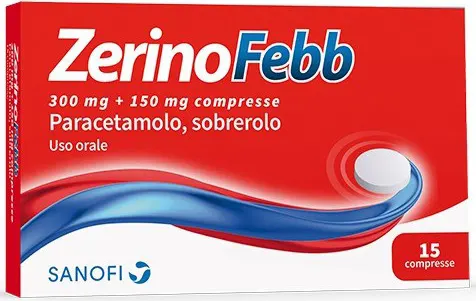
ZerinoFebb is an analgesic and antipyretic medicine, capable of relieving flu-like pain and reducing fever.
Symptomatic treatment of acute febrile processes of the respiratory system.
Active ingredients
Zerinofebb 300mg+150mg tablets.
One tablet contains: Paracetamol 300 mg, Sobrerolo 150 mg;
Zerinofebb Bambini 250 mg + 100 mg suppositories
Each suppository contains: Paracetamol 250 mg, Sobrerolo 100 mg;
Zerinofebb Adults 500 mg + 200 mg suppositories
Each suppository contains: Paracetamol 500 mg, Sobrerolo 200 mg;
Zerinofebb 12.8 mg/ml + 8 mg/ml syrup
100 ml of syrup contains: Paracetamol 1.28 g, Sobrerolo 0.8 g.
Excipients
Tablets: Dibasic calcium phosphate, starch, talc, magnesium stearate, povidone, microgranular cellulose, carboxymethyl starch. Suppositories: Adults and Children: Solid semi-synthetic glycerides. Syrup: Propylene glycol, glycerin, carboxymethylcellulose, sucrose, methyl p-hydroxybenzoate, propyl p-hydroxybenzoate, ethyl alcohol, saccharin, E150, ethylvanillin, cardamom flavouring, sodium phosphate, sodium dihydrogen phosphate dihydrate, purified water.
Hypersensitivity to the active substances or to any of the excipients listed in paragraph 6.1;
Patients with manifest glucose-6-phosphate dehydrogenase insufficiency;
Patients with severe haemolytic anaemia;
Severe hepatocellular insufficiency;
Severe alterations in renal function;
Severe alterations in blood count.
Adult suppositories: 2 suppositories per day.
Children's suppositories: 2 suppositories per day.
Adult tablets: 2 - 4 tablets per day.
Syrup: 4 - 6 teaspoons per day.
The product is contraindicated in patients with severe hepatocellular insufficiency and in patients with severely impaired renal function (see section 4.3). Administer with caution in patients with renal or hepatic insufficiency (see section 4.4). Do not exceed the maximum total daily dosage.
Suppositories: Store below 25°C.
Tablets, syrup: This medicine does not require any special storage conditions.
High or prolonged doses of the product can cause even serious alterations to the kidneys and blood count and high-risk liver disease. Do not use outside the acute febrile phase. Do not administer for more than 3 consecutive days without consulting your doctor. For administration to children under 3 years of age, consult your doctor. In patients being treated with anticoagulants, the product should be administered at a reduced dose. Administer with caution in subjects with renal or hepatic insufficiency. During treatment with paracetamol, before taking any other medicine, check that it does not contain the same active ingredient, as it may cause serious damage to the kidneys. If paracetamol is taken in high doses, serious adverse reactions may occur. Hepatotoxicity may occur with paracetamol even at therapeutic doses, after short-term treatment and in patients without pre-existing liver dysfunction (see section "Undesirable effects"). Caution is recommended in patients with a history of sensitivity to aspirin and/or nonsteroidal anti-inflammatory drugs (NSAIDs). Serious skin reactions: Life-threatening reactions such as Stevens-Johnson syndrome (SJS), toxic epidermal necrolysis (TEN), and acute generalized exanthematous pustulosis have been reported with the use of paracetamol. Patients should be informed of the signs and symptoms and monitored closely for skin reactions. If symptoms or signs of Stevens-Johnson syndrome, toxic epidermal necrolysis, or acute generalized exanthematous pustulosis (e.g., progressive skin rash with blisters or mucosal lesions) occur, the patient must immediately discontinue paracetamol treatment and consult a doctor. The use of ZERINOFEBB, as with any drug that inhibits the synthesis of prostaglandins and cyclooxygenase, is not recommended in women attempting to conceive. Administration of ZERINOFEBB must be suspended in women who have fertility problems or who are undergoing fertility investigations. Instruct the patient to contact their doctor before combining any other medication. See also the section "Interactions with other medicinal products and other forms of interaction." ZERINOFEBB syrup contains 1.25% vol. ethanol (alcohol), i.e., 1.5% alcohol. Up to 300 mg per dose, equivalent to 7.5 ml of beer, 3.1 ml of wine per dose. May be harmful for alcoholics. To be taken into consideration by pregnant or breastfeeding women, children and high-risk groups such as people with liver disease or epilepsy. ZERINOFEBB syrup contains up to 9 g of sucrose per dose. To be taken into consideration by people with diabetes mellitus. Patients with rare hereditary problems of fructose intolerance, glucose-galactose malabsorption, or sucrase-isomaltase insufficiency should not take this medicine. ZERINOFEBB syrup contains methyl parahydroxybenzoate and propyl parahydroxybenzoate: they may cause allergic reactions (possibly delayed). ZERINOFEBB syrup may contain up to 2 mmol of sodium per dose. To be taken into consideration in patients with reduced renal function or on a low-sodium diet.
Use with extreme caution and under close monitoring during chronic treatment with drugs that can induce hepatic monooxygenases or in case of exposure to substances that can have this effect (for example, cimetidine). The risk of paracetamol toxicity may be increased in patients taking other potentially hepatotoxic drugs or drugs that induce hepatic microsomal enzymes, such as some antiepileptics (such as phenobarbital, phenytoin, carbamazepine, topiramate), rifampicin and alcohol. Paracetamol administration may interfere with the determination of uric acid (using the phosphotungstic acid method) and blood glucose (using the glucose-oxidase-peroxidase method). Drugs that slow gastric emptying (e.g., propantheline) can reduce the rate of paracetamol absorption, delaying its therapeutic effect; conversely, drugs that increase the rate of gastric emptying (e.g., metoclopramide, domperidone) lead to an increase in the rate of absorption. Paracetamol may increase the risk of bleeding in patients taking warfarin and other vitamin K antagonists. Patients taking paracetamol and vitamin K antagonists should be monitored for appropriate coagulation and the occurrence of bleeding. The presence of paracetamol in the product increases the plasma levels of aspirin and chloramphenicol. Concomitant use of NSAIDs or opioids may result in mutual potentiation of the analgesic effect. Co-administration of flucloxacillin with paracetamol may lead to metabolic acidosis in patients with risk factors for glutathione depletion. Paracetamol increases the AUC of ethinylestradiol by 22%. Paracetamol may reduce the plasma concentration of lamotrigine.
Skin and subcutaneous tissue disorders: Erythema, urticaria, rash, fixed drug eruption. Very rare cases of serious skin reactions such as toxic epidermal necrolysis (TEN), Stevens-Johnson syndrome (SJS), and acute generalized exanthematous pustulosis have been reported (see section 4.4 Special warnings and special precautions for use). Immune system disorders: Hypersensitivity reactions such as angioedema, laryngeal edema, anaphylactic shock. Blood and lymphatic system disorders: Thrombocytopenia, neutropenia, leukopenia. Agranulocytosis, haemolytic anaemia in patients with basic glucose-6-phosphate dehydrogenase deficiency. Hepatobiliary disorders: Abnormal liver function and hepatitis. Cytolytic hepatitis leading to acute liver failure. Renal and urinary disorders: Acute renal failure, interstitial nephritis, haematuria, anuria. Gastrointestinal disorders: Gastrointestinal reactions. Ear and labyrinth disorders: Vertigo. Cardiac disorders: Kounis syndrome. Respiratory, thoracic and mediastinal disorders: Bronchospasm. Reported adverse reactions require discontinuation of treatment and the institution of appropriate therapy.
Reporting of suspected adverse reactions. Reporting suspected adverse reactions that occur after authorization of the medicinal product is important, as it allows continued monitoring of the benefit/risk balance of the medicinal product. Healthcare professionals are asked to report any suspected adverse reactions via the national reporting system at: http://www.agenziafarmaco.gov.it/it/responsabili.
Symptoms of paracetamol overdose are pallor, nausea, vomiting, anorexia, and abdominal pain and generally appear during the first 24 hours after paracetamol overdose. A paracetamol overdose can cause hepatic cytolysis, which can lead to liver failure. Overdose can lead to hepatocellular failure, gastrointestinal bleeding, metabolic acidosis, encephalopathy, coma, and death. Increased levels of hepatic transaminases, lactate dehydrogenase, and bilirubin with decreased prothrombin levels may occur 12 to 48 hours after acute overdose. Overdose can also lead to pancreatitis, acute renal failure, and pancytopenia. In severe cases, liver failure due to cellular necrosis may occur. Regarding sobrerol, there are no data in the literature regarding symptoms of overdose.
Epidemiological studies on neurodevelopment in children exposed to paracetamol in utero show inconclusive results. If clinically necessary, in case of pregnancy or breastfeeding, use only in case of real need under the direct supervision of a doctor.
Pack of 15 tablets
This product has been on sale since 10/12/2018
In the last 30 days, the product's lowest price was 8,38 €

Estimated delivery: 2-5 working days


Estimated delivery: 2-5 working days

Estimated delivery: 2-5 working days

Estimated delivery: 2-5 working days

Estimated delivery: 2-5 working days

Estimated delivery: 2-5 working days