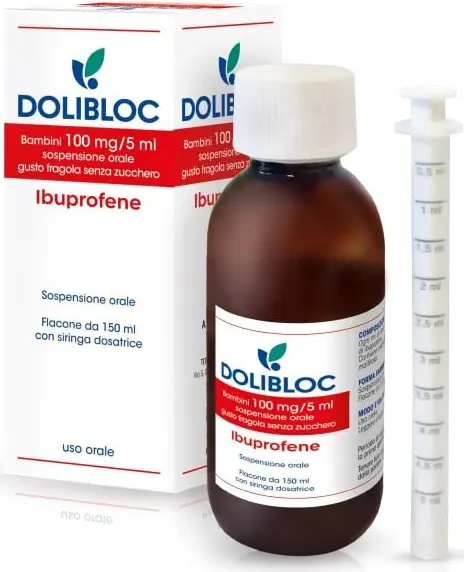
Dolibloc children 100 mg/5 ml oral suspension strawberry flavour 150 ml
Estimated delivery: 1-3 business days
Information on returns and shipments
Payment methods
Medicines authorized by the Ministry of Health
Symptomatic treatment of fever and mild to moderate pain.
Indications
DOLIBLOC Children 100 mg/5 ml sugar-free strawberry-flavored oral suspension is an ibuprofen-based medicine used to relieve pain and fever in children.
Composition
Active ingredients
Each ml of oral suspension contains: Active ingredient: ibuprofen 20 mg. Excipients with known effects: maltitol, sodium, sodium benzoate, citral, and linalool.
Excipients
Citric acid monohydrate, sodium citrate, acesulfame potassium, xanthan gum, sodium benzoate, strawberry flavoring, maltitol syrup, glycerin, purified water.
Directions for use and Dosage
The lowest effective dose should be used for the shortest duration necessary to relieve symptoms.
Dosage
The daily dose is structured according to the patient's weight and age. Undesirable effects can be minimized by using the lowest effective dose for the shortest duration necessary to control symptoms. In children aged 3 to 6 months, limit administration to those weighing more than 5.6 kg.
Method of administration
Oral administration to infants and children aged 3 months to 12 years should be done using the dosing syringe provided with the product. Patients who suffer from stomach problems may take the medicine during meals. The daily dose of 20-30 mg/kg of body weight, divided 3 times a day at intervals of 6-8 hours, can be administered according to the following schedule (do not exceed the recommended doses). The graduated scale on the body of the syringe clearly shows the markings for the different dosages; in particular the 2.5 ml mark corresponding to 50 mg of ibuprofen and the 5 ml mark corresponding to 100 mg of ibuprofen.
| WEIGHT | Age | Single DOSE in ml | n° maximum number of administrations/day |
| From 5.6 kg | 3 - 6 months | 2.5 ml | 3 in 24 hours |
| From 7 kg | 6 - 12 months | 2.5 ml | |
| From 10 kg | 1 - 3 years | 5 ml | |
| From 15 Kg | 4 - 6 years | 7.5 ml (5 ml + 2.5 ml) | |
| From 20 Kg | 7 - 9 years | 10 ml | |
| From 28 to 43 kg | 10 - 12 years | 15 ml |
Special populations: In case of post-vaccination fever, refer to the dosage indicated above; it is recommended to administer a single dose (2.5 ml) followed, if necessary, by another dose after 6 hours. Do not administer more than two doses in 24 hours. Consult your doctor if the fever does not decrease. The product is intended for short-term treatment. In infants aged 3 to 5 months, a doctor should be consulted if symptoms persist for more than 24 hours or if symptoms worsen. If use of the medicine is necessary for more than 24 hours, the doctor should be consulted if symptoms worsen. 3 days in infants and children over 6 months of age and in adolescents, or in case of worsening of symptoms, a doctor must be consulted.
Instructions for using the dosing syringe:
- Unscrew the cap by pushing it downwards and turning it to the left.
- Insert the tip of the syringe fully into the hole in the undercap.
- Shake well.
- Invert the bottle, then, holding the syringe firmly, gently pull the plunger downwards, allowing the suspension to flow into the syringe up to the mark corresponding to the desired dose.
- Return the bottle to an upright position and remove the syringe by gently turning it.
- Insert the tip of the syringe into the child's mouth and apply gentle pressure on the plunger to allow the suspension to flow out.
After Before use, screw the cap to close the bottle and rinse the syringe with hot water. Let it dry, keeping it out of the reach and sight of children.
Warnings
Undesirable effects can be minimized by using the lowest effective dose for the shortest duration necessary to control symptoms.
Other NSAIDs: The use of DOLIBLOC should be avoided in conjunction with other NSAIDs, including selective COX-2 inhibitors. Analgesics, antipyretics, and nonsteroidal anti-inflammatory drugs can cause potentially serious hypersensitivity reactions (anaphylactoid reactions), even in subjects not previously exposed to this type of drug. The risk of hypersensitivity reactions after taking ibuprofen is greater in subjects who have experienced such reactions after using other analgesics, antipyretics and non-steroidal anti-inflammatory drugs and in subjects with bronchial hyperreactivity (asthma), hay fever, nasal polyps, chronic obstructive respiratory diseases or previous episodes of angioedema.
Gastrointestinal (GI) effects:
- Gastrointestinal bleeding, ulceration and perforation: Gastrointestinal bleeding, ulceration and perforation, which can be fatal, have been reported with all NSAIDs at anytime during treatment, with or without warning symptoms or a previous history of serious GI events.
- Elderly: Elderly patients have an increased frequency of adverse reactions to NSAIDs, especially gastrointestinal bleeding and perforation, which may be fatal. In the elderly and in patients with a history of ulcers, particularly if complicated by haemorrhage or perforation, the risk of gastrointestinal bleeding, ulceration, or perforation is higher with increased doses of NSAIDs. These patients should start treatment on the lowest available dose. Concomitant use of protective agents (e.g. misoprostol or proton pump inhibitors) should be considered for these patients and also for patients taking low dose aspirin or other drugs likely to increase gastrointestinal risk.
- Patients with a history of gastrointestinal toxicity, particularly when elderly, should report any unusual gastrointestinal symptoms (especially gastrointestinal bleeding) particularly in the initial stages of treatment.
- Caution should be advised in patients receiving concomitant medications which could increase the risk of ulceration or bleeding, such as oral corticosteroids, anticoagulants such as warfarin, selective serotonin reuptake inhibitors or anti-platelet agents such as acetylsalicylic acid (aspirin).
- When gastrointestinal bleeding or ulceration occurs in patients receiving DOLIBLOC, the treatment should be withdrawn.
- NSAIDs should be administered with caution to patients with a history of gastrointestinal toxicity. of gastrointestinal disease (ulcerative colitis, Crohn's disease) as these conditions may be exacerbated.
Dermatological effects:
- Severe skin reactions: Serious skin reactions, some of them fatal, including exfoliative dermatitis, Stevens-Johnson syndrome, and toxic epidermal necrolysis, have been reported rarely in association with the use of NSAIDs. Patients appear to be at highest risk early in the course of therapy, with the onset of the reaction occurring in the majority of cases within the first month of treatment. Acute generalized exanthematous pustulosis (AGEP) has been reported in association with medicines containing ibuprofen. Ibuprofen should be discontinued at the first appearance of signs and symptoms of severe skin reactions, such as rash, mucosal lesions, or any other sign of hypersensitivity.
Masking of symptoms of underlying infections: DOLIBLOC may mask the symptoms of infection, which may delay the initiation of adequate treatment and thus worsen the outcome of the infection. This has been observed in community-acquired bacterial pneumonia and bacterial complications of varicella. When DOLIBLOC is administered for the relief of infection-related fever or pain, monitoring for the infection is recommended. In non-hospital settings, the patient should seek medical attention if symptoms persist or worsen. Varicella can exceptionally cause serious infectious complications of the skin and soft tissues. To date, no treatment can be considered. It is possible to exclude the contribution of NSAIDs in the worsening of these infections, therefore it is advisable to avoid the use of Dolibloc in case of chickenpox.
Cardiovascular and cerebrovascular effects: Caution is required (discuss with your doctor or pharmacist) before starting treatment in patients with a history of hypertension and/or heart failure since fluid retention, hypertension and edema have been reported in association with treatment with NSAIDs. Clinical studies and epidemiological data suggest that the use of ibuprofen, particularly at high doses (2400 mg/day) and for long-term treatment, may be associated with a modest increased risk of arterial thrombotic events (e.g. myocardial infarction or stroke). Overall, epidemiological studies do not suggest that low-dose ibuprofen (e.g., <1200 mg/day) is associated with an increased risk of myocardial infarction. Patients with uncontrolled hypertension, congestive heart failure, established ischemic heart disease, peripheral arterial disease, and/or cerebrovascular disease should be treated with ibuprofen only after careful consideration. Similar consideration should be made before initiating long-term treatment in patients with risk factors for cardiovascular events (e.g., hypertension, hyperlipidaemia, diabetes mellitus, smoking).
Renal disorders: In general, the habitual use of analgesics, especially the combination of different analgesics, can cause permanent kidney damage, with risk of renal failure (analgesic nephropathy). There is a risk of impaired renal function in dehydrated children and adolescents.
Other considerations:
- Prolonged use of any type of painkiller for headache may worsen symptoms. If this situation occurs or is suspected, a doctor should be consulted and treatment should be discontinued. The diagnosis of medication overuse headache (MOH) should be suspected in patients who experience frequent or daily headaches despite or because of the regular use of headache medications.
- Impaired female fertility: The medicine belongs to a group of drugs (NSAIDs) that can impair fertility in women.
This effect is reversible upon discontinuation of the drug. - The use of ibuprofen, acetylsalicylic acid or other analgesics, antipyretics, nonsteroidal anti-inflammatory drugs requires particular caution:
- in case of asthma or current or previous allergic diseases: possible deterioration of bronchoconstriction;
- in the presence of coagulation defects since ibuprofen, the active ingredient of DOLIBLOC, can temporarily inhibit platelet function (thrombocyte aggregation). Therefore, it is recommended to carefully monitor patients with coagulation disorders;
- in the presence of renal, cardiac or hypertension diseases: possible critical reduction of renal function (especially in subjects with impaired renal or hepatic function, cardiac failure or treated with diuretics), nephrotoxicity or fluid retention;
- in the presence of liver diseases: possible hepatotoxicity;
- rehydrate the subject before the start and during treatment in case of dehydration (for example due to fever, vomiting or diarrhea);
- immediately after major surgery;
- congenital disorders of porphyrin metabolism (for example, acute intermittent porphyria).
The following precautions are relevant during prolonged treatments:
- monitor for signs or symptoms of gastrointestinal ulceration or bleeding;
- monitor signs or symptoms of hepatotoxicity;
- monitor for signs or symptoms of nephrotoxicity;
- if visual disturbances occur (blurred or reduced vision, scotomas, alteration of color perception): discontinue treatment and consult an ophthalmologist;
- if signs or symptoms of meningitis occur: consider the rare possibility that it is due to the use of ibuprofen (aseptic meningitis; more frequent in subjects with systemic lupus erythematosus and mixed connective tissue disease or other collagen diseases).
Important information about some of the excipients:
- This medicine contains liquid maltitol: patients with rare hereditary problems of fructose intolerance should not take this medicine. This medicine does not contain sugar and is therefore indicated for those patients who need to control their sugar and calorie intake.
- This medicine contains 4.51 mg of sodium per 2.5 ml dose, equivalent to 0.23% of the WHO recommended maximum daily intake of 2 g of sodium for an adult.
- This medicine contains 2.5 mg of sodium benzoate per dose (2.5 ml of suspension), equivalent to 15 mg for the 15 ml dose.
- DOLIBLOC Children 100mg/5ml sugar-free orange-flavoured oral suspension also contains orange flavouring, which in turn contains linalool and citral which may cause allergic reactions.
Interactions
Ibuprofen should be avoided in combination with:
- Acetylsalicylic acid: The concomitant administration of Ibuprofen and acetylsalicylic acid are generally not recommended due to the potential for increased adverse effects. Experimental data suggest that ibuprofen may inhibit the effects of low-dose acetylsalicylic acid on platelet aggregation when the drugs are administered concomitantly. However, limited data and uncertainties regarding the application of ex vivo data to the clinical situation do not allow definitive conclusions to be drawn regarding regular ibuprofen use; clinically relevant effects from occasional ibuprofen use appear unlikely.
- Other NSAIDs, including cyclooxygenase-2 selective inhibitors: Avoid the concomitant use of two or more NSAIDs. analgesics, antipyretics, nonsteroidal anti-inflammatory drugs: increased risk of adverse effects.
Ibuprofen should be used with caution in combination with:
- Corticosteroids: Increased risk of gastrointestinal ulceration or bleeding.
- Quinolone antibiotics: Data from animal studies indicate that NSAIDs may increase the risk of convulsions associated with quinolone antibiotics. Patients taking NSAIDs and quinolones may have an increased risk of developing convulsions.
- Anticoagulants (such as warfarin): NSAIDs may enhance the effects of anticoagulants.
- Antiplatelet agents and selective serotonin reuptake inhibitors (SSRIs): Increased risk of gastrointestinal bleeding.
- Phenytoin: Concomitant use of DOLIBLOC with phenytoin may increase the serum levels of these drugs. Correct use of the drugs (administered for a maximum period of 3 days) does not usually require monitoring of phenytoin serum levels.
- Antidiabetics: The hypoglycaemic effect of sulfonylureas may be increased. In case of simultaneous treatment, monitoring of blood glucose levels is recommended.
- Antivirals (such as ritonavir): Possible increase in the concentration of NSAIDs.
- Cyclosporin: Increased risk of nephrotoxicity.
- Mifepristone: NSAIDs should not be administered within 8-12 days of taking mifepristone since they may increase the risk of nephrotoxicity. may reduce its effectiveness.
- Cytotoxics (such as methotrexate): Reduced excretion (increased risk of toxicity).
- Lithium: Reduced excretion (increased risk of toxicity).
- Tacrolimus: Increased risk of nephrotoxicity.
- Uricosurics (such as probenecid and sulfinpyrazone): Slow down the excretion of NSAIDs (increase plasma concentrations).
- Methotrexate: Potential for increased plasma concentrations of methotrexate.
- Zidovudine: Increased risk of haematological toxicity when NSAIDs are used in combination with zidovudine. There is evidence of an increased risk of haemarthrosis and haematomas in HIV (+) haemophiliacs when treated concomitantly with zidovudine and ibuprofen.
- Diuretics and antihypertensives (ACE inhibitors and angiotensin II antagonists): NSAIDs may reduce the effect of diuretics and other antihypertensive drugs. In some patients with compromised renal function (for example, dehydrated patients or elderly patients with compromised renal function), the co-administration of an ACE inhibitor or an angiotensin II antagonist and agents that inhibit the cyclo-oxygenase system may lead to further deterioration of renal function, including possible acute renal failure, which is usually reversible. These interactions should be considered in patients taking DOLIBLOC concomitantly with ACE inhibitors or angiotensin II antagonists. Therefore, the combination should be administered with caution, especially in elderly patients; Patients should be adequately hydrated and consideration should be given to monitoring renal function after initiation of concomitant therapy and periodically thereafter.
- Potassium-sparing diuretics: Concomitant administration of DOLIBLOC and potassium-sparing diuretics may lead to hyperkalemia.
- CYP2C9 inhibitors: Concomitant administration of ibuprofen and CYP2C9 inhibitors may increase exposure to ibuprofen (CYP2C9 substrate). In a study with voriconazole and fluconazole (CYP2C9 inhibitors), an increased exposure to S(+)-ibuprofen of approximately 80% to 100% was demonstrated. A reduction in the ibuprofen dose should be considered when strong CYP2C9 inhibitors are administered concomitantly, particularly when high doses of ibuprofen are administered with voriconazole or fluconazole.
- Cardiac glycosides (Digoxin): NSAIDs may worsen heart failure, reduce GFR (glomerular filtration rate) and increase plasma glycoside levels.
Contraindications
DOLIBLOC is contraindicated in the following cases:
- Hypersensitivity to ibuprofen or to any of the excipients.
- Children under 3 months of age or weighing less than 5.6 kg.
- Patients who show or have previously shown hypersensitivity (e.g. asthma, rhinitis, angioedema or urticaria) to acetylsalicylic acid or other analgesics, antipyretics, nonsteroidal anti-inflammatory drugs (NSAIDs), particularly when hypersensitivity is associated with nasal polyposis and asthma.
- Active peptic ulcer.
- Severe renal or hepatic insufficiency.
- Severe cardiac insufficiency.
- History of gastrointestinal bleeding or perforation related to previous NSAID therapy or history of recurrent peptic ulcer/haemorrhage (two or more distinct episodes of proven ulceration or bleeding).
- Concomitant use of NSAIDs, including specific COX-2 inhibitors.
- Patients with a history of cerebrovascular bleeding or other active bleeding.
- Patients with unexplained blood formation disorders.
- Patients with severe dehydration (caused by vomiting, diarrhea or insufficient fluid intake).
- During the last trimester of pregnancy.
Undesirable effects
The list of the following undesirable effects includes all those that have been recognized during treatment with ibuprofen for short periods of treatment and for daily doses up to a maximum of 1200 mg. In case of chronic or prolonged therapies at high doses, other undesirable effects may occur. The adverse reactions associated with the administration of ibuprofen are listed below according to the system organ class and by frequency. Frequencies are defined as:
- Very common (>1/10)
- Common (>1/100, <1/10)
- Uncommon (>1/1,000, <1/100)
- Rare (>1/10,000, <1/1,000)
- Very rare (>1/10,000)
- Not known (frequency cannot be estimated from the available data)
Within each frequency grouping, undesirable effects are presented in order of decreasing seriousness.
| System organ class | Frequency | Adverse reaction |
| Infections and infestations | Rare | Cystitis, rhinitis |
| Very rare | Worseness of infection-related inflammations (e.g. development of necrotising fasciitis), in exceptional cases severe skin infections and soft tissue complications have been reported during chickenpox infection | |
| Blood and lymphatic system disorders | Very rare | Haematopoiesis disorders¹ |
| Immune system disorders | Uncommon | Hypersensitivity reactions manifested by urticaria and pruritus² |
| Very rare | Severe hypersensitivity reactions including swelling of the face, tongue and larynx, dyspnoea, tachycardia, hypotension (anaphylaxis, angioedema or severe shock), exacerbation of asthma | |
| Immune system disorders Metabolism and nutrition disorders | Not known | Fluid retention and decreased appetite³ |
| Psychiatric disorders | Rare | Depression, insomnia, difficulty concentrating, emotional lability, visual and hearing disturbances |
| Not known | Irritability | |
| Nervous system disorders | Uncommon | Headache, dizziness, somnolence, convulsions, agitation, tiredness |
| Rare | Cerebrovascular haemorrhage | |
| Very rare | Aseptic meningitis4 | |
| Eye disorders | Uncommon | Visual disturbances |
| Rare | Dryness ocular | |
| Ear and labyrinth disorders | Not known | Tinnitus |
| Cardiac disorders | Very rare | Myocardial infarction |
| Rare | Palpitations | |
| Not known | Cardiac failure and oedema5 | |
| Vascular disorders | Not known | Hypertension5 and shock |
| Respiratory, thoracic and mediastinal disorders | Not known | Respiratory tract reactivity including asthma, laryngeal obstruction, bronchospasm or apnoea, dyspnoea |
| Gastrointestinal disorders | Uncommon | Abdominal pain, nausea and vomiting | dyspepsia6
| Rare | Diarrhoea, flatulence, dry mouth, constipation and vomiting | |
| Very rare | Peptic ulcer, gastrointestinal perforation or bleeding, melaena and haematemesis7. Mouth ulceration and gastritis | |
| Not known | Exacerbation of colitis and Crohn's disease8, pancreatitis, duodenitis, esophagitis | |
| Hepatobiliary disorders | Very rare | Hepatic dysfunction, hepatitis, jaundice, hepatorenal syndrome, hepatic necrosis, hepatic failure |
| Skin and subcutaneous tissue disorders | Uncommon | Various skin rashes² |
| Rare | Exfoliative dermatitis, alopecia, photosensitivity dermatitis | |
| Very rare | Bullous reactions including Stevens-Johnson syndrome, erythema multiforme and toxic epidermal necrolysis² | |
| Not known | Drug reaction with eosinophilia and systemic symptoms (DRESS syndrome), acute generalized exanthematous pustulosis (AGEP), photosensitivity reactions | |
| Renal and urinary disorders | Rare | Tubular necrosis, glomerular nephritis, polyuria, haematuria |
| Very rare | Acute renal failure9 | |
| Investigations | Rare | Decreased haematocrit levels |
| Very rare | Decreased haemoglobin levels |
Description of selected adverse reactions
¹ Haematopoiesis disorders: including anaemia, aplastic anaemia, haemolytic anaemia (positive Coombs test), leukopenia, neutropenia, thrombocytopenia (with or without purpura), eosinophilia, pancytopenia and agranulocytosis. Early symptoms may include fever, sore throat, superficial mouth ulcers, flu-like symptoms, marked fatigue, nosebleeds and haemorrhage. In these cases, the patient should be advised to immediately stop taking the medicine, avoid any over-the-counter drugs containing analgesics or antipyretics and consult a doctor. Rarely, congestive heart failure has been observed in patients with impaired cardiac function.
² Hypersensitivity reactions: These reactions include:
- a) non-specific allergic reactions and anaphylaxis, fever, chills;
- b) respiratory tract reactivity including asthma, aggravated asthma, bronchospasm or dyspnoea;
- c) various skin disorders including various rashes (including maculo-papular in nature), pruritus, urticaria with or without angioedema, purpura, angioedema and, very rarely, bullous and exfoliative dermatitis including toxic epidermal necrolysis, Stevens-Johnson syndrome and erythema multiforme.
³ Decreased appetite: Generally, this resolves rapidly upon discontinuation of treatment.
? Aseptic meningitis: The pathogenic mechanism of drug-induced aseptic meningitis is not fully understood. However, available data on aseptic meningitis related to NSAID administration suggest an immune reaction (due to a temporal relationship with drug intake and the disappearance of symptoms after discontinuation of treatment). It should be noted that single cases of aseptic meningitis symptoms (such as stiff neck, numbness in the neck, headache, nausea, vomiting, fever, and disorientation) have been observed during treatment with ibuprofen in patients with autoimmune diseases (such as systemic lupus erythematosus, mixed connective tissue disease).
? Heart failure and edema: Clinical trial and epidemiological data suggest that the use of ibuprofen, particularly at high doses (2400 mg/day) and in long-term treatment, may be associated with a modest increased risk of arterial thrombotic events (e.g. myocardial infarction).
Price Trend
This product has been on sale since 29/04/2025
In the last 30 days, the product's lowest price was 9,38 €