Symptomatic treatment of fever and mild to moderate pain.
Indications
Dolibloc Oral Suspension Ibuprofen Orange Flavor Sugar-Free is used in the symptomatic treatment of fever and mild to moderate pain.
Composition
Active ingredients
Composition
Each ml of Dolibloc® oral suspension contains 100 mg of ibuprofen. contains:
- Active ingredient: ibuprofen 20 mg.
- Excipients with known effects: maltitol, sodium, sodium benzoate, citral and linalool.
Directions for use and Dosage
Method of administration:
- Infants and children (3 months - 12 years): Oral administration using the measuring syringe provided.
- Patients with stomach problems: They can take the medicine during meals.
Dosage:
- Daily dose: 20-30 mg/kg of body weight, divided into 3 doses administrations at intervals of 6-8 hours.
- Dosage reference (do not exceed the recommended doses):
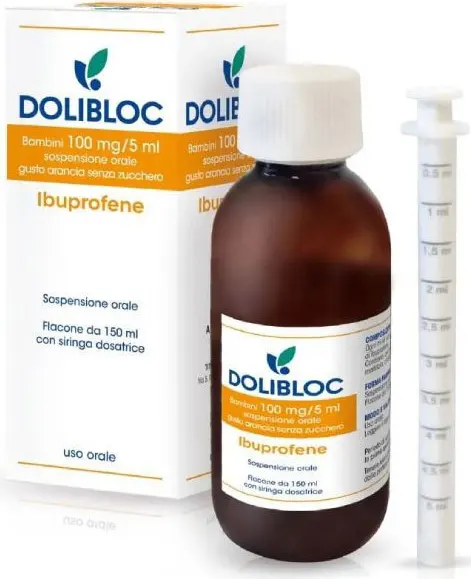
- 2.5 ml mark: Corresponds to 50 mg of ibuprofen.
- 5 ml mark: Corresponds to 100 mg of ibuprofen.
- Post-vaccination fever:
- Single dose: 2.5 ml.
- If necessary, a second dose after 6 hours.
- Do not exceed two doses in 24 hours.
- Consult your doctor if the fever does not decrease.
Duration of treatment:
- The product is intended for short-term treatments.
- Infant (3-5 months): Consult your doctor if symptoms persist for more than 24 hours or worsen.
- Infant (> 6 months), children and adolescents: Consult your doctor if use is necessary for more than 3 days or if symptoms worsen.
Instructions for using the dosing syringe:
- Unscrew the cap by pushing it downwards and turning it to the left.
- Insert the tip of the syringe fully into the hole in the undercap.
- Shake the bottle well.
- Turn the bottle upside down. Holding the syringe firmly, gently pull the plunger down to the mark corresponding to the desired dose.
- Return the bottle to an upright position and remove the syringe by gently twisting it.
- Insert the tip of the syringe into the child's mouth and apply gentle pressure to the plunger to release the suspension.
Cleaning the syringe:
- After use, screw the cap on to close the bottle.
- Wash the syringe with warm water.
- Let the syringe dry out of the reach and sight of children.
Warnings
Warnings and precautions:
Talk to your doctor or pharmacist before using DOLIBLOC if your child:
- Allergies and skin problems respiratory:
- You have or have had an allergy to medicines used for fever, pain and inflammation (NSAIDs).
- You have difficulty breathing (asthma).
- You have seasonal allergies (hay fever).
- You have polyps in your nose.
- You have severe breathing or chest problems (e.g. COPD).
- You have had swelling of the face, lips and throat (angioedema).
- Taking other medicines:
- You are taking other NSAIDs (including COX-2 inhibitors) for pain, fever and/or inflammation.
- Gastrointestinal problems:
- You have had stomach and intestinal problems (history of ulcers), especially if complicated by bleeding or perforation. In these cases:
- Your doctor may recommend the lowest dose and stomach-protective medications.
- Also consider taking low-dose aspirin or other medications that increase gastrointestinal risk.
- Inform your doctor of any uncommon gastrointestinal symptoms (especially bleeding).
- Stop taking Dolibloc and contact your doctor if you experience gastrointestinal bleeding or ulceration.
- You suffer or have suffered from inflammatory bowel disease (ulcerative colitis, Crohn's disease) as it may cause serious side effects. may get worse.
- Increased risk of ulcer or bleeding from other medicines:
- You are taking oral corticosteroids.
- You are taking blood thinners (e.g. warfarin).
- You are taking antiplatelet drugs (e.g. aspirin).
- You are taking medicines for depression (selective serotonin reuptake inhibitors).
- Cardiovascular and cerebrovascular problems:
- You have heart disease (uncontrolled hypertension, congestive heart failure, established ischemic heart disease, peripheral arterial disease) or have had a stroke.
- You think your child may be at risk for these conditions (high blood pressure, diabetes, high levels of fat in the blood, smoking).
- Important: Do not exceed the recommended dose or duration, as medicines such as Dolibloc may slightly increase the risk of heart attack or stroke, especially at high doses and for prolonged periods.
- Other health problems:
- You suffer or have suffered from high blood pressure and/or severe heart disease (heart failure) as Fluid retention, high blood pressure and swelling (oedema) have been reported.
- You have chickenpox (it is advisable to avoid the use of Dolibloc).
- You have an infection.
- You have or have had asthma (this may make breathing difficulties worse).
- You have clotting problems.
- You have kidney, heart or liver disease, are taking diuretics or have had major surgery involving loss of fluids (your doctor may recommend regular tests).
- You have had major surgery.
- You have certain congenital diseases affecting blood formation (e.g. acute intermittent porphyria).
- You are dehydrated (e.g. due to fever, vomiting or diarrhoea) - rehydrate before treatment.
Infections:
- Dolibloc can hide the symptoms of infections (fever and pain), delaying adequate treatment and increasing the risk of complications.
- This has been observed in bacterial pneumonia and bacterial skin infections related to chickenpox.
- If during treatment with Dolibloc the symptoms of infection persist or worsen, consult your doctor immediately.
Allergic reactions:
- Signs of allergic reaction (breathing problems, swelling of the face and neck (angioedema), chest pain) have been reported with ibuprofen.
- Stop taking Dolibloc immediately and contact your doctor or emergency medical service immediately if you experience such signs.
Serious skin reactions:
- Serious skin reactions (exfoliative dermatitis, erythema multiforme, Stevens-Johnson syndrome, toxic epidermal necrolysis, DRESS, AGEP).
- Stop using Dolibloc and contact your doctor immediately at the first signs of these skin reactions.
- Stop taking Dolibloc and contact your doctor immediately if you experience a skin rash, mucosal lesions, blisters or other signs of allergy.
Precautions during prolonged treatment:
Notify your doctor immediately if you experience:
- Signs or symptoms of gastrointestinal ulceration or bleeding (black, foul-smelling stools, vomiting blood).
- Signs or symptoms of liver damage (hepatitis and jaundice).
- Signs or symptoms of kidney damage (increased urine production, blood in the urine).
- Visual disturbances (blurred or reduced vision, areas of blindness, impaired colour vision).
- Frequent or daily headaches despite regular use of headache medicines.
- Symptoms such as headache, disorientation, nausea, vomiting, stiff neck and fever (possible symptoms of aseptic meningitis, more frequent in patients with systemic lupus erythematosus or other collagen diseases).
Children and adolescents:
- There is a risk of impaired kidney function in dehydrated children and adolescents.
Contraindications/Side effects
Do not use DOLIBLOC if the child:
- Allergies:
- Is allergic to ibuprofen or any of the other ingredients of this medicine.
- Has experienced or you have experienced past or current allergic reactions such as:
- Wheezing.
- Rhinitis (runny nose).
- Swelling of the face, lips and throat (angioedema).
- Urticaria, especially if associated with nasal polyps and asthma, after taking:
- Other painkillers.
- Other antipyretics.
- Acetylsalicylic acid (aspirin).
- Other non-steroidal anti-inflammatory drugs (NSAIDs).
- Serious illnesses:
- You suffer from severe kidney disease (severe renal failure).
- You suffer from severe liver disease (severe hepatic failure).
- You suffer from severe heart disease (severe cardiac failure). severe).
- Serious gastrointestinal problems:
- You have or have had bleeding in the stomach and/or intestines (gastrointestinal haemorrhage) or perforation following previous treatment with NSAIDs.
- You have or have had active or recurrent gastric/duodenal ulcers (peptic ulcers) or bleeding (at least two separate episodes of ulceration or bleeding).
- Taking other medicines:
- You are taking other non-steroidal anti-inflammatory drugs (NSAIDs, including selective COX2 inhibitors).
- Other risk factors:
- You have any disease that increases the risk of bleeding.
- You have unexplained blood disorders.
- You are in a you are severely dehydrated (for example, you have had severe vomiting, diarrhoea or you drink very little).
- Age and weight:
- You are less than 3 months old or weigh less than 5.6 kg.
- Pregnancy:
- You are in the last trimester of pregnancy.
Side effects
Like all medicines, this medicine can cause side effects. cause side effects, although not everybody gets them.
Stop using ibuprofen and see a doctor immediately if you notice your child develops any of the following symptoms:
- flat, target-shaped, or circular reddish spots on the trunk, often with central blisters, peeling skin, ulcers of the mouth, throat, nose, genitals, and eyes. These serious skin rashes may be preceded by fever and flu-like symptoms (bullous dermatitis, exfoliative dermatitis, erythema multiforme, Stevens-Johnson syndrome, toxic epidermal necrolysis);
- widespread rash, high body temperature, and swollen lymph nodes (DRESS syndrome);
- widespread, red, scaly rash with bumps under the skin and blisters, accompanied by fever. Symptoms usually appear at the beginning of treatment (acute generalized exanthematous pustulosis);
- allergic reactions, including severe ones, which may include: hives, itching, purpura, swelling of the face, mouth and throat (angioedema), difficulty breathing (bronchospasm or dyspnoea), abnormal heartbeat (tachycardia), low blood pressure (hypotension), anaphylaxis, shock and worsening of asthma;
- aseptic meningitis with symptoms such as disorientation, headache, nausea, vomiting, stiff neck and fever (more frequent if the child suffers from systemic lupus erythematosus or other collagen diseases).
Additional side effects include:
Uncommon (may affect up to 1 in 100 people): - headache, dizziness, drowsiness and convulsions
- stomach pain, nausea and difficulty breathing digestive (dyspepsia)
- skin rashes
- visual disturbances
Rare (may affect up to 1 in 1,000 people): - cystitis, rhinitis
- depression, insomnia, difficulty concentrating, mood swings, hearing disturbances
- cerebrovascular haemorrhage
- dry eyes
- awareness of your heartbeat (palpitations)
- diarrhoea, flatulence, dry mouth, constipation and vomiting
- hair loss (alopecia), skin reaction caused by exposure to sunlight (photosensitivity dermatitis)
- severe kidney disease including tubular necrosis, glomerular nephritis, blood in the urine and increased production of urine
- decrease in haematocrit levels
Very rare (may affect up to 1 in 10,000 people):
- reduction in the number of blood cells (anaemia, leucopenia, thrombocytopenia, eosinophilia, pancytopenia, agranulocytosis) - the first signs are: fever, sore throat, superficial mouth ulcers, flu-like symptoms, severe tiredness, nose bleeds and bleeding
- signs or symptoms of ulceration or bleeding in the stomach and intestines, black, foul-smelling stools, vomiting blood
- bleeding lesions in the mouth, heartburn (gastritis)
- simultaneous kidney and liver disease (hepatorenal syndrome), death of some liver cells (liver necrosis), liver disease (liver failure, liver dysfunction, hepatitis, jaundice)
- severe kidney disease (acute renal failure, papillary necrosis) particularly following long-term treatment, associated with increased blood urea concentration and swelling (oedema)
- decreased blood haemoglobin levels
- heart attack (myocardial infarction)
- severe skin infections and soft tissue complications during chickenpox infection
- worsening of infection-related inflammation (e.g. necrotising fasciitis) associated with the use of some non-steroidal anti-inflammatory drugs (NSAIDs). If signs of an infection appear or worsen, you should contact your doctor immediately to assess whether anti-infective/antibiotic therapy is necessary.
Not known (frequency cannot be estimated from the available data)
- irritability
- fluid retention and decreased appetite
- abnormal perception of noises such as buzzing, ringing or rustling (tinnitus)
- severe heart disease (cardiac failure) and swelling (oedema), chest pain, which may be severe; be a sign of a potentially serious allergic reaction called Kounis syndrome
- increased blood pressure (hypertension) and reduced blood flow to the body (shock)
- respiratory tract disorders including asthma, obstruction of the larynx, shortness of breath (bronchospasm), temporary cessation of breathing (apnoea) and difficulty breathing (dyspnoea)
- worsening of inflammatory bowel diseases (colitis and Crohn's disease)
- inflammation of the pancreas (pancreatitis), inflammation of the duodenum (duodenitis), inflammation of the oesophagus (oesophagitis)
- a widespread, red, scaly rash with pustules under the skin and blisters mainly located in the skin folds, on the trunk and upper limbs accompanied by fever at the start of treatment (acute generalised exanthematous pustulosis). Stop using Dolibloc if you develop these symptoms and contact your doctor immediately.
- A serious skin reaction known as DRESS syndrome may occur. Symptoms of DRESS include: rash, fever, swollen lymph nodes, and an increase in eosinophils (a type of white blood cell).
- The skin becomes sensitive to light.
Using ibuprofen, especially at high doses (2400 mg/day), may be associated with a small increased risk of heart attack (myocardial infarction) or stroke.
If you get any side effects, talk to your doctor or pharmacist. This includes any possible side effects not listed in this leaflet. You can also report side effects directly via the national reporting system.
By reporting side effects, you can help keep your doctor and pharmacist informed. Help provide more information on the safety of this medicine.
Storage
Shelf life: 3 years.
Shelf life after first opening: 6 months. This medicine does not require any special storage conditions.
Format
150 ml bottle with measuring syringe.
Product Code:FRCM222765




 Richiedi info sul prodotto