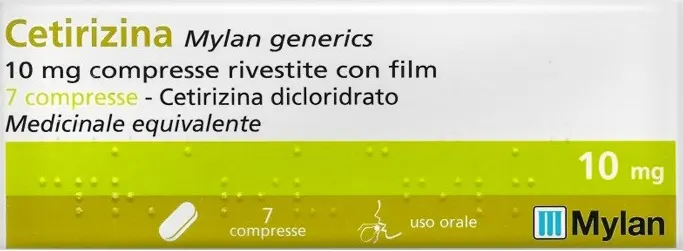
Cetrizine MYLAN 10 mg film-coated tablets
Composition:
One film-coated tablet contains 10 mg cetirizine dihydrochloride. Contains lactose monohydrate. For the full list of excipients, see section 6.1.
Excipients
Tablet core: lactose monohydrate, pregelatinized maize starch, povidone K29/32, magnesium stearate. Tablet coating: Talc Opadry Y-1-7000, Titanium dioxide (E171), Hypromellose 5cP (E464), macrogol 400,
Therapeutic indications
Adults and adolescents over 12 years: symptomatic treatment of allergic rhinitis (seasonal and perennial), associated with allergic conjunctivitis and chronic idiopathic urticaria. Children 6-12 years: symptomatic treatment of allergic rhinitis (seasonal and perennial) and chronic idiopathic urticaria.
Contraindications
Hypersensitivity to cetirizine or any of the excipients of the preparation as well as to other piperazine derivatives. Cetirizine 10 mg tablets are contraindicated in children under six years of age. Patients with severe renal impairment.
Dosage
Cetirizine Mylan Generics should be taken with liquid and not chewed, preferably in the evening. Adults and adolescents over 12 years: one tablet daily. Children aged 6-12 years weighing less than 30 kg: 1 tablet (5 mg) once daily. Children aged 6-12 years weighing 30 kg or more: 1 tablet (10 mg) daily taken as a single dose or 1 tablet (5 mg) taken twice daily (morning and evening). The duration of treatment in children is 2-4 weeks. Clinical trials in children have not exceeded 4 weeks. Cetirizine is contraindicated in patients with severe renal impairment. In patients with moderate renal impairment, the dose should be adjusted to 5 mg (12 mg/day). Caution is recommended in patients with mild to moderate renal impairment or impaired hepatic function. (See section 4.4.) There is no evidence that the dose needs to be adjusted in healthy elderly patients. The duration of treatment may vary according to symptoms. For the treatment of hay fever, 3-6 weeks are usually sufficient. There is clinical experience of 1 year with cetirizine dihydrochloride in chronic urticaria or chronic allergic rhinitis.
Warnings and precautions
Long-term treatment with cetirizine tablets may lead to an increased risk of caries due to dry mouth in some patients. Patients should therefore be informed of the importance of oral hygiene. With impaired renal and hepatic function, the elimination of cetirizine may also be impaired. Caution is recommended when administering cetirizine to these patients (see sections 4.2 and 4.3). Cetirizine may cause: Cetirizine may potentiate the effects of alcohol. Therefore, caution is recommended when using alcohol concomitantly. Caution is recommended when using CNS depressants concomitantly. Cetirizine Mylan Generics contains lactose monohydrate. Patients with rare hereditary problems of galactose intolerance, the Lapp lactase deficiency, or glucose-galactose malabsorption should not take this medicine.
Interactions
Allergy testing: Cetirizine should be discontinued three days before allergy testing. Cetirizine may potentiate the effects of alcohol. Therefore, caution is recommended when using alcohol concomitantly. Caution is recommended when using CNS depressants concomitantly.
Undesirable effects
Dry mouth, headache, dizziness, drowsiness in children and adults, agitation, abdominal and digestive discomfort. The following have been observed: cases of reversible liver function disorders (hepatitis, increased transaminases), epileptic convulsions, thrombocytopenia, palpitations, tachycardia, syncope, epileptic convulsions, weight gain. Cetirizine can cause oculogyric crises, especially in pediatric patients. Exceptionally, cases of allergic reactions such as skin reactions and Quincke's edema have been reported.
Pregnancy and breastfeeding
Data on a limited number of exposures to the drug during pregnancy indicate the lack of adverse effects of cetirizine on pregnancy or on the health of the fetus or newborn. To date, no other relevant epidemiological data are available. Animal studies do not indicate direct or indirect harmful effects with respect to pregnancy, embryonic/fetal development, parturition, or postnatal development (see section 5.3). Caution is recommended when prescribing the drug to pregnant women. Breastfeeding There are no data available on the excretion of cetirizine in milk.
Product Code:FRCM046567




 Richiedi info sul prodotto