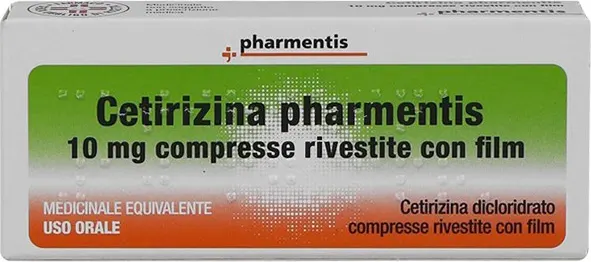
Cetirizine-based antihistamine useful for nasal and ocular symptoms of allergic rhinitis and chronic urticaria.
Indications
Cetirizine is an antiallergic medicine based on Cetirizine dihydrochloride.
In adults and children aged 6 years and over, Cetirizine is indicated:
- to relieve the nasal and ocular symptoms of seasonal and perennial allergic rhinitis.
- to relieve the symptoms of chronic urticaria (chronic idiopathic urticaria).
Composition
Active ingredients
One film-coated tablet contains 10 mg of cetirizine dihydrochloride.
Excipients
lactose monohydrate, maize starch, povidone 30, magnesium stearate, hypromellose 2910/5 (E464), macrogol 6000, talc, titanium dioxide (E171), simethicone emulsion SE 4
Directions for use and Dosage
Adults and adolescents from 12 years of age: 10 mg once daily as 1 tablet
Children aged 6 to 12 years: 5 mg twice daily as half a tablet twice daily.
Warnings
If you are pregnant or breast-feeding, think you may be pregnant or are planning to have a baby, ask your doctor or pharmacist for advice before taking this medicine.
Cetirizine should be avoided during pregnancy. pregnancy. Accidental use of the medicine by a pregnant woman does not produce any harmful effects on the fetus.
However, the medicine can be administered if necessary and after medical advice.
Cetirizine passes into breast milk.
Therefore, you should not take Cetirizine while breastfeeding unless you have contacted your doctor.
If you are a patient with kidney failure, ask your doctor for advice; if necessary, you will need to take a lower dose. The new dose will be established by your doctor.
If you have problems urinating (such as spinal cord problems or prostate or bladder problems), ask your doctor for advice.
If you are an epileptic patient or a patient at risk of convulsions, you should ask your doctor for advice.
No clinically significant interactions have been observed between alcohol (at blood levels of 0.5 per thousand corresponding to a glass of wine) and cetirizine used at the recommended doses.
However, there are no data available on the safety when high doses of cetirizine and alcohol are taken together.
Therefore, as with all antihistamines, it is recommended to avoid taking Cetirizine and alcohol at the same time.
If you have scheduled allergy tests, ask your doctor if you should stop taking it several days before the tests.
This medicine may cause allergic reactions. have an effect on test results.
Contraindications
Hypersensitivity to the active substance, to any of the excipients, to hydroxyzine or to any piperazine derivative. Patients with severe renal insufficiency with creatinine clearance less than 10 ml/min.
Interactions
Due to the pharmacokinetic, pharmacodynamic and tolerability profile of cetirizine, no interactions with this antihistamine are expected.
In drug-drug interaction studies, in fact, neither pharmacodynamic nor significant pharmacokinetic interactions have been reported, in particular with pseudoephedrine or theophylline (400 mg/day).
The extent of absorption of cetirizine is not reduced by food intake; although the rate of absorption is decreased.
Undesirable effects
Clinical studies have shown that cetirizine at the recommended dosage has minor CNS adverse effects, including drowsiness, fatigue, dizziness, and headache.
In some cases, paradoxical CNS stimulation has been reported.
Although cetirizine is a selective inhibitor of peripheral H1 receptors and is relatively free of anticholinergic activity, rare cases of difficulty in urination, disturbances of ocular accommodation, and dry mouth have been reported. Cases of abnormal liver function with elevated liver enzymes accompanied by elevated bilirubin have been reported, most of which resolved following discontinuation of cetirizine dihydrochloride treatment.
Overdose
Symptoms: Symptoms observed following cetirizine overdose are mainly associated with central nervous system effects or effects that may suggest anticholinergic activity.
The following adverse events have been reported following intake of a dose equal to at least 5 times the recommended daily dose: confusion, diarrhea, dizziness, fatigue, headache, malaise, mydriasis, pruritus, restlessness, sedation, somnolence, stupor, tachycardia, tremor, and urinary retention. Treatment: There is no known specific antidote to cetirizine.
In case of overdose, symptomatic or supportive treatment is recommended.
Following recent ingestion, gastric lavage is recommended.
Cetirizine is not effectively removed by dialysis.
Pregnancy and lactation
Pregnancy: For cetirizine very limited clinical data on exposed pregnancies are available. Animal studies do not indicate direct or indirect harmful effects with respect to pregnancy, embryonic/fetal development, parturition or postnatal development.
Caution should be exercised when prescribing the medicinal product to pregnant women.
Lactation: Cetirizine is excreted in breast milk at concentrations representing 0.25 to 0.90 of those measured in plasma, depending on the sampling time after administration. Therefore, caution should be exercised when cetirizine is prescribed to women who are breastfeeding.
Storage
This medicinal product does not require any special storage conditions.
Format
7 x 10 mg tablets
Product Code:FRCM134153




 Richiedi info sul prodotto