Antibacterial for the treatment of acne.
Indications
Boric acid is an antiseptic for the disinfection of minor burns and irritated or chapped skin areas. The solution is also used in the form of local swabs with a decongestant action.
Boric acid is indicated as an antibacterial for the treatment of acne.
Directions for use
External use: apply as needed to the affected area.
Adults Boric acid can be applied directly once or twice a day to inflamed areas in case of chapped, irritated, or dry skin, abrasions, minor burns, sunburn, windburn, or insect bites.
Children over 3 years Boric acid can be applied directly once or twice a day to inflamed areas associated with chapped, irritated, or dry skin, diaper rash, minor burns, sunburn, windburn, or insect bites.
Warnings
Excessive and prolonged application to large areas or damaged skin may cause accumulation toxicity. Keep out of reach of children, as deaths have occurred following accidental ingestion. The medicine should not be used for ophthalmic purposes.
Contraindications
Boric acid is contraindicated in case of: – hypersensitivity to the active substance or to any of the excipients; – extensive skin lesions; – children under 3 years of age.
Interactions
There are no known interactions between boric acid for external use and other medicinal products.
Side effects
The absorption of boric acid through intact skin is less than 0.5%; however, it may increase if accidentally administered systemically or applied to wounds or lesions.
The following are the side effects of boric acid that occurred in case of accumulation toxicity, after prolonged exposure and following systemic absorption.
These effects are organized according to the MedDRA system organ classification. There are insufficient data to establish the frequency of the individual effects listed.
Skin and subcutaneous tissue disorders: Dermatitis, rash, alopecia.
Gastrointestinal disorders: Gastrointestinal disorders: Nausea, vomiting, diarrhea. Metabolism and nutrition disorders: Anorexia.
Endocrine disorders: Menstrual disorders.
Blood and lymphatic system disorders: Anemia.
Musculoskeletal and connective tissue disorders: Weakness.
Psychiatric disorders: Confusion.
Nervous system disorders: Convulsions.
Overdose
The risk of acute intoxication via the skin appears to be negligible given its low transcutaneous absorption rate.
Boric acid can be absorbed in toxic quantities through the gastrointestinal tract, by inhalation, or through skin lesions.
Symptoms: Cases of poisoning and death have occurred following the use of large amounts of boric acid on wounds or sores, especially in children.
The mechanism of toxic action is unknown, and numerous organs and systems are affected, particularly the skin, kidneys, and digestive tract.
The toxic effects also affect the CNS and lungs, with lesions, predominantly hemorrhagic, of unclear origin.
The main symptoms of boric acid poisoning are vomiting, diarrhea, visceral pain, skin erythema followed by desquamation, CNS stimulation followed by depression, restlessness, and headache. Metabolic acidosis and severe salt and water imbalances are also common.
Furthermore, boric acid in these situations can cause convulsions, changes in body temperature, and kidney damage, which may be evidenced by oliguria.
Death, following circulatory collapse and untreated shock, may occur within 3–5 days.
Cyanosis, delirium, convulsions, and coma (HSDB) may also occur. Cases of severe poisoning have manifested themselves with gastrointestinal disturbances (73%), central nervous system (67%), and skin lesions (76%).
Symptoms of chronic poisoning include anorexia, confusion, debilitation, dermatitis, menstrual disorders, anemia, convulsions, and alopecia (see section 4.8).
No treatment is necessary if the dose taken is less than 50 mg/kg.
For ingestion of higher doses, gastric lavage is performed with activated charcoal suspension and saline purgative.
If the absorbed amount exceeds 100 mg/kg, even if the patient is still asymptomatic, forced diuresis must be instituted immediately to accelerate elimination and protect the kidney from toxic effects; at the first signs of renal failure and water overdose, forced diuresis must be replaced with peritoneal dialysis or hemodialysis.
The remaining therapy is symptomatic and resuscitative.
Pregnancy and breastfeeding
Pregnancy: No clinical data are available on exposed pregnancies.
Animal studies are insufficient to highlight effects on embryonic/fetal development.
The potential risk for humans is unknown; however, if the medicinal product is used according to the instructions for use, absorption is poor and, therefore, the risk of systemic effects is minimal.
Breastfeeding: There are no data available on the use of the medicine during breastfeeding and it is not known whether this active substance passes into breast milk.
However, since absorption of the drug can be considered negligible, it is very unlikely that significant quantities reach breast milk.
Storage
Keep the container tightly closed to protect from light.
Format
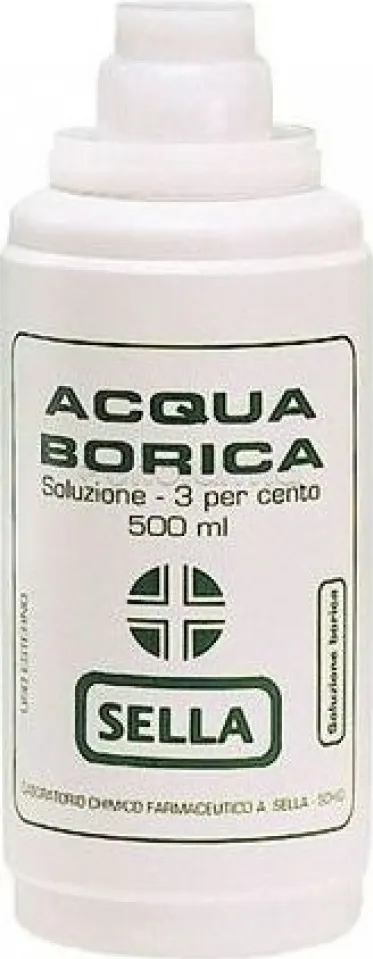
500 ml bottle.
Product Code:FRCM116954




 Richiedi info sul prodotto