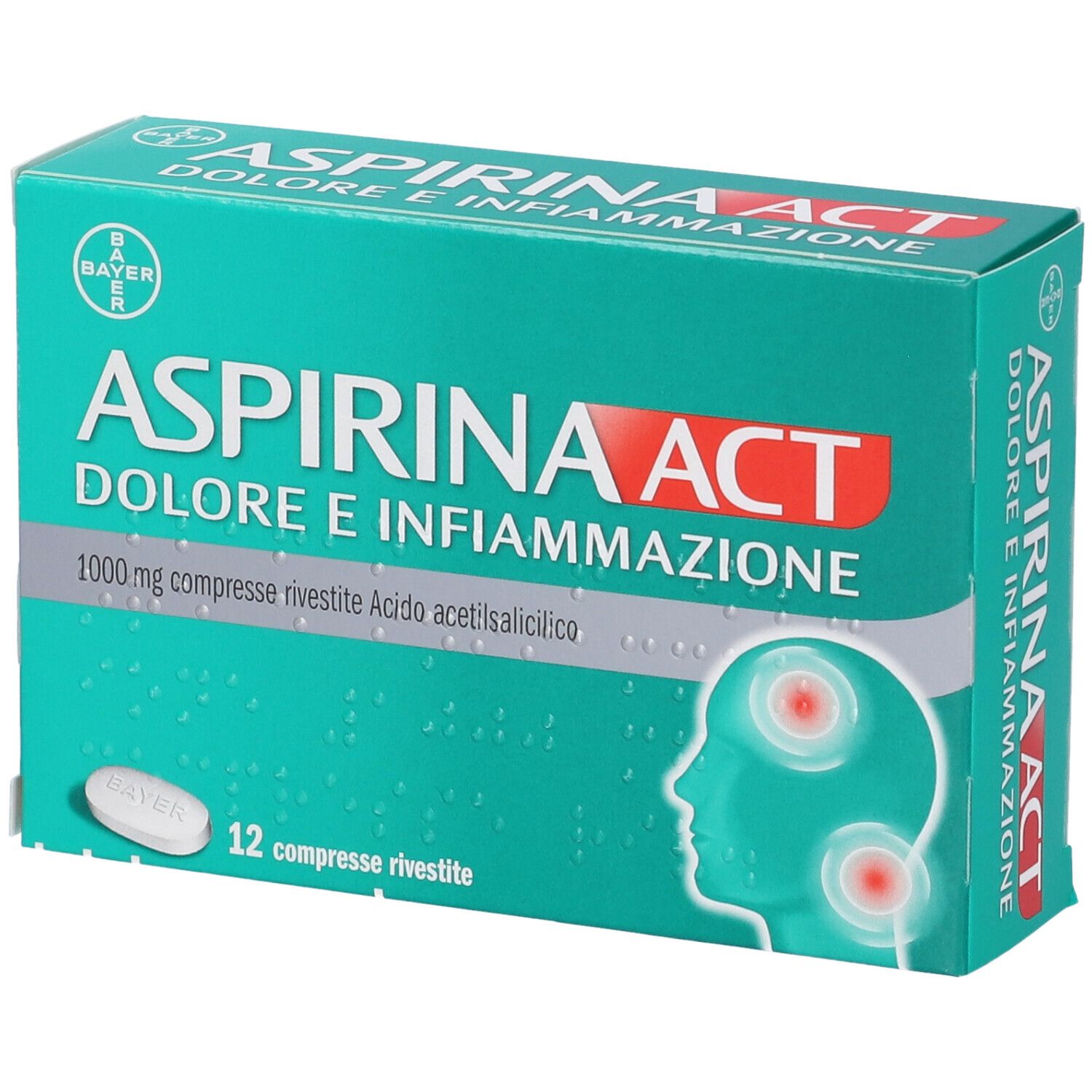
Aspirinaact Pain and Inflammation contains acetylsalicylic acid for the rapid relief of fever and mild to moderate pain, and is indicated for adults and adolescents aged 16 to 65.
Indications
Aspirinaact Pain and Inflammation contains acetylsalicylic acid, which relieves pain and reduces fever. It offers rapid relief from pain thanks to the rapid dissolution and rapid absorption of acetylsalicylic acid.
Aspirinaact pain and inflammation is used for the symptomatic treatment of fever and/or mild to moderate pain such as headache, flu-like syndrome, toothache, muscle pain.
Aspirinaact pain and inflammation is reserved for adults and adolescents aged 16–65 years. Contact your doctor if you do not notice improvement or if you notice worsening of symptoms after 3 days in the case of fever or 3–4 days in the case of pain. [for the RR pack - 24 tablets]
Composition
Active ingredients
- 1000 mg ACETYLSALICYLIC ACID
Directions for use and dosage
Aspirinaact pain and inflammation is reserved for adults and adolescents aged 16 to 65 years. Talk to your doctor if you do not notice any improvement or if you notice worsening of symptoms after 3 days in case of fever or 3 - 4 days in case of pain.
Interactions
Tell your doctor or pharmacist if you are taking, have recently taken, or might take any other medicines.
Talk to your doctor or pharmacist before taking Aspirinaact pain and inflammation if you are using:
- methotrexate: a medicine to treat, for example, severe joint inflammation, psoriasis (a skin disease), or cancer.
Do not take Aspirinaact pain and inflammation if you are taking methotrexate in doses higher than 20 mg per week.
Medical supervision is recommended if you are taking methotrexate in doses less than or equal to 20 mg per week. - Medicines to inhibit blood clotting or to dissolve blood clots (e.g., oral anticoagulants, heparins, thrombolytics, clopidogrel, ticlopidine, anagrelide).
Do not take Aspirinact pain and inflammation if you are are being treated with oral anticoagulants and have a history of gastroduodenal ulcers.Medicines for the treatment of pain, inflammation, or rheumatism belonging to the group of so-called nonsteroidal anti-inflammatory drugs.Make sure that any other medicines you are using do not contain acetylsalicylic acid.Oral glucocorticoids, or those administered by injection or infusion – except hydrocortisone replacement therapy.
Glucocorticoids are medicines used to prevent organ transplant rejection or to reduce inflammation, for example in the skin and in asthma. - Medicines such as citalopram, escitalopram, fluoxetine, fluvoxamine, paroxetine, sertraline (so-called SSRIs) used to treat depression and other disorders.
- Medicines for the treatment of high blood pressure or other diseases that contain active substances whose names end in "pril" or "sartan" and medicines to increase water elimination through the kidneys.
It is recommended to drink a sufficient amount of fluids and to monitor kidney function. kidney problems at the start of treatment. - medicines against gout such as benzbromarone, probenecid
pemetrexed: a medicine to treat cancerdeferasirox: a medicine to lower iron levels in the bloodtopical gastrointestinal medications, antacids, and charcoal.Do not take Aspirinaact pain and inflammation with alcohol.
Warnings
Talk to your doctor or pharmacist before taking Aspirinaact pain and inflammation if:
- you are taking other products containing acetylsalicylic acid, to avoid the risk of overdose.
- you have headache after using Aspirinaact pain and inflammation.
Do not increase the dose; talk to your doctor or pharmacist if the headache occurs while taking a painkiller at a high dose for a prolonged period. - you use painkillers regularly, especially different painkillers in combination. This may lead to reduced function. kidney disease.
- have a G6PD (glucose-6-phosphate dehydrogenase) deficiency (a hereditary disease affecting red blood cells), as high doses of acetylsalicylic acid may cause haemolysis (destruction of red blood cells).
- have a history of gastric or intestinal ulcer or bleeding, or inflammation of the lining of the stomach.
Do not take Aspirinact pain and inflammation if you have a gastric or intestinal ulcer, or bleeding.
Gastric or intestinal bleeding or ulcers/perforations may occur at any time during treatment. The risk is increased in elderly, patients with low body weight, and patients using medicines to inhibit blood clotting. - have reduced kidney or liver function.
Do not take Aspirinact pain and inflammation if you have severely reduced liver or kidney function. Regular use of painkillers, especially combinations of painkillers, can lead to persistent kidney damage, with the risk of reduced kidney function. - have reduced kidney function. cardiovascular disease (e.g., when the heart does not pump blood adequately through the body, volume depletion, major surgery, blood infection, or major bleeding event).
- you have asthma.
Do not take Aspirin Act Pain and Inflammation if your asthma is caused by the use of acetylsalicylic acid or medicines with similar effects. - you have abnormally heavy and prolonged menstrual periods, or bleeding from the uterus at irregular intervals.
There is a risk of increased volume and duration of menstrual periods. - You have abnormally heavy and prolonged menstrual periods, or bleeding from the uterus at irregular intervals.
There is a risk of increased volume and duration of menstrual periods. - You have abnormally heavy and prolonged menstrual periods, or bleeding from the uterus at irregular intervals. about to undergo surgery.
Acetylsalicylic acid increases the
risk of bleeding even if taken several days beforehand. Tell your doctor or dentist if you are planning to undergo surgery, even minor surgery.
gastrointestinal bleeding occurs during treatment (
blood coming from the mouth,
blood in the stools,
black stools). You should stop treatment and call your doctor or emergency medical services immediately.You suffer from
gout.
Acetylsalicylic acid reduces the
excretion of uric acid.
Children and adolescents
Aspirinact pain and inflammation is not indicated for children and adolescents under 16 years of age.
General advice:
Reye's syndrome is a rare and serious disease associated with damage to the nervous system and liver. It is It has been observed in children suffering from viral diseases, such as influenza and chickenpox, and who use acetylsalicylic acid. Therefore:
- acetylsalicylic acid should be administered to children suffering from viral diseases only on the advice of a doctor.
- If you experience dizziness or fainting, abnormal behavior, or vomiting, stop treatment and inform your doctor immediately.
Contraindications
Do not take Aspirinaact pain and inflammation:
If you:
- are allergic to
- acetylsalicylic acid;
- salicylates: a group of medicines to reduce pain or fever to which acetylsalicylic acid belongs;
- any of the other ingredients of this medicine;
- have already have suffered in the past from asthma or allergic reactions (e.g., urticaria, angioedema, severe rhinitis, shock) caused by the use of acetylsalicylic acid or medicines with similar actions, particularly those called nonsteroidal anti-inflammatory drugs (NSAIDs)have a stomach or intestinal ulcerhave bleeding or are at risk of bleedinghave severely reduced liver or kidney functionhave severely reduced liver or kidney functionSeverely reduced and uncontrolled heart rate
- are taking methotrexate in doses greater than 20 mg/week
- are being treated with oral anticoagulants (medicines to thin the blood and prevent clots)
- are in the last trimester of pregnancy
Side effects
These side effects are all very serious and you may need urgent medical attention or hospitalization. Tell your doctor immediately or go to the nearest hospital. If you notice any of the following symptoms:
- bleeding, such as:
- epistaxis (nosebleeds), bleeding gums
- reddish or purple spots on the skin, bruising
- bleeding from the urinary tract and genitals.
The risk of bleeding persists for 4-8 days after stopping use of Aspirinact (pain and inflammation). It may cause an increased risk of bleeding in case of surgery. Bleeding inside the skull, stomach, or intestine may also occur. - Hypersensitivity reactions, severe allergic reactions that can cause swelling of the face or throat, asthma
- Headache, dizziness, sensation of hearing loss, ringing in the ears, which are usually indicative of an overdose
- Cerebral bleeding
- Stomach pain
- Bleeding in the stomach or intestines.
Symptoms are vomiting blood and blackish stools. The risk of bleeding is dose-dependent. - stomach ulcer and perforation
increased liver enzyme levels, usually reversible after discontinuation of treatment, hepatic impairment (mainly hepatocellular)urticaria, skin reactionsReye's syndromehemolysis (destruction of red blood cells) in severe forms of G6PD (glucose-6-phosphate dehydrogenase) deficiencyrenal failure, renal damageintestinal diaphragm disease (especially with long-term treatment (term)Reporting of side effects
If you get any side effects, including any not listed in this leaflet, talk to your doctor or pharmacist. You can also report side effects directly via the national reporting system at: https://www.aifa.gov.it/content/segnalazionireazioni-avverse.
By reporting side effects, you can help provide more information on the safety of this medicine.
Overdose
Talk to your doctor or pharmacist if you are taking overdose. If you are taking other products containing acetylsalicylic acid, to avoid the risk of overdose.
Do not increase the dosage; talk to your doctor or pharmacist if your headache occurs while taking a high dose of painkiller for a prolonged period.
Symptoms of an overdose may include: headache, dizziness, sensation of hearing loss, ringing in the ears.
Pregnancy and breastfeeding
Do not take Aspirinaact pain and inflammation if you are pregnant or breastfeeding. in the last trimester of pregnancy.
The use of this medicine during breastfeeding is not recommended.
Format
12 coated tablets
Product Code:FRCM226065




 Richiedi info sul prodotto