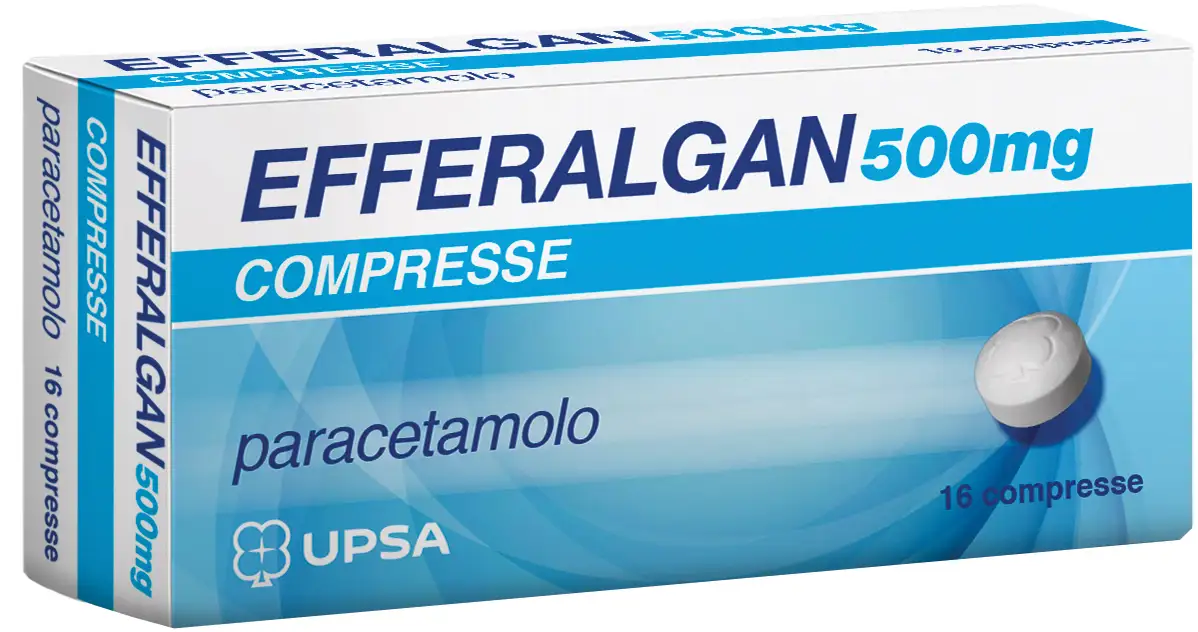
A paracetamol-based tablet, which has analgesic and antipyretic effects.
Therapeutic indications
Symptomatic treatment of mild to moderate pain and fever in adults and children.
Symptomatic treatment of arthritic pain.
Composition
One tablet contains:
Active ingredient: paracetamol 500 mg.
Excipients: hypromellose, povidone, croscarmellose sodium, glyceryl behenate, microcrystalline cellulose, magnesium stearate.
Contraindications
Hypersensitivity to paracetamol or propacetamol hydrochloride (paracetamol precursor) or to any of the excipients.
Dosage and Directions for Use
Oral use. The tablets should be swallowed whole with a glass of water.
EFFERALGAN 500 mg tablets are intended for adults and children weighing more than 26 kg (approximately 8 years or older).
In children, dosing schedules based on body weight must be followed, and therefore, the appropriate formulation must be chosen. The age-weight correlation is for guidance only.
Children weighing between 26 kg and 40 kg (approximately 8 to 13 years of age): The dosage is 1 tablet per administration, to be repeated, if necessary, after an interval of at least 6 hours, without exceeding 4 tablets per day.
Adolescents weighing between 41 kg and 50 kg (approximately 12 to 15 years of age): The dosage is 1 tablet per administration, to be repeated, if necessary, after an interval of at least 4 hours, without exceeding 6 tablets per day.
Adults and adolescents weighing more than 50 kg (approximately 15 years of age or older): The usual dosage is one tablet per administration, to be repeated, if necessary, after an interval of at least 4 hours, without exceeding 6 tablets per day. day.
Adults: For more severe pain, two tablets can be taken at a time up to 3 times a day (3 g of paracetamol), always leaving at least 4 hours between doses.
Frequency of administration
Regular administrations prevent fluctuations in pain or fever levels.
In children, the interval between administrations should be regular, both day and night, and should preferably be at least 6 hours.
In adults and adolescents, an interval of at least 4 hours must always be maintained between administrations.
In cases of severe renal insufficiency (creatinine clearance less than 10 ml/min), the interval between administrations must be at least 8 hours.
Do not exceed 3 g of paracetamol per day, i.e., 6 tablets. Maximum recommended dosage for adults and adolescents weighing more than 40 kg; the total dose of paracetamol should not exceed 3 g/day.
Warnings and Precautions
Paracetamol should be administered with caution to patients with mild to moderate hepatic impairment (including Gilbert's syndrome), severe hepatic impairment (Child-Pugh >9), acute hepatitis, concomitant treatment with drugs that alter liver function, glucose-6-phosphate dehydrogenase deficiency, or hemolytic anemia. Do not administer during chronic treatment with drugs that can induce hepatic monooxygenases or in case of exposure to substances that can have this effect. Paracetamol should be administered with caution to patients with renal impairment (creatinine clearance <= 30 ml/min). Use with caution in cases of chronic alcoholism, excessive alcohol intake (3 or more alcoholic drinks per day), anorexia, bulimia, or cachexia, chronic malnutrition (low hepatic glutathione reserves), dehydration, or hypovolemia. During treatment with paracetamol, before taking any other medication, check that it does not contain the same active ingredient, as high doses of paracetamol can cause serious adverse reactions. High or prolonged doses of the product can cause high-risk liver disease and alterations, even serious, to the kidneys and blood. In case of prolonged use, it is advisable to monitor liver and kidney function and blood count. In case of allergic reactions, administration should be discontinued. This medicine contains 412.4 mg of sodium (equivalent to 18 mEq) per tablet. This should be taken into consideration when administering it to patients with reduced kidney function or on a low-sodium diet. It also contains sorbitol: use with caution in patients with rare hereditary problems of fructose intolerance.
Side effects
Skin reactions of various types and severity have been reported, including cases of erythema multiforme, Stevens-Johnson syndrome, and epidermal necrolysis. Hypersensitivity reactions such as angioedema, laryngeal edema, and anaphylactic shock have been reported.
In addition, the following adverse reactions have been reported: thrombocytopenia, leukopenia, anemia, agranulocytosis, liver function abnormalities and hepatitis, renal disorders (acute renal failure, interstitial nephritis, hematuria, anuria), gastrointestinal reactions, and dizziness.
Post-marketing: The frequency of reported adverse reactions is unknown.
Blood and lymphatic system disorders: thrombocytopenia, neutropenia, leukopenia.
Gastrointestinal disorders: diarrhea, abdominal pain.
Hepatobiliary system disorders: increased liver enzymes.
Immune system disorders: anaphylactic shock, Quincke's edema, hypersensitivity reactions.
Diagnostic investigations: decreased INR values, increased INR values.
Skin and subcutaneous tissue disorders: urticaria, erythema, rash.
Vascular system disorders: hypotension (as a symptom of anaphylaxis).
In case of overdose, paracetamol can cause hepatic cytolysis, which can lead to massive and irreversible necrosis.
Efferalgan in Pregnancy and Breastfeeding
Pregnancy
Clinical experience with the use of paracetamol during pregnancy and breastfeeding is limited. Epidemiological data on the use of therapeutic doses of oral paracetamol indicate that no adverse effects occur in pregnant women or on the health of the fetus or newborns. Reproductive studies with paracetamol have not revealed any malformations or fetotoxic effects. However, paracetamol should be used during pregnancy only after careful risk/benefit assessment. In pregnant patients, the recommended dosage and duration of treatment must be strictly observed.
Breastfeeding
Paracetamol is excreted in small amounts in breast milk. Rash has been reported in breast-fed infants. However, paracetamol administration is considered compatible with breastfeeding. However, caution should be exercised when administering paracetamol to breastfeeding women.
Interactions
Paracetamol may increase the risk of adverse effects when administered concomitantly with other medications. Paracetamol administration may interfere with the determination of uric acid levels (using the phosphotungstic acid method) and blood glucose levels (using the glucose-oxidase-peroxidase method). Dose reduction is recommended during oral anticoagulant therapy. Monooxygenase-inducing drugs: Use with extreme caution and under close monitoring during chronic treatment with drugs that can induce hepatic monooxygenase or in case of exposure to substances that can have this effect (e.g., rifampicin, cimetidine, antiepileptics such as glutethimide, phenobarbital, carbamazepine). Phenytoin: Concomitant administration of phenytoin may result in decreased efficacy of paracetamol and an increased risk of hepatotoxicity. Patients treated with phenytoin should avoid taking high and/or chronic doses of paracetamol. Patients should be monitored for evidence of hepatotoxicity. Probenecid: This causes at least a two-fold reduction in paracetamol clearance by inhibiting its conjugation with glucuronic acid. A reduction in the paracetamol dose should be considered if administered concomitantly with probenecid. Salicylamide: May prolong the elimination half-life (t1/2) of paracetamol.
Format
Pack of 16 tablets.
Product Code:FRCM046192




 Richiedi info sul prodotto