




- -23.28%

Recommended price

€16.11
Get free shipping with a minimum spend of 69,00 €. Or by purchasing one of the selected products. Discover them now!
 Richiedi info sul prodotto

Information on returns and shipments

Payment methods


Composition:
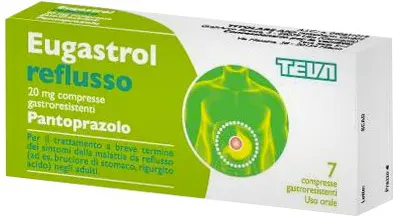
Each gastro-resistant tablet contains: 20 mg pantoprazole (as sodium sesquihydrate) Excipients: Each gastro-resistant tablet contains 38.425 mg maltitol and 0.345 mg soya lecithin.
Excipients
Core: maltitol (E 965), crospovidone type B, carmellose sodium, anhydrous sodium carbonate (E 500), calcium stearate. Coating: polyvinyl alcohol, talc (E 553b), titanium dioxide (E 171), macrogol 3350, soya lecithin (E 322), yellow iron oxide (E 172), anhydrous sodium carbonate (E 500), methacrylic acid - ethyl acrylate copolymer (1:1), polysorbate 80, sodium lauryl sulfate, triethyl citrate (E 1505).
Therapeutic indications
Short-term treatment of symptoms of reflux disease (e.g. heartburn, acid regurgitation) in adults.
Contraindications
Hypersensitivity to the active substance, to soya, peanuts or to any of the excipients. Concomitant administration of atazanavir.
Dosage
The recommended dose is 20 mg pantoprazole (one tablet) daily. It may be necessary to take the tablets for 2–3 consecutive days to achieve symptomatic relief. Once complete symptom relief is achieved, treatment should be discontinued. Treatment duration should not exceed 4 weeks without prior medical advice. If symptom relief is not achieved within 2 weeks of continued treatment, the patient should be advised to inform their doctor. No dosage adjustment is required in elderly patients or in patients with impaired renal or hepatic function. The use of Eugastrol reflux is not recommended in children and adolescents under 18 years of age due to insufficient data on safety and efficacy.Method of administration. Eugastrol reflux tablets should not be chewed or crushed, but should be swallowed whole with liquid before a meal.
Warnings and precautions
Patients should be advised to inform their doctor if: they experience unintentional flatulence, anemia, gastrointestinal bleeding, dysphagia, persistent vomiting, or vomiting blood, as treatment with pantoprazole may alleviate symptoms and delay diagnosis of serious conditions. In these cases, malignancy must be excluded; they have previously suffered from gastric ulcer or have undergone gastrointestinal surgery; they are receiving continuous symptomatic treatment for indigestion or heartburn for 4 weeks or more; suffer from jaundice, impaired liver function, or liver disease; suffer from any other serious medical condition affecting general well-being; are over 55 years of age and have new symptoms or recent changes in pre-existing symptoms. Patients with chronic recurring symptoms of indigestion or heartburn should consult their doctor at regular intervals. In particular, patients over 55 years of age who take nonprescription remedies for indigestion or heartburn on a daily basis should inform their pharmacist or doctor. Patients should not take pantoprazole and another proton pump inhibitor or an H2 receptor antagonist at the same time. Patients should consult their doctor before taking this medicine if they are undergoing an endoscopy or a urea breath test. Patients should be informed that the tablets are not intended to provide immediate relief of symptoms. Symptom relief may begin after about one day of treatment with pantoprazole, but may continue for a longer period. It may need to be taken for 7 days before complete heartburn control is achieved. Patients should not take pantoprazole as a preventative medicine. The decreased gastric acidity following any treatment – including that with proton pump inhibitors – increases the number of bacteria normally present in the gastrointestinal tract. Therefore, treatment with acid-reducing drugs may slightly increase the risk of gastrointestinal infections such as those caused by Salmonella, Campylobacter, or C. difficile. This medicine contains maltitol. Patients with rare hereditary problems of fructose intolerance should not take this medicine.
Interactions
Eugastrol reflux may cause heartburn. reduce the absorption of active substances whose bioavailability is dependent on gastric pH (e.g. ketoconazole). Co-administration of atazanavir 300 mg/ritonavir 100 mg with omeprazole (40 mg once daily) or atazanavir 400 mg with lansoprazole (60 mg single dose) in healthy volunteers has been shown to result in a substantial reduction in the bioavailability of atazanavir. The absorption of atazanavir is pH-dependent. Therefore, pantoprazole should not be co-administered with atazanavir. Pantoprazole is metabolised in the liver via the cytochrome P450 enzyme system. An interaction of pantoprazole with other compounds metabolised by this enzyme system cannot be excluded. However, no clinically significant interactions have been observed in specific tests with carbamazepine, caffeine, diazepam, diclofenac, digoxin, ethanol, glibenclamide, metoprolol, naproxen, nifedipine, phenytoin, piroxicam, theophylline, and an oral contraceptive containing levonorgestrel and ethinyl estradiol. Although no interactions were observed in pharmacokinetic studies during concomitant administration of pantoprazole and phenprocoumon or warfarin, there have been isolated post-marketing reports of changes in the International Normalized Ratio (INR) during concomitant treatment with these substances. Therefore, in patients treated with coumarin-type anticoagulants (e.g., phenprocoumon or warfarin), monitoring of prothrombin time/INR values is recommended after initiation or discontinuation of pantoprazole therapy and in case of irregular use. No interactions with concomitantly administered antacids have been observed.
Undesirable effects
Approximately 5% of patients may experience adverse drug reactions (ADRs). The most commonly reported ADRs are diarrhoea and headache, occurring in approximately 1% of patients. The following undesirable effects have been reported with pantoprazole. In the table below, undesirable effects are listed according to the following frequency classification: Very common (>1/10); common (>1/100, <1/10); uncommon (>1/1,000, <1/100); rare (>1/10,000, <1/1,000); very rare (<1/10,000), not known (frequency cannot be estimated from the available data). Within each frequency grouping, undesirable effects are presented in order of decreasing seriousness.
| Frequency System Organ Class | Uncommon | Rare | Very rare | Not known |
| Blood and lymphatic system disorders | Agranulocytosis | Thrombocytopenia; Leukopenia; Pancytopenia | ||
| Nervous system disorders | Headache; Dizziness | Taste disorders | Paresthesia | |
| Eye disorders | Vision disturbances/blurred vision | |||
| Gastrointestinal disorders | Diarrhoea; Nausea/vomiting; Abdominal distension and bloating; Constipation; Dry mouth; Abdominal pain and discomfort | |||
| Renal and urinary disorders | Interstitial nephritis (with possible progression to renal failure) | |||
| Skin and subcutaneous tissue disorders | Rash / exanthema / eruption; Pruritus | Urticaria; Angioedema; | Steven-Johnson syndrome; Lyell syndrome; Erythema multiforme; Photosensitivity, Subacute cutaneous lupus erythematosus | |
| Musculoskeletal and connective tissue disorders | Arthralgia; Myalgia | Muscle spasm as a consequence of electrolyte disturbances | ||
| Metabolism and nutrition disorders | Hyperlipidemia and increased lipid levels (triglycerides, cholesterol); Weight changes | Hyponatraemia; Hypomagnesemia, Hypocalcemia in association with hypomagnesemia, Hypokalaemia | ||
| Systemic disorders and administration site conditions | Asthenia, fatigue and malaise | Increased body temperature; Peripheral oedema | ||
| Immune system disorders | Hypersensitivity (including anaphylactic reactions and anaphylactic shock) | |||
| Hepatobiliary disorders | Increased liver enzyme levels (transaminases, γ–GT) | Increased bilirubin levels | Hepatocellular injury; Jaundice; Hepatocellular failure | |
| Psychiatric disorders | Sleep disorders | Depression (and all stages of exacerbation) | Disorientation (and all stages of exacerbation) | Hallucinations; Confusion (especially in predisposed patients, and worsening of these symptoms if pre-existing) |
| Reproductive system and breast disorders | Gynecomastia |
Soya lecithin may very rarely cause allergic reactions. Reporting suspected adverse reactions that occur after authorisation of the medicinal product is important, as it allows continued monitoring of the benefit/risk balance of the medicinal product. Healthcare professionals are asked to report any suspected adverse reactions via the national reporting system at www.agenziafarmaco.gov.it/it/responsabili.
Overdose There are no known symptoms of overdose in humans. Doses up to 240 mg administered intravenously over 2 minutes were well tolerated since pantoprazole is extensively bound to plasma proteins and is not readily dialyzable. In case of overdose with clinical signs of intoxication, no specific therapeutic recommendations are given, apart from the adoption of the usual symptomatic and supportive measures.
Pregnancy and breastfeeding
Pregnancy. There are no adequate data from the use of pantoprazole in pregnant women. Studies in animals have shown reproductive toxicity. Preclinical studies reveal no signs of impaired fertility or teratogenic effects. The potential risk for humans is unknown. This medicinal product should not be used during pregnancy.
Breastfeeding. It is not known whether pantoprazole is excreted in human breast milk. Animal studies have shown excretion of pantoprazole in breast milk. This medicine should not be used during breastfeeding.
This product has been on sale since 25/09/2017
In the last 30 days, the product's lowest price was 3,26 €
Non è forte come il Lansoprazolo: da alternare
Ottimo prodotto che protegge dal reflusso. Prezzo concorrenziale, Farmacosmo serio e affidabile
spedizione ok
Ottimo prodotto!
Prezzo molto più basso di Maalox con stesso principio attivo ed efficacia. Perfetto.


